
As anyone who knows me knows, I’m a huge fan of Sylvester Stallone or Sly as he’s called by many people. I grew up with the underdog story of Rocky Balboa and the first ever true action film First Blood, where Stallone played Vietnam Vet John Rambo. It would be hard for me to be very impartial in a documentary about this man and his career. Excluding his last outing in the Expendables franchise, he hasn’t had a terrible career. Maybe because of my love of him as an actor and American icon, I have given him a pass more often than not.
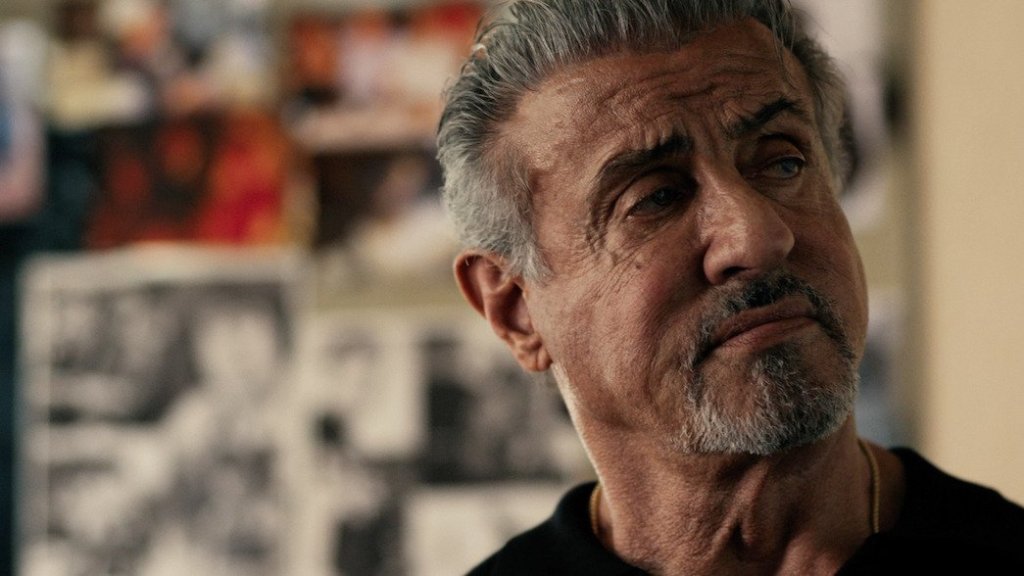
The documentary Sly starts with a framing device of him visiting his old home in Brooklyn, New York, talking to people walking the streets. He reminisces about his upbringing and how bad this section of New York was when he was a kid, and how eventually his parents got divorced, and he and his brother, Frank, went with different parents to Michigan and Maryland. He had a lot of alone time, which was when he started watching old television shows and movies.

All this time alone reminded me of myself at this age. I watched a television station religiously as well, and found all kinds of films I would admire. Stallone got interested in movies and writing from this. He started writing his own stories, which he would turn into screenplays. I turned my love of movies into film criticism after watching Siskel & Ebert, along with all the films I watched as a kid. It’s fascinating how our childhood is a bit paralleled that way. Obviously, things would vastly change between us, though.
Stallone struggled to get work in Hollywood, with The Lords of Flatbush being a key moment for him. He met and befriended Henry Winkler working on that film, and that gave him an opportunity in Hollywood and a chance to sell the script he was writing about as a down-on-his-luck working-class boxer. The studios loved the script, but didn’t want Stallone to play the character because he wasn’t a well-known actor. He refused to sell it, even if he got half a million dollars. As we all know the story by now, it was the break of his career, and his career was off and running after this.
Rocky would rocket Stallone to fame and fortune, but it wasn’t doing much for his career. He had a few flops between the Rocky films, but Rocky II put him back on top again. This is where he started having a little pull in Hollywood with producers and so forth. He got the script of First Blood based on the book and retooled it to what we’ve all seen in the final cut. It wasn’t easy getting that film made the way it ended up. He wanted to send a message about Vietnam vets and how they were perceived in this country and abroad. Little did he know he would start the action genre, which is what he would become synonymous with the rest of his career.
The film has Stallone packing up a bunch of his old belongings from the past, like statues and sculptures, from a house he lived in, and that’s where the editing and back and forth of the stories goes into high gear in the film. There is a lot of archival footage of Stallone when he was younger, and photos of him on the set of Rocky and other moments. The recording of the conversations was also used to help tell this man’s story. These were effective in getting across his mindset back then compared to his thoughts now.

Like most documentaries, there are also talking heads — mainly Stallone himself, but his brother Frank, Arnold Schwarzenneger, Quentin Tarantino, and other friends were sprinkled in for a different perspective on this man’s life and storied career. Besides his career, he reminisced about his family and his upbringing, and how he used his family as inspiration for his movies — namely his son Sage in Rocky V. Without getting into details, that is a tragic story. As we see him today, he is happily married to his wife Jennifer Flavin, living with his son, Seargoeh, and his three daughters, Scarlet Rose, Sistine, and Sophia.
One of the things the director Thom Zimny touches on in the film I thought was interesting was Stallone’s rivalry with Arnold Schwarzenegger. These two rivaled each other with their iconic characters and the box office receipts that followed. They also rivaled each other with the fact that they didn’t always get the crowds to come along with them in some of their roles. Stallone idolized Robert De Niro when he was younger, so when he got a more serious role opposite him, he jumped at the chance to work with him on Cop Land directed by James Mangold. That was a good film, and Stallone got a lot out of the time he spent with that terrific cast of actors. Keitel, and Liotta, among others. He and Arnold would always be friends, and friends would be what Stallone would rely on for the rest of his career.
4 stars
Dan Skip Allen

 From the Fourth Row!
Leave a comment