By Brian Susbielles
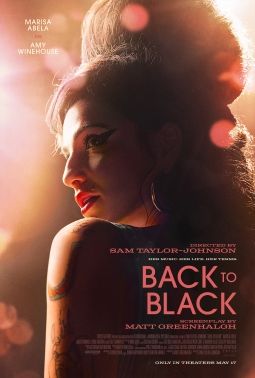
When Amy Winehouse died unexpectedly aged 27 in 2011, it was a massive and profound loss that forever made her internal as part of Club 27. Jimi Hendrix (Jimi: All Is By My Side), Janis Joplin (The Rose), Jim Morrison (The Doors), and Kurt Cobain (Last Days) were already up there as high talents that suddenly burned out and got a biopic or a film inspired by their lives. Unsurprisingly, right after she died, the push to get her life rights for a transition to the screen was on and thirteen years passed by rather quickly for Winehouse’s own biopic, Back To Black, to finally make the screen. Sadly, it feels like Lifetime made an R-rated film and chose to excise the heavy duty stuff from her story.
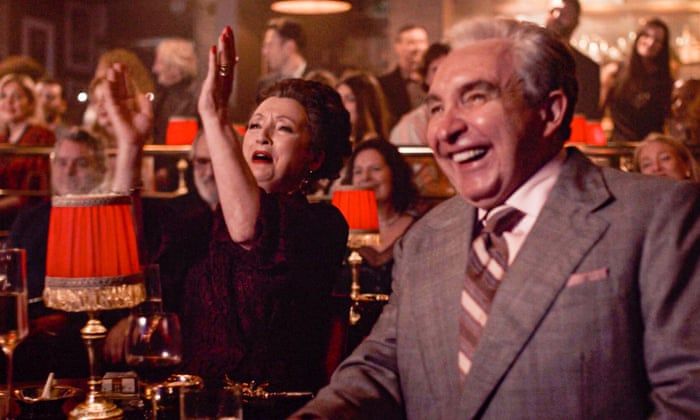
The life of Amy Winehouse (Marisa Abela) starts when she is 19 at home with her father, Mitch (Eddie Marsan), and her grandmother, Cynthia (Leslie Manville). Amy is a jazz fan who is like her grandmother, once a jazz singer, and takes up on a more soulful sound instead of the Britpop of the late 90s and early 00s. Her demo is brought to the attention of Island Records, who signs Amy and releases her first album, Frank, but doesn’t perform to expectations and won’t push to promote it in the United States. Winehouse isn’t too thrilled that they think her stage presence could be improved, almost like a Spice Girl, which is the antithesis of who she is.

At a pub, Amy meets Blake (Jack O’Connell) and the two quickly fall in love, even though he is in a relationship with another woman. It becomes the start of a toxic love story thanks to his introduction of hard drugs to her and growing alcoholism which begins to affect Amy as she faces concern from others and brings in the paparazzi to scrutinize her life. Yet, it also stirs creativity for Amy’s next album, also the film’s title, which sends her up to the stratosphere of fame – and continues a cycle of chaos that no one seems to have Amy get a hold of.
Following the release of Asif Kapadia’s documentary, Amy, Winehouse’s family were critical in what they saw as portraying Mitch as complicit in her problems and taking advantage of her fame. So, in this version fully supported by the family, Mitch is a fully innocent bystander of Amy’s career and personal crisis, completely detaching themselves from certain facts around him and the commercial side of things that compounded onto Amy’s troubles. None of it can be really buoyed by the script which feels very pictorial and just glosses over many things.
When talking about Amy’s struggle with mental health and addiction, those who remember her how torrid it was. It wasn’t just run-of-the-mill abuse of substances, but her heavy smoking resulted in on-set emphasema for a woman in her mid twenties. Cocaine, crack cocaine, marijuana, and alcohol was all consumed – not to mention allegations of heroin use – and the film doesn’t delve into how bad it is. That whole side is handled with such fragility that the film seems too scary to depict Amy haggard and terribly thin throughout the roughest periods, especially when you add bulimia into it.
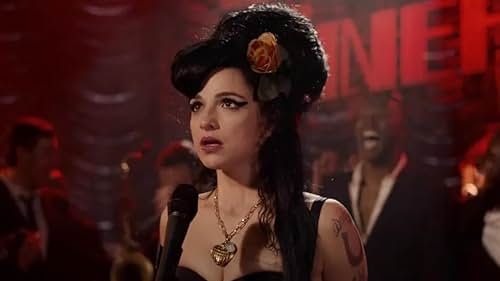
Performance wise, Abela captures the spirit of Amy Winehouse and her scenes with O’Connell are the strongest of the film. Although she is able to perfectly lip-sync to the songs and perfect the choreography to Amy’s Grammy performance, the creative side is not shown at all. There is the intervention scene which is the basis of “Rehab” (no, no, no), but where is the rest of the album being recorded and how does she put pen to paper to Amy lyrics? You hear of producer Mark Ronson, but never see the collaboration. This, with the other faults, curtails Abela from really giving out the best of her own version of Amy.
In the end, we have a movie that is cherry-picked and stays away from getting too deep with the worst of Amy’s vices and the deeper complications in her relationship with Blake. Back To Black comes off as very protective of Amy and everyone else around her as a response to other pieces that don’t paint a flattering picture. This is a misjudgment by Taylor-Johnson and company to not be really true to the story and only touch the edges without going past. Sad that her legacy, even with the support of Winehouse’s estate, is all in this very bland biopic.
2 1/2 Stars
Follow me on Twitter: @brian_cine

 From the Fourth Row!
Leave a comment