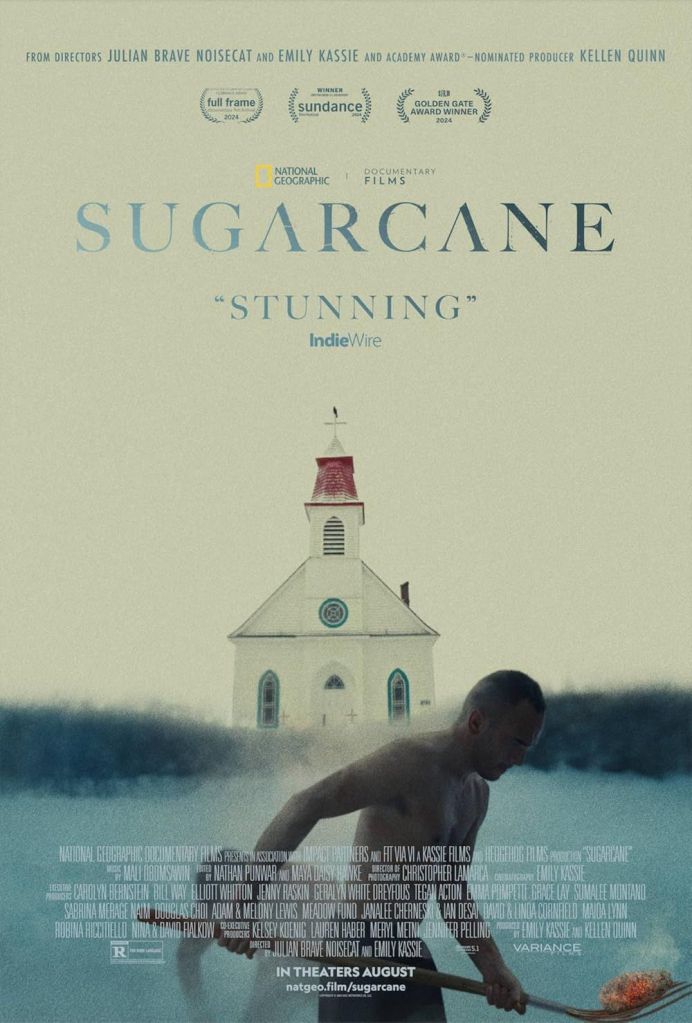
“National Geographic Documentary, Beginning in 1894, the Canadian government forced Indigenous children to attend segregated boarding schools. The schools were designed to “get rid of the Indian Problem.” Most were run by the Catholic Church. For years, students spoke of abuse and whispered about missing classmates. The Williams Lake First Nation is Investigating abuse and deaths at nearby St. Joseph’s Mission. Investigators are using ground penetrating radar to detect unmarked graves of students at St Joseph’s Mission.”
The thing about documentaries is that they tell stories more often than not that most people don’t know anything about or have never heard of before. There are a lot of celebrity documentary films and those are usually pretty good. The ones that turn out to be the best are the ones like I said, stories people don’t know anything about. That’s the case with Sugarcane. It’s a story set in Canada about Indigenous people who live there.

From the beginning of the film, the filmmakers show an old ramshackle school called St Joseph’s Mission and a graveyard on a hill. This school is where a lot of Indigenous kids went to school. Some died and some lie in unmarked graves. That’s the story behind this documentary. It’s a tragic tale about those who were abused, beaten, and killed by catholic priests who were supposed to care for these children and teach them English, Math, and Science.
The film focuses mainly on a group of men and women. Some of them are First Nation Chief Willie Sellars, Charlie Bellieau Investigator, Whitney Spearing Investigator & Archeologist, Ed Archie Noisecat-Julian’s Father, Julian Brave Noisecat-Ed’s Son who directed the film with Emily Kassie. These are the people who are either affected by the tragedies or are investigating them. Either way, these people get to the bottom of this mystery that took place. It’s very emotional for them.
In the process of the film being made the filmmakers show some of the investigative methods they used to get to the bottom of this tragedy. They used school archive documents, photos, and videos of kids taken while they were at school. These help them find survivors and people who could shed some light on what transpired at the school. People who were lost or who weren’t looking to be found, but they talked nonetheless. These were good interviews the filmmakers got.
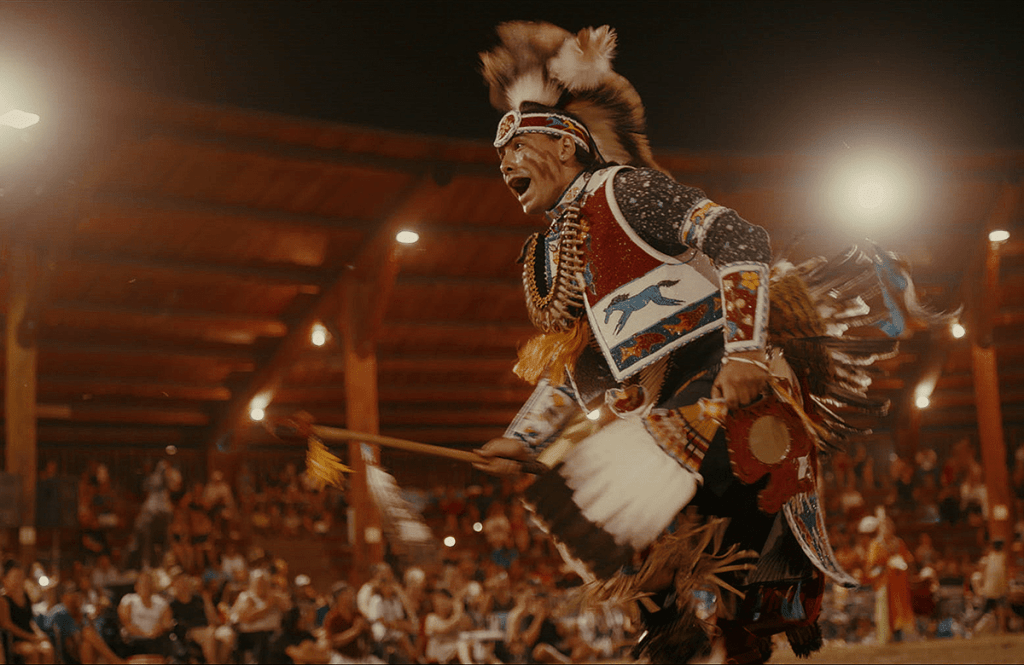
Various events are depicted in the context of the documentary. One of them is Orange Shirt Day which is a day of memory for those who have passed away. Also, an Indigenous powwow and dance celebration which the documentarian was a part of. These kinds of celebrations help to keep the memory of those who were lost in their minds. They will never forget what has happened to so many young people who were supposed to be looked after and cared for. A precursor of these events at the school was suicide and alcoholism. That’s the real travesty here sadly.

Sugarcane is a documentary that I never thought I’d see. It’s a story I wasn’t familiar with but once I saw it I was deeply saddened by it. Having dealt with abuse from a parent and subsequent alcoholism and anxiety and depression I understand what these people are going through. Of course, I can never understand the actions of priests and men who were supposed to care for children and treat them so badly that they died. That’s a tragedy nobody should have to be a part of. The filmmakers did an excellent job of showing the investigative methods the men and women used to get to the bottom of these tragedies. I was glued to the screen watching this deeply informative film. I hope more people get to watch as I did.
4 stars
Dan Skip Allen

 From the Fourth Row!
Leave a comment