By Brian Susbielles
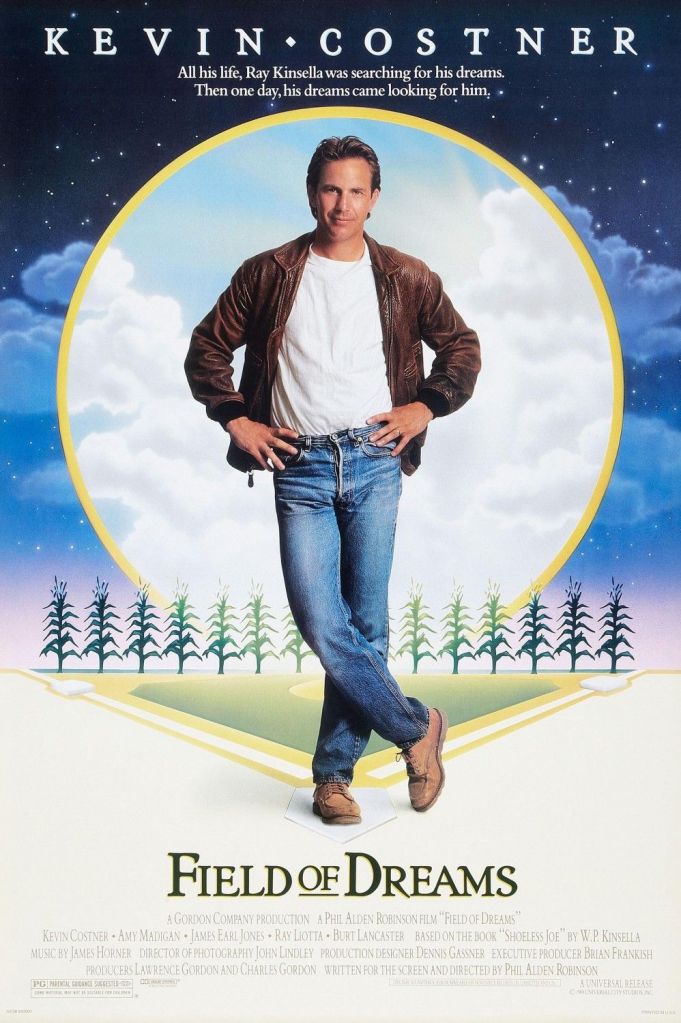
Once upon a time, baseball was king in the United States. Basketball was in its infancy, football was just becoming professional, and ice hockey was strictly a winter sport with its roots in Canada. Boxing and horse racing were big events but on certain days. Nothing had the country’s attention away from their troubles than baseball in the major cities, even if there were not any professional teams there. It seems strange to fathom what the uniforms were like, what the crowds wore to the games, the strange dimensions of the whole field, and that every game until 1935 was in the daytime. Major baseball fans today still romanticize the classical period of the time and it plays the heart of a farmer who is distant from his past.
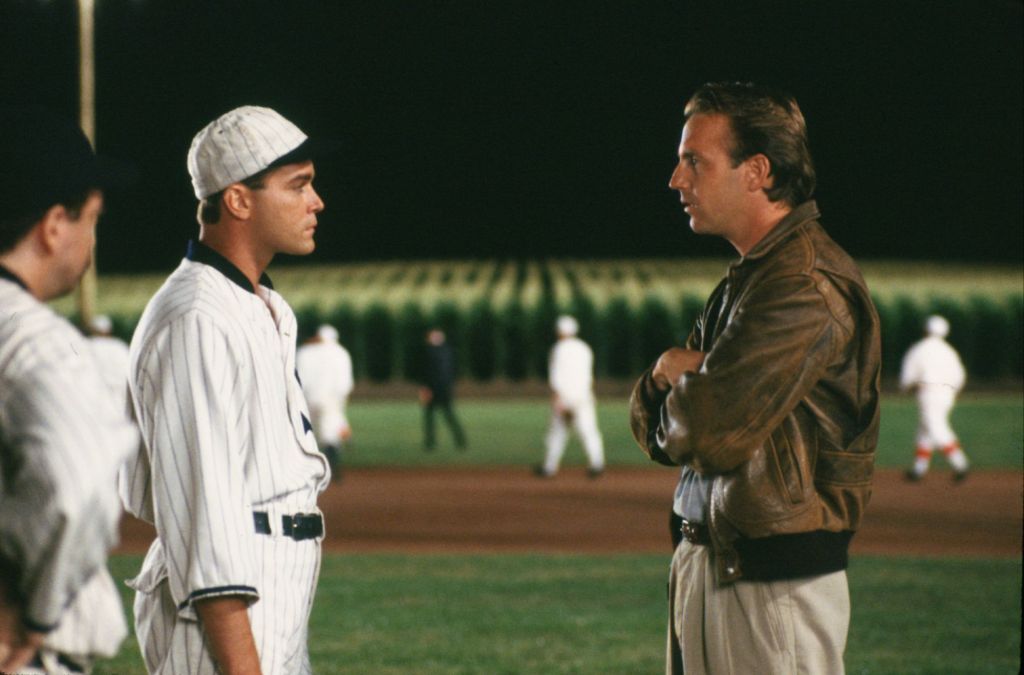
Kevin Costner may be prominent for Westerns (such as his struggling four-part Horizon saga), but he is formidable as the farmer who gets told, “If you build it, he will come.” Living in the middle of a corn field in Iowa, Costner’s Ray Kinsella visions a baseball field one day and decides to plow his field to make an actual baseball diamond with the support of his wife (Amy Madigan), but to the puzzlement of his neighbors and brother-in-law (Timothy Busfield). Then, one night, a man stands in the middle of his field: “Shoeless” Joe Jackson (Ray Liotta), a member of the infamous Black Sox of 1919, who died banned for life for his role in throwing the World Series that year. Famously, Jackson asks, “Is this heaven?” Ray, in shock still, admits, “No, this is Iowa.”
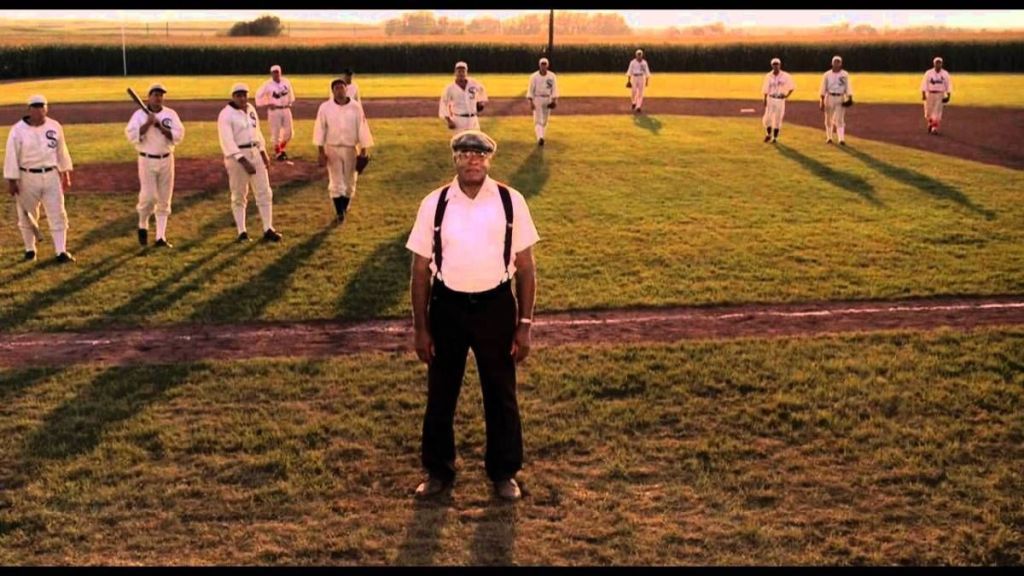
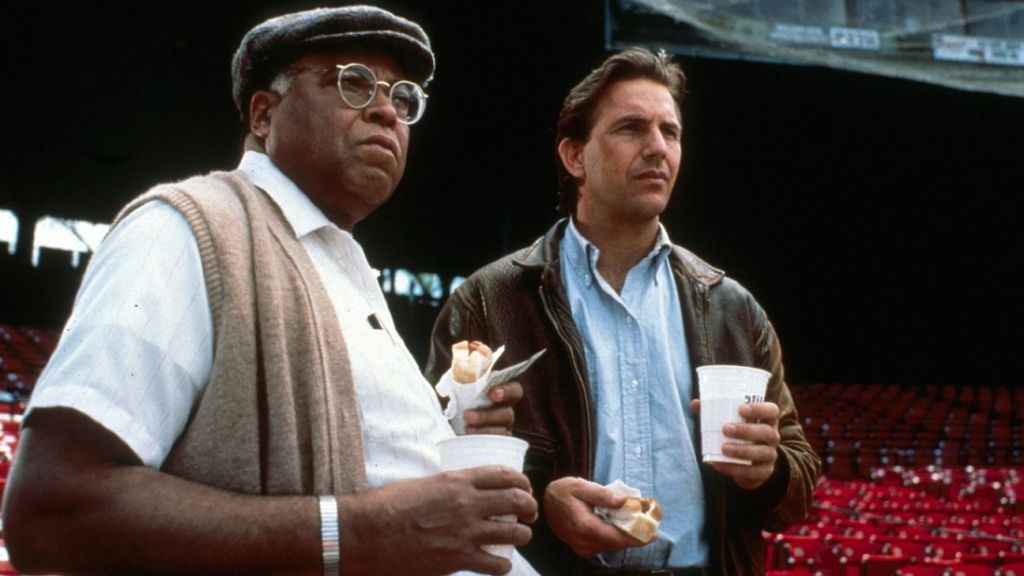
Terrance Mann (the late James Earl Jones), a reclusive author who once dreamed of being a professional baseball player, is thought of by Kinsella as someone who is the subject of the voice’s suggestion that he will come. So, Kinsella drives to Boston and forces the reluctant author to attend a Red Sox game. There, a second sentence, “Go the distance,” is heard, and the career stats of Archie “Moonlight” Graham appear, changing the trip to find him – if he is alive – and take Mann back to Iowa. Along the way, an unusual hitchhiker joins them and connects the elements together in this tale of baseball symbolism.
While Liotta added another memorable role to his wonderful career, just one year before the release of GoodFellas, and Burt Lancaster in one of his last performances before his death, James Earl Jones gives out the core to the film’s meaning. It takes someone with such a distinguished voice to spell it out and does it flawlessly when he tells Ray what his baseball field means. With his booming, baritone voice, Mann talks of how this field symbolizes how the sport has remained constant despite changing trends in the world and part of the past when things were much more innocent. It is a speech that is part of a long career of defining roles for Jones, from Darth Vader to Mufasa to Jack Johnson, a voice as worthy as the mysterious whisperer from above talking to Ray. (Note: the actor of that voice is unconfirmed and is better off as a mystery as to who it really is.)
It seems like something way out of left field (no pun intended) for this to be a story, but writer/director Phil Alden Robinson is able to test our suspension of disbelief and asks us to take a leap of faith in what he is making at. Field of Dreams is not just a baseball film like Costner’s other baseball vehicle, For The Love Of The Game. There is so much heart and love that touches sentimentality, especially when it comes to our fathers. Robinson timely touches on those moments to get the emotions out of people who really adore this game. Certainly, it is not a film for those who don’t understand sporting metaphors, but it is beyond sports, and the movie’s third act tugs the hardest strings in making you believe in the living spirits of what connects those family bonds still.
Rating: 4.5/5
Follow me on Twitter: @brian_cine (Cine-A-Man)

 From the Fourth Row!
Leave a comment