
By Jacob Cameron
The Straight Story was released in 1999 and serves as a true outlier in the career of David Lynch. The world of film recently lost a true creative giant in Lynch. The filmography of Lynch is among the more unique in the history of the medium. Lynch only directed 10 feature-length films; each film more bizarre than the last. In the case of The Straight Story, this is a bizarre film because of its normalcy.
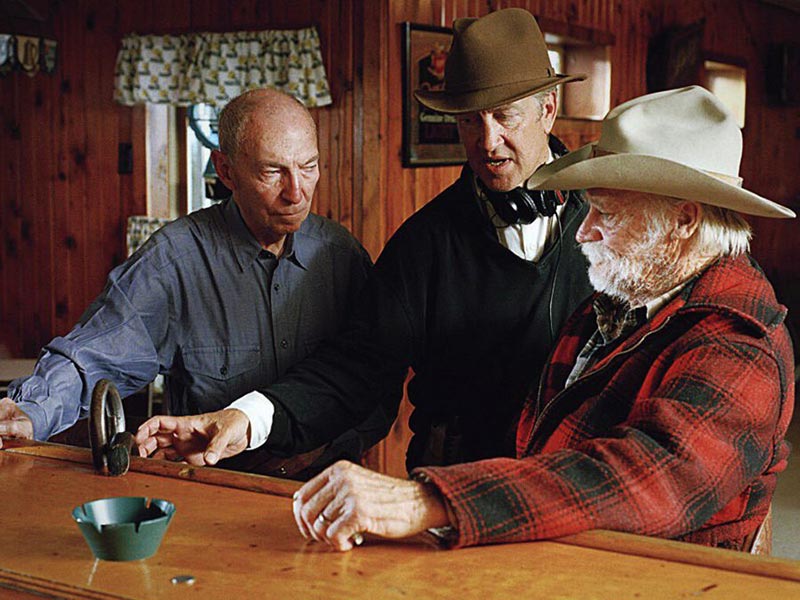
The film is based on the true story of Alvin Straight; who, in 1994, rode 300 miles on a lawn mower across the American Midwest to see his ailing brother. Straight is portrayed in the film by Richard Farnsworth. After hearing his estranged brother has suffered a stroke, Straight drives his John Deere lawn mower from Iowa to Wisconsin to say his goodbyes. This is a lot easier said than done as Straight’s legs and eyes are impaired. The lawn mower is used due to Straight not being able to acquire a driver’s license because of said eyesight.

David Lynch was a surreal filmmaker by all descriptions. His first film, 1977’s Eraserhead, was just a taste of the madness he would bring to the silver screen. Lunch tested the limits of television with Twin Peaks, he nearly won an Oscar for The Elephant Man, and he made Dune film over 30 years before Denis Villeneuve. Lunch matched to the beat of his own drum. So The Straight Story, with its simple premise and straightforward story structure, sticks out like a sore thumb. But the film also has a quality that allows it to shine like a diamond.
Richard Farnsworth did a great job as Alvin Straight. Farnsworth was legitimately diagnosed with prostate cancer; which would spread to his bones while filming. The paralysis that would be a side effect of this disease mirrored that of Alvin Straight. In a way, art imitated life. The film also stars reliably great actors, such as Sissy Spacek and Jeffrey Dean Stanton, but this is Richard Farnsworth’s movie.
Alvin Straight’s journey sees a few detours along the way. Including a meeting on the side of the highway with a pregnant runaway, a World War II veteran who buys Alvin a drink, and a group of cyclists. Lynch would later call this film his most experimental. An incredible statement when considering the context of Lynch’s filmography. But Lynch made the film feel real and grounded.

The absolute best part of the film is the ending. In which Alvin finally makes it to his brother Lyle. The two have not spoken to each other for a decade. So in another movie, this would lead to a fight of some kind. But instead, Alvin and Lyle sit down together.
Lyle asks if Alvin rode that mower all the way just to see him and Alvin simply responds, “I did, Lyle.” In that short exchange, a decade of resentment washes away.
At the end of the day, David Lynch will probably be better remembered for his more bizarre works. But it would be a shame if we forgot his chance to tell a story straight from the heart.

5 Stars

 From the Fourth Row!
Leave a comment