
By Jacob Cameron
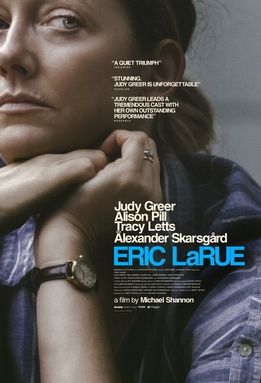
Eric LaRue is the directorial debut of Michael Shannon. Shannon is known for his many acting credits: including General Zod in Man of Steel and supporting roles in movies like Knives Out. This film is his first film on the other side of the camera. It is a film that attempts to comment on the effects of a tragedy. But the attempt is not as successful as it could have been.
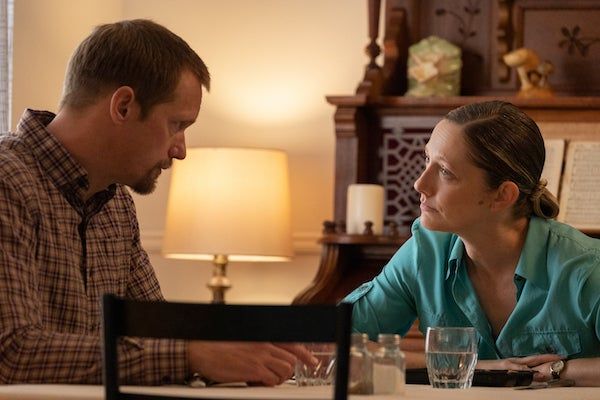
The film tells the story of a woman named Janice LaRue, played by Judy Greer, whose son Eric killed three students at his school. Understandably, she has been having an incredibly difficult time coping with this tragedy. Her husband Ron, played by Alexander Skarsgaard, has found solace in a local church prayer group. The pastor of the church is attempting to set up a meeting between Janice and the mothers of the victims. But Janice is beset by grief, overcome with anger, and has no outlet to express these feelings.
This is a difficult film to write a review for; not just because of the subject matter. There have been films that have dealt with the aftermath of a mass shooting; Lynne Ramsay’s We Need To Talk About Kevin as an example. While Eric LaRue seems to have good intentions, it doesn’t follow through on those intentions. The main problem with the film is that it feels very clinical. With many scenes of banal dialogue exchanges followed by random tonal shifts with zero warning.
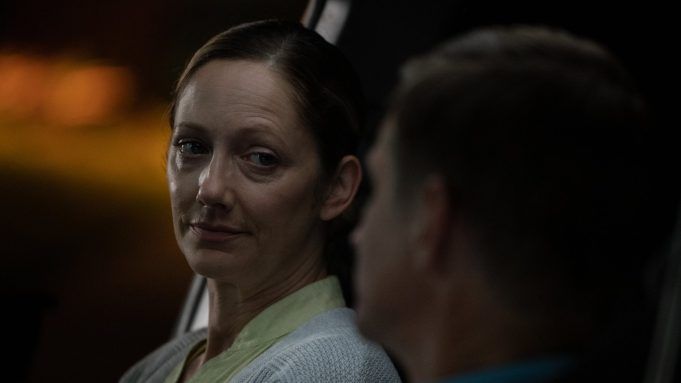
Judy Greer is the best part of this film by a considerable margin. Her performance is given as much space to breathe as this movie will allow when it comes to the straightforward nature of the film. Her character is very clearly struggling with the unspeakable tragedy that has befallen her family. Along with the fact that she wants to move on from said tragedy but is given no avenue to do so. When she tries to profess her true feelings, she is met with resistance from all sides.

Alexander Skarsgaard, who is normally a fine actor, is a one-note caricature. The character he plays is one who embraces religion to cope with the tragedy. He tries to convince Janice of healing benefits of these religious beliefs to no avail. Many of the dialogue scenes between Skarsgaard and Greer bleed together. After the third attempt at a “come to Jesus” meeting, it became tiresome. It seems that the film was trying to make a point on religion. However, at best, there is no nuance in this point.
When the film is not bogged down in dialogue, heavy scenes that go nowhere, there are tonal shifts that will give you whiplash. There are awkward deliveries of lines. Skarsgaard’s character randomly asks one of the mothers of the victims if he can give her a neck massage. Skarsgaard has a vision while he is out to dinner, where Jesus drinks water with him. Along with other moments that just stand out for all the wrong reasons.
In conclusion, this is a film that made mistakes that could’ve easily been avoided. If it had a clear focus, both in story and in tone, it would’ve been a riveting drama. Instead it has one good performance mixed in with a lot of questionable decisions.
1.5 stars

 From the Fourth Row!
Leave a comment