
By Jacob Cameron
I am grateful to have received the opportunity to watch and write reviews for the work of Akira Kurosawa. Kurosawa is a director that I have little experience with before starting this project. I have watched one of his movies previously, 1980’s Kagemusha. Kurosawa has a sterling reputation amongst film fans, critics, and filmmakers. So, for the next few weeks, I will be watching and reviewing some of Kurosawa’s most famous films. Beginning with 1949’s Stray Dog.
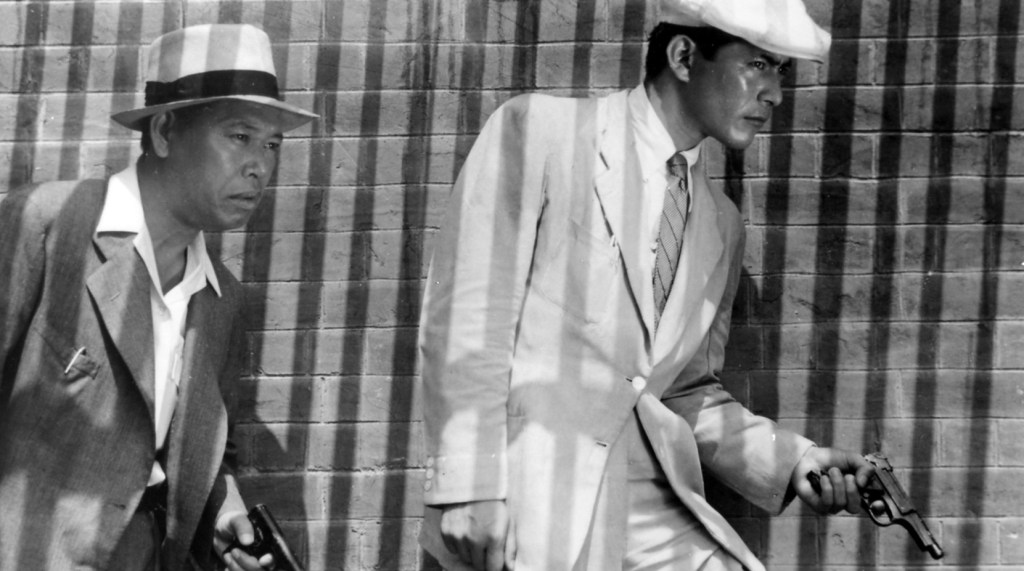
Stray Dog tells the story of Murakami, played by Toshiro Mifune, who is a rookie police officer working in post-WWII Tokyo. While riding in a crowded trolley, his gun is stolen by a pickpocket. Out of remorse and shame, Murakami intends to resign from his position. His superior officer tells him to look for the gun and get it back. The film sees Murakami carry out the investigation with the help of a veteran detective named Sato, played by Takashi Shimura.
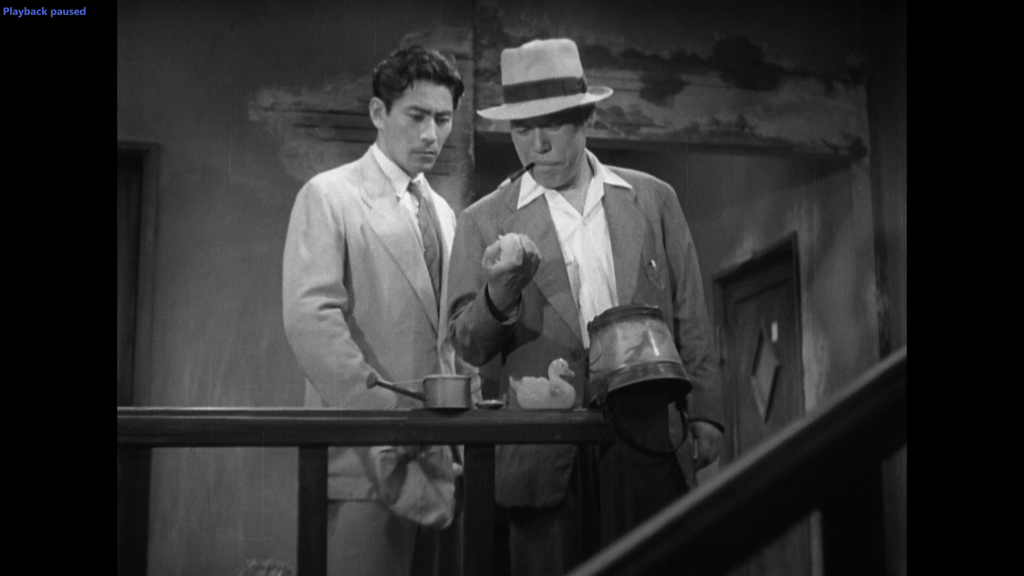
Toshiro Mifune and Takashi Shimura are regulars of Kurosawa’s films. Of Kurosawa’s 30 films, Mifune would appear in 16, and Shimura would appear in 21. They both give very good performances and they have good chemistry with each other. Mifune’s turn as Murakami was especially good and was the most interesting character. Murakami is a homicide detective who earnestly gives his best effort at his job. But his inexperience costs him dearly on more than one occasion.
Shimura as Sato was very good as well. Sato gives Murakami an education over the course of this investigation. An education, in Sato’s view, of what the world looks like to him. Sato does help Murakami gather leads and help piece together the puzzle of an investigation. Such as tracking down a local gun dealer, going under the alias Honda, at a baseball game. Determining that Murakami’s gun was loaned to a man named Yusa, a war veteran with some dubious affiliations.

Stray Dog is also effective at capturing the mood of post-WWII Tokyo. The streets are teeming with crime and illicit dealings on the black market. All of which is situated in a sweltering city. A subtle factor I noticed was how Kurosawa was able to show how hot the city was. Every character is actively sweating and fanning themselves with giant fans. I’m trying in vain to stay cool during the dog days of summer.
My one minor nitpick is that the movie is a bit too long. It’s nothing to be bothersome, but there was a general awareness of how long the movie had lasted at a certain point. In the grand scheme of things, Stray Dog is a great watch and a poignant movie in some ways. The film is considered to be one of the first “buddy cop” films in certain circles, and I can see why that is the case. When it comes to Kurosawa, the films only get better, which is an incredibly exciting prospect.

4 ½ stars

 From the Fourth Row!
Leave a comment