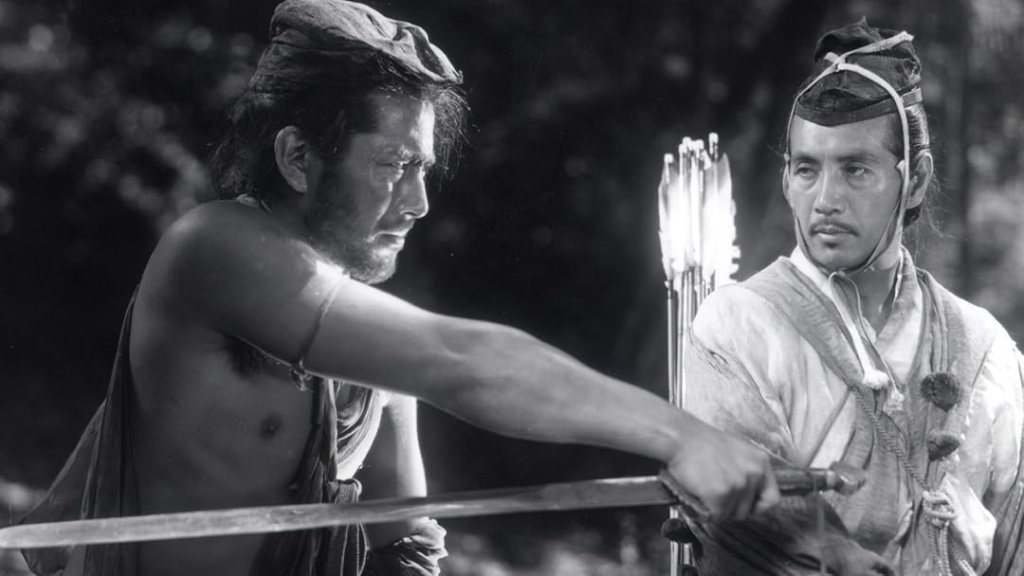

By Jacob Cameron
Rashomon was released in 1950, 75 years ago this year. It is revered and praised by many. It was the winner of Best Foreign Language Film at the 24th Academy Awards, and it established the Rashomon Effect, which is a plot device used in films today. This was my very first time watching this film. I was not disappointed.
Rashomon tells the story of a peculiar incident. A woodcutter, a priest, and a common man wait in the ruins of the Rashomon City Gate. The woodcutter, played by Takashi Shimura, recounts an incident where he found the body of a dead samurai in the woods. The woodcutter reports the body to the authorities. The movie hears the testimonies of the incident from three perspectives: a crazed thief, the widowed wife of the samurai, and the samurai himself as told through a medium.

This film is 88 minutes long, and it never relented for a second. This film is a truly riveting mystery because there is a prevailing sense of deceit layered throughout the film. Every person who tells their side of the story feels as if they’re trying to protect themselves from the scorn of the court. Each side is similar but also different. Unless you were there, there is a sense that you will never know.
All of the actors are giving their all in this film. Toshiro Mifune was the standout as the thief. Unlike in Stray Dog, where Mifune plays and earnest police detective, Mifune plays a wild man. A wild man who proudly boasts about having gotten one over on a samurai. Mifune plays an unstable braggart to great results.
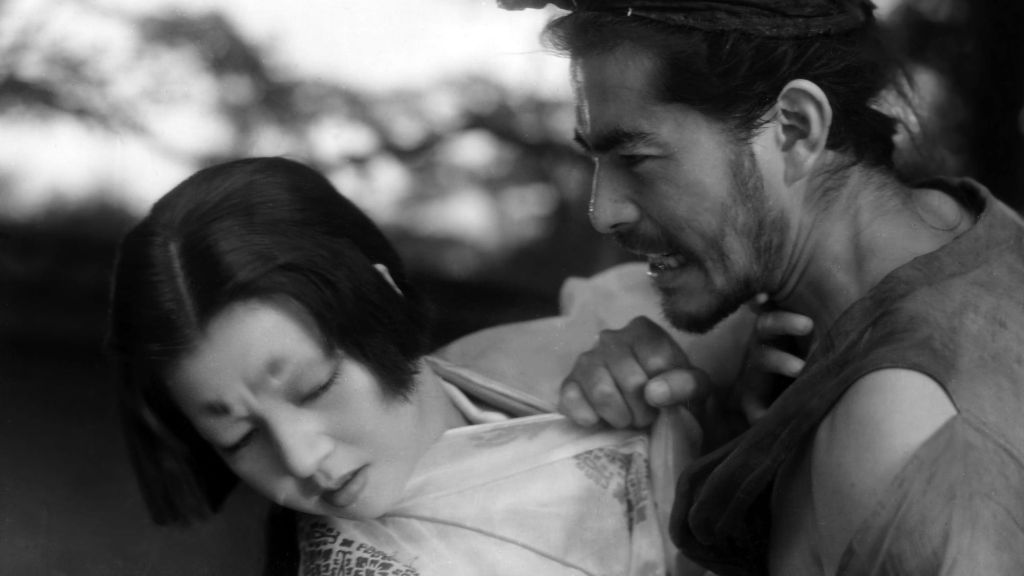
The widow, played by Masayuki Mori, is also brilliant. Playing to the nature of the film’s premise, her story is plausible but not quite clear. She is sympathetic; considering events that happen to her as described in her testimony. But the truth of what happened to her and her husband is not as simple as it seems. The truth of the titular event is both shocking and confounding.
As mentioned, this film spawned what is known as the Rashomon Effect. It is a term that is used to describe the description of an event as told by several perspectives, all of which are unreliable. It is a storytelling device that has been used in many films in the decades since Rashomon was released. A notable example of this effect is 2021’s The Last Duel. You see the perspectives of Jean De Carrouges, Jacques Le Gris, and De Carrouges’s wife Marguerite in regards to a horrifying incident. Rashomon and The Last Duel have much in common; including a duel at the end of each film.

In the end, Rashomon was absolutely worth the praise it has received throughout the years. It’s fast-paced, well acted, and it has mystery that will lock you in for all 88 minutes.
5 stars

 From the Fourth Row!
Leave a comment