
By Jacob Cameron
That is the subject of the 1952 film Ikiru. A stark departure from the harrowing mystery of Rashomon. Ikiru is harrowing; but in a much more human way. The film serves as a somber meditation on life and how all-to-brief it is. While also holding up a mirror to post-war Japan and bureaucracy as a whole.
Ikiru stars Takshi Shimura as Kanji Watanabe. Kanji has worked in the same Public Works job for three decades and has retirement in sight. Kanji shuffles through life; almost numb to the fact that he has a thankless job and an almost empty life. Compounding matters is the revelation that Kanji has stomach cancer and will die in less than a year. Faced with his mortality, Kanji chases pleasure in Tokyo’s nightclub scene. Until ultimately, pushing for the construction of a children’s playground.
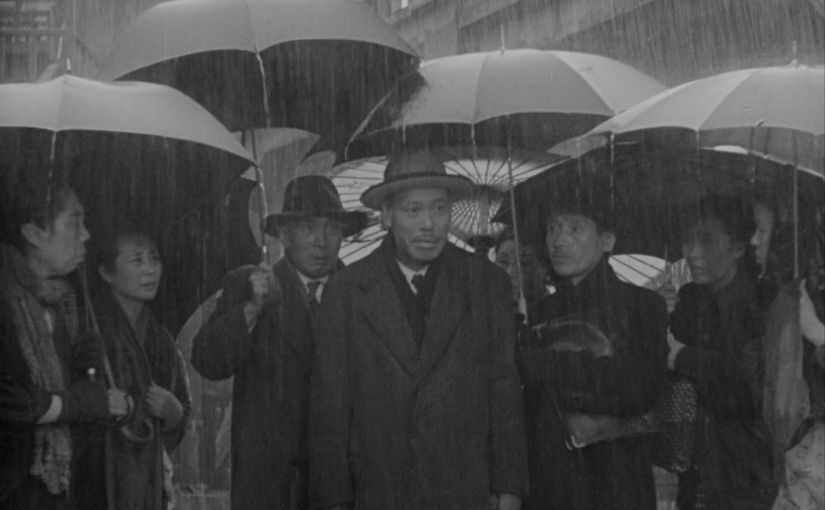
Takashi Shimura is the shining star of this film. Throughout the film, you learn just how deep Kanji’s apathy runs. His wife died due to circumstances never seen in the film and his son is more interested in his retirement pension. Kanji’s focus on his job affected this relationship and left him with next to nothing. It’s only the stomach cancer that finally forces him to face the sobering reality of his past, present, and future.
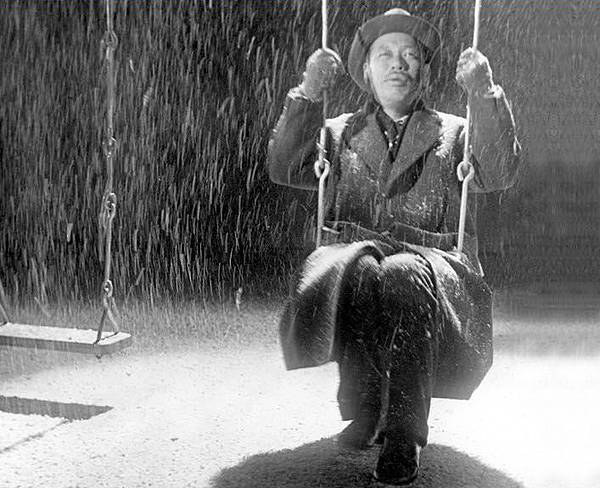
Shimura’s talent shines the most in a scene in which Kanji takes in the nightlife with an author he has met. He tries to enjoy the song and dance but to no avail. The most emotionally charged part of the film happens when Kanji requests that the song “Gondola no Uta” be played by the piano player. “Gondola no Uta” translates to “Life is Brief” and Kanji sings the song through a stoic and steady stream of tears. In a payoff to this scene, in a flashback, Kanji is seen singing the same song while sitting on a children’s swing while snow falls over his head.

Kurosawa did an excellent job balancing the emotional side with the commentary on bureaucracy. Early in the film, a group of mothers go to the public works office to apply for a permit for the construction of the titular playground. The group gets sent to every department in a runaround that almost becomes comical. Even Kanji is not innocent from this runaround. It is shown that he is a workaholic to a fault. In a flashback, Kanji’s son, Mitsuo, is going under the knife for an appendix removal. Kanji can’t stay for the procedure as he is needed back at work.
Similar to Rashomon, Ikiru has received universal praise, and its influence has been felt for decades. The film was remade in 2022; the film was called Living, and it starred Bill Nighy, and it netted him an Oscar nomination for Best Actor. At the end of the day, there is one Ikiru. It is a testament to Kurosawa that he was able to go from a wild mystery to a meditative drama. It is a great achievement, to say the least.

5 stars

 From the Fourth Row!
Leave a comment