
By Brian Susbielles
Horse racing, even in the old days, is one of those sports that is less about the actual jockeys and horses and more about the betting action. It is a subject that is often linked to the realm of crime, thanks to mysterious betting and illegal drug use; the horses are being given PEDs at some of these events. Think of Stanley Kubrick’s masterful noir The Killing, where a horse race is central to the whole scheme or the HBO TV series Luck. For director Luis Ortega, horse racing is secondary to the actual nature of the story, one that goes straight, but then turns left, right, and a full U-Turn to where we get tangled up with an ending that really isn’t.
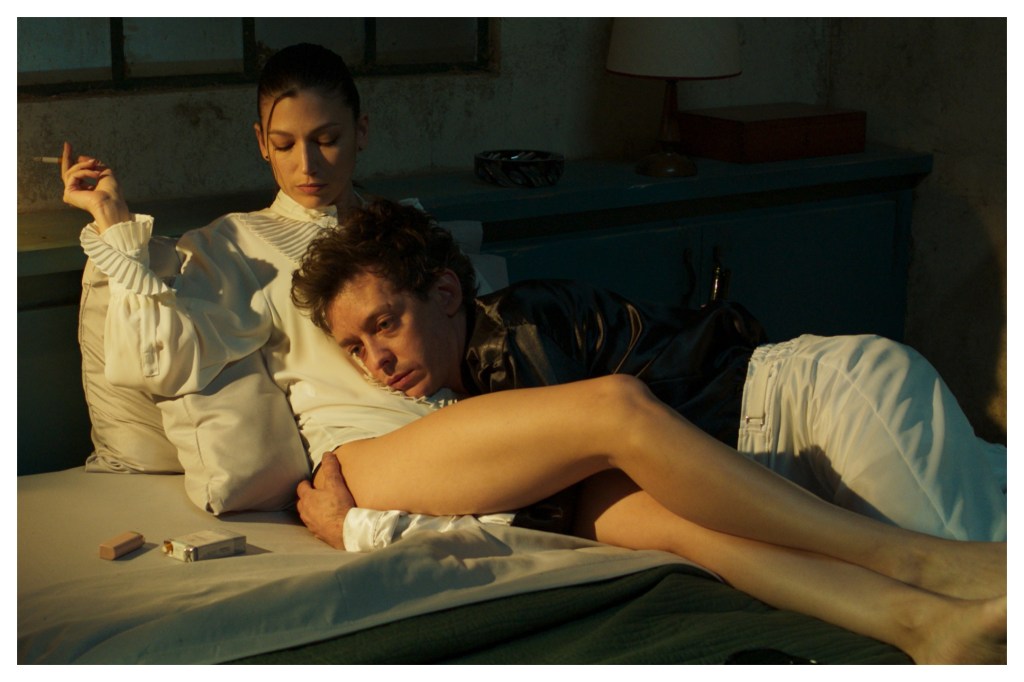
Remo Manfredini (Nahuel Pérez Biscayart, 120 BPM) is a distinguished jockey who has now fallen on hard times with his drug use. He lives under the power of mob-like businessman Sirena (Daniel Gimenez Cacho, Cronos), who tells Remo to win this next race with his expensive Japanese horse, or he will be killed. His pregnant girlfriend and fellow jockey, Abril (Ursula Corbero), tries to keep him away due to his inebriation, but Remo, unable to function sober, goes out riding under the influence. Remo takes the lead of the race early, only to lead the horse off the track and straight into a fence.

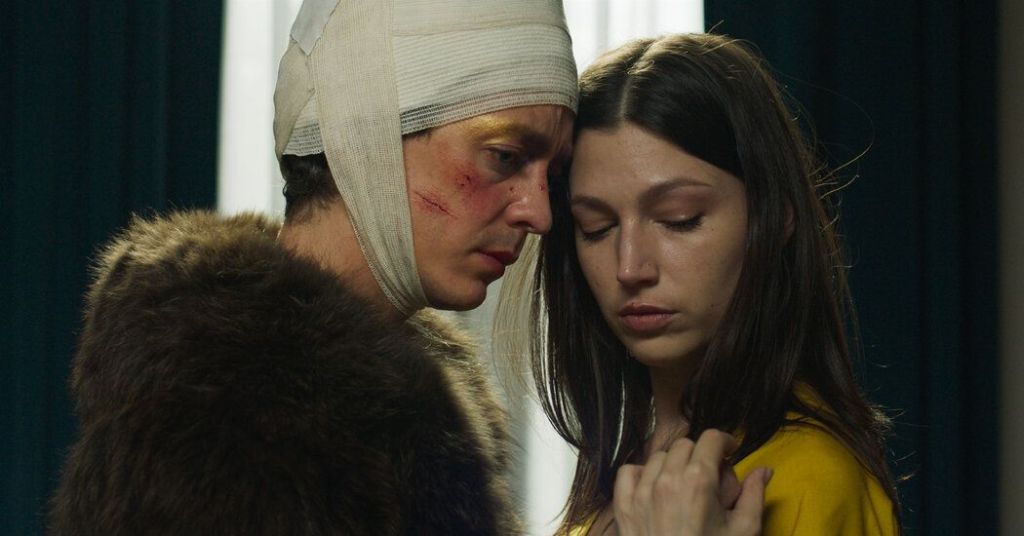
The horse is dead, Remo is in a hospital with a massive head injury, and now Sirena seeks to find his future dead man. However, Remo gets up and leaves the hospital; whether he’s conscious of time and space—and what he’s wearing in public—isn’t fully known. But it allows Remo to hide in plain sight and change his life, transitioning to a new identity without questions, switching from jockey uniform to a woman’s fur coat, and calling herself, Dolores. From here, this leads us to a completely different story that we’d think we would have gotten, moving from comic noir to multi-directional absurdity that just loses itself at times.
The shift is too jarring and makes the movie too unpredictable and directionless, but has some great visual work to capture the drastic change. Those dance sequences, one between Remo and Abril, and another in the women’s locker room where it felt like Cirque du Soleil, is an eye-opener to put it all on one shot. While Ortega does mix in his Lynch and Bunuel-like scenes, the second half just drags on and begins to lose the plot. Where it goes becomes an open interpretation for the viewer, and I spent an hour after watching it coming up with, I’d say, six different meanings of what all of it means. The movie is only 96 minutes long, so the movie doesn’t get pretentious and over-stuffed as other films have done. It becomes a bit too self-conscious, but I appreciated Ortega taking a big swing at this type of film, even if it misses at some points.

For Biscayart, who was just phenomenal in 120 BPM, this role was more of physical poses than speaking, and he is totally all in those characteristics from drunk jockey to a brand new identity and name. In fact, the first act as Remo, with his curly hair and drunken attitude, Biscayart isn’t recognizable until the latter act when his helmet-like head bandage is gone and Biscayart’s natural hair gives the clean look we’d recognize him for and perfects fits that full transition by the end of the film. Corbero as Abril is a poignant character who is the rising jockey in the sport but has to decide whether motherhood now is plausible, but that subplot lacks any emotional depth and just falls flat in the movie. Even as Abril is looking for Remo/Dolores, the move from loving his missing boyfriend to a sudden affair with a fellow female jockey is almost without reason.
Kill The Jockey can be a frustrating watch due to the very open interpretation and lack of coherence is expressing the change in its story. Luis Ortega presents a montage of many parts of genres which hit or miss, depending on the context, and finishes like the scene towards the start, where Remo falls off the horse and faceplants into the dirt. It would sound like I didn’t like it, but the strength of Biscayart’s performance, as well as some memorable images that Bunuel would be proud of, does carry such enough over the line. Even with a lack of identity, Kill The Jockey explores enough to gain our attention about certain absurdities in love and self-reflection as drugs and head injuries cloud our judgments.
3 stars
Follow me on X: @brian_cine (Cine-A-Man)
Follow me on BlueSky: @briansusbielles.bsky.social

 From the Fourth Row!
Leave a comment