By Jacob Cameron
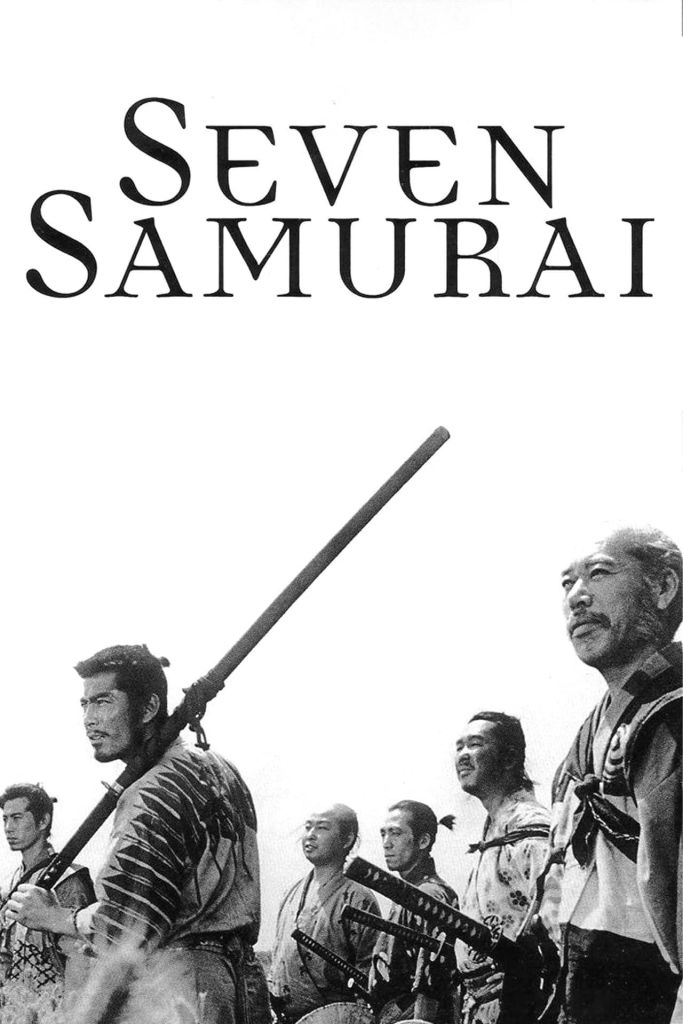
Seven Samurai is seen as a masterpiece. Ever since its release in 1954, it has been lauded and praised by fans, critics, filmmakers, and more. It has been influenced, referenced, and remade countless times. Knowing this, I was slightly intimidated as this was my first time watching the film. I am happy to report that this did live up to the expectations.
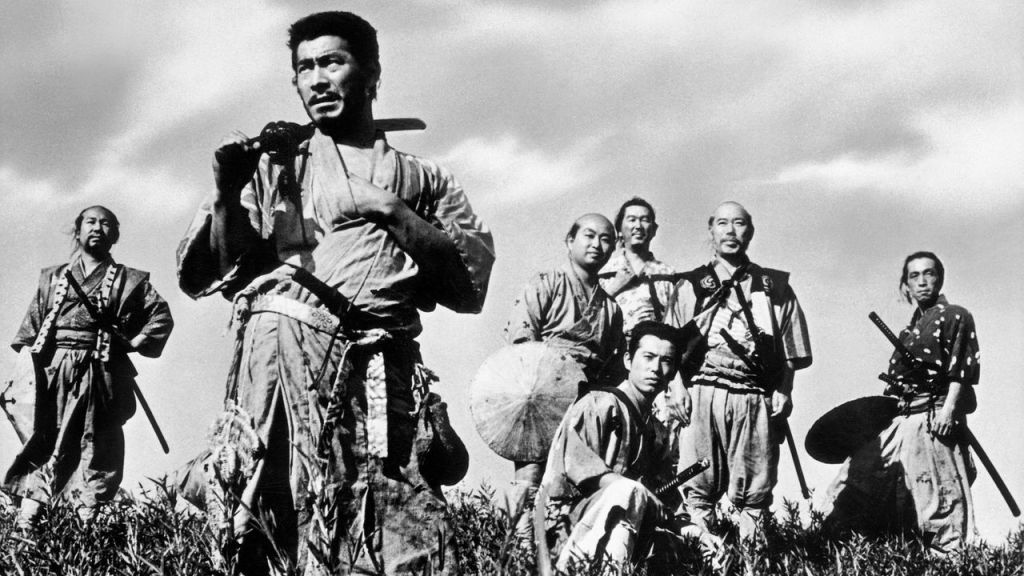
Seven Samurai tells the story of Kambei, played by Takashi Shimura, who answers the call of a village of farmers in peril. A group of marauding bandits have been carving up the countryside to their hearts’ content. Kambei reluctantly agrees to provide aid to the village and recruits six other warriors to help him. The seven do everything in their power to train and defend the village despite the overwhelming odds. Attempting to win in a must-lose situation.

This film was a tremendous gamble for all parties involved. For Toho Company Limited, it meant a huge financial risk, as the film was the most expensive film in Japanese film history at the time. For Kurosawa, it meant a huge creative leap forward in terms of writing, directing, and production. Considering that production on the film had to stop twice and it went over its schedule, this should have been a disaster. But in every respect, this film is an amazing achievement.
Takashi Shimura and Toshiro Mifune both return to the Kurosawa fold; predictably, they both deliver great performances. This is more of a Shimura film as he is the leader of the seven. But Mifune has more than a few standout moments. Mifune plays Kikuchiyo, a man posing as a samurai who basically begs to be let on the team. Early signs suggest that he is a boon to the samurai defense. However, in his own unique way, he proves his worth.

Every samurai has their role in fighting off the bandits. However, they are hopelessly outnumbered in most aspects. Having to defend farmers who have never had to fight such battles before. They have the scraps of a plan; having to resort to digging moats and other improvised tactics. The film does a great job of showing the evolution of not just the farmers but the samurai.
The film holds up well in the cinematography department as well. For 1954, it still looks like it would rival most films today. It also helps that Kurosawa insisted on shooting on location with sets built on location. Everything feels dirty, lived-in, and set for something other than battle. And it all comes together in a tremendous way.
In a way, this film is like the Rosetta Stone. It has spawned countless imitations and alterations. Six years after its release, director John Sturges would remake the film and set it in the Old West with The Magnificent Seven. 1998’s A Bug’s Life has often been compared to Seven Samurai. And those are just the direct inspirations. If you’ve ever enjoyed a team-up movie, a movie with a reluctant hero, or a movie where the common folk have to settle their differences to face a common enemy, you can thank Seven Samurai for getting there first.

Seven Samurai walked so many others could run.
5 stars

 From the Fourth Row!
Leave a comment