By Jacob Cameron
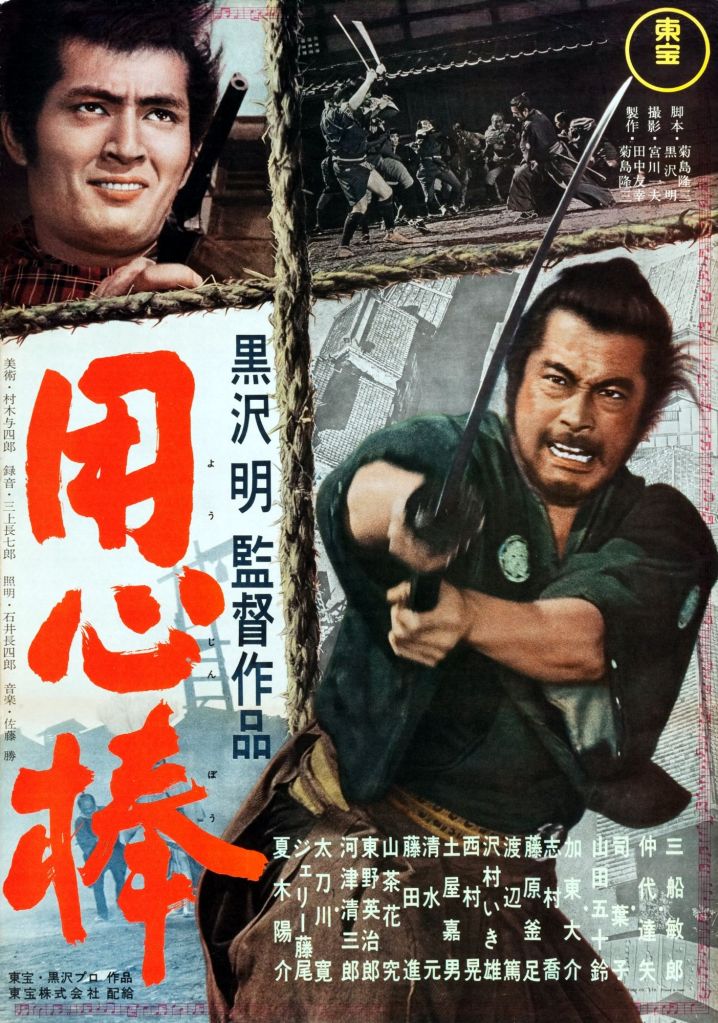
“I’ll get paid for killing, and this town is full of people who deserve to die.” This is a line from Sanjuro, the main character of 1961’s Yojimbo. If Seven Samurai and Hidden Fortress showed anything, it’s that Akira Kurosawa’s influence has been felt for decades. With directors taking direct influence for their own creation. Yojimbo, famously, inspired Sergio Leone to loosely remake the film and call it “A Fistful of Dollars.” Yojimbo has been so influential that the actual movie itself almost gets forgotten, which is a shame because it’s rather excellent.
In a shocking twist, the movie stars Toshiro Mifune.
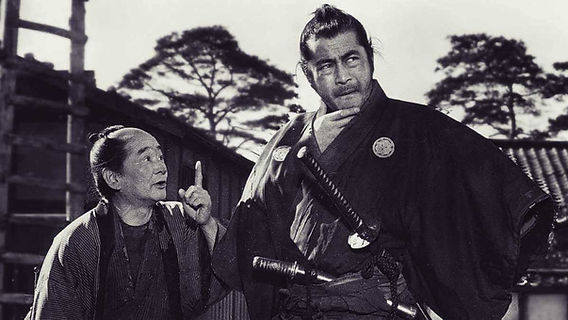
Mifune plays Sanjuro, a ronin, a samurai warrior with no master. Sanjuro stumbles into a town that is being torn to shreds by two feuding Yakuza clans. Both clans quickly seek Sanjuro’s services as a bodyguard. Sanjuro reads the room and plays both sides against each other. Sitting back and watching while both clans tear each other apart.

I hesitate to say that this is Mifune’s finest work, but it’s still a great performance. Sanjuro is immediately recognized as an outsider by both clans. But Sanjuro enters every situation as cool as a cucumber. One of the best scenes comes from when Sanjuro resigns from one of the clans, and the two almost come to blows. It’s only the presence of a government official that stops them. There is a sense that Sanjuro is no saint; but in this town, he is as close to a hero as once can be.
As mentioned, Sergio Leone took direct influence from this movie to create “A Fistful of Dollars.” It’s not hard to see the comparisons between the two films. The Man With No Name, or Joe in certain cases, is pretty much Sanjuro. From choice of attire to belief systems. Both characters even wear dark clothes: a brown poncho and a black kimono. This is far from a condemnation of Leone; “A Fistful of Dollars” is one of the greatest westerns of all time. But seeing both movies is almost like seeing the same movie but in different locations.

It’s worth noting that Toho sued Leone over Fistful, and it was settled out of court. Kurosawa received a portion of the profits. Also worth noting is that Sergio Corbucci in 1966 would direct “Django” which is seen as an adaptation of Yojimbo.
Both Yakuza clans are equally vile. With kidnappings and looting happening regularly. One clans’ silk warehouse gets torched, and the other clans’ tavern gets destroyed. Both clans froth at the mouth with hatred, and the hatred is palpable. It’s never explained why they hate each other other than the lucrative gambling trade in the area. The allure of money and power giving justification for bloodshed.
At the end of the day, this is Kurosawa firmly rooting himself in a realistic story. There are no prophecies of doom or gold hidden in wood. It’s about a lone warrior besting two feuding clans with his wit, his cunning, and his sword. It can be argued that this is Kurosawa’s grittiest film.

5 stars

 From the Fourth Row!
Leave a comment