
By Jacob Cameron
High and Low is a relevant movie nowadays. Spike Lee, director of such films as Do the Right Thing and He Got Game, has remade the film and called it Highest 2 Lowest. It is currently in a limited theatrical run and will stream on Apple TV+ September 5th. High and Low is a departure from the samurai films that Kurosawa had been doing for some time. That doesn’t stop the film from being as excellent as those samurai films.
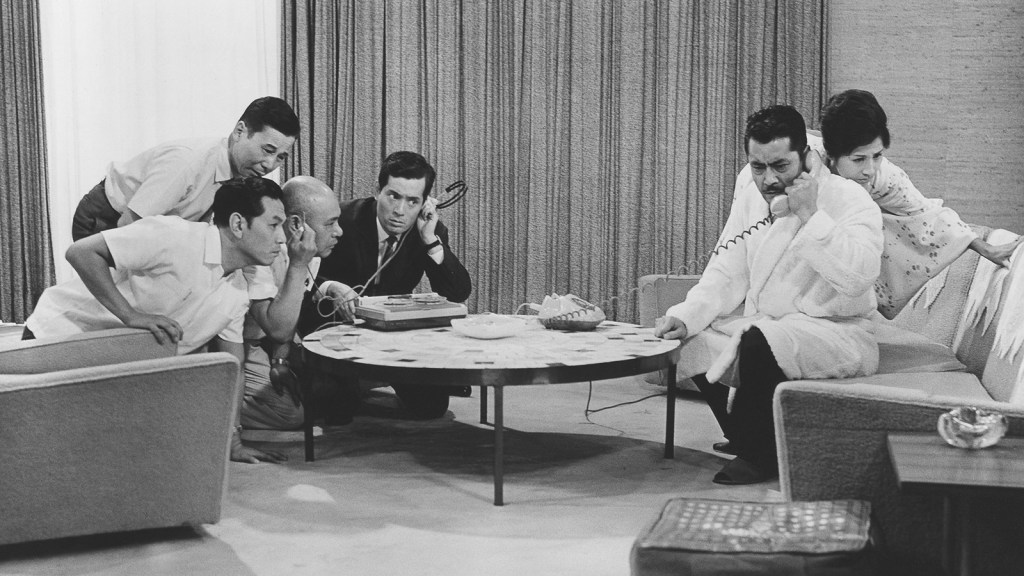
High and Low stars Takashi Mifune as Kingo Gondo. Gondo runs the National Shoes Company and is plotting a high-risk plan to buy out certain shareholders to take total control of his company. In the midst of this, the son of his chauffeur is kidnapped. The intended target of this kidnapping plot was Gondo’s own son. At much insistence of the chauffeur, Gondo arranges the payment of the ransom.

The beauty of this film lies in its layers. It essentially consists of two halves: the matter of the ransom and the police manhunt for the kidnapper. Both halves are compelling in their own way. The ransom negotiations feel like a pressure cooker and the manhunt feels like something out of Se7en. All while saying something about class and what one is willing to do to get just a little ahead in life.
Mifune is great in his subtly. He attempts to show that he is calm and collected, but privately, he is falling apart. He is high in that he is prosperous both in material things and in his family life. He is also low in that he is at risk of losing everything on the gamble of the company takeover he is planning. Using the funds to pay the ransom from the funds that were earmarked for the takeover.

Additionally, Ginjirō played by Tsutomu Yamazaki is great. Ginjirō is high in that he has a very powerful man at his mercy and is 30 million yen richer. However, he is low in that he conducts the kidnapping and deals in heroin. Ginjirō engineered the deaths of two accomplices via a heroin overdose. A secretly disturbing scene is when Ginjirō sees a woman going through heroin withdrawal.
After an ambitious scene on a train, the movie switches gears to the manhunt and the film never loses momentum. There is a compelling nature to the detectives slowly building evidence and following leads. There is no one thing that leads the police to Ginjirō. It takes a lot of patience, good luck, and creative use of print journalism to finally make an arrest. It’s a slow burn that doesn’t feel slow.

Ultimately, it speaks to Kurosawa’s ability that he could switch stories midstream and still keep things interesting. It’s a fantastic film and one that should not be missed.
5 stars

 From the Fourth Row!
Leave a comment