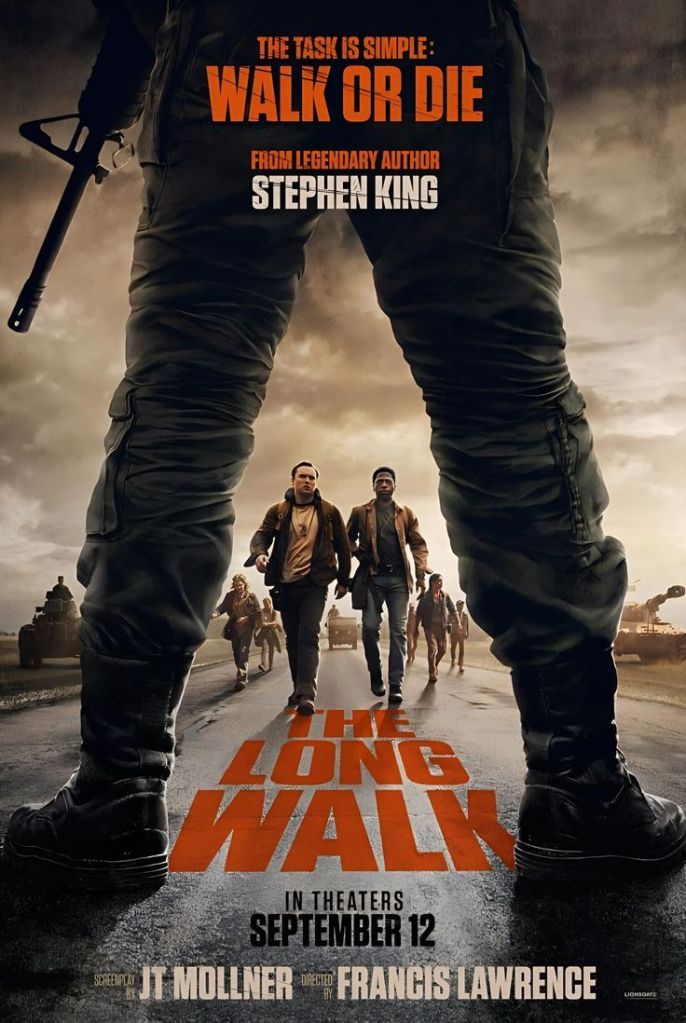
Stephen King has had many of his novels turned into big-budget motion pictures for decades now. Going all the way back to Carrie, his film adaptations have captured large audiences. As a kid, I remember the releases of The Shining, Cujo, and Christine in the early 1980s, making his work a hot property. His suspenseful nature and sometimes horrific things are perfect for the big screen, and the latest work from King, who said he didn’t think it would be turned into a film because of its violence, is The Long Walk. I can attest to the violent nature of the story, but what we have here is a very good film with great themes and ideas that will make people think long after the movie is over.
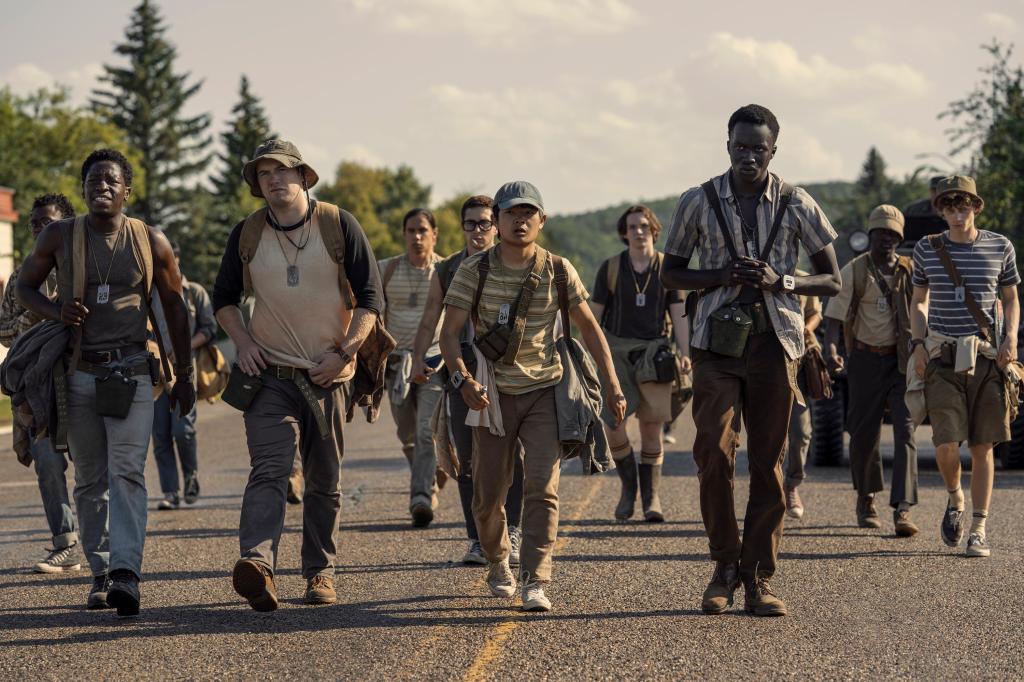
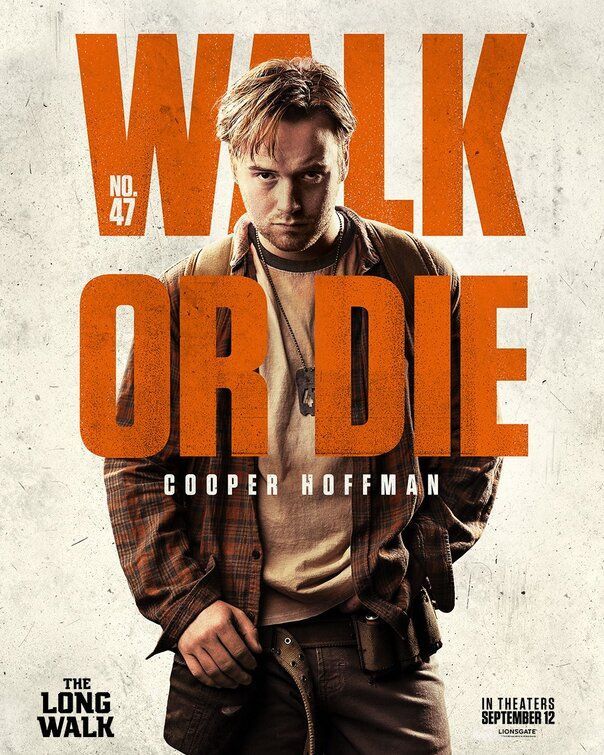
Ray Garraty (Cooper Hoffman) is one of fifty teens who have been picked to go on a grueling walk until there is only one person left standing. Set after a second American Civil War in the 20th century, and the government now being a totalitarian military regime, the winner gets a cash prize and a wish of their choice. Along the way, these young men develop relationships with each other, but also learn about biases and some prejudices. Some get bullied, and others get very sick. It’s an arduous journey that isn’t for the weak, as anyone who falls below 3 miles per hour or stops walking is immediately executed. Every one of these people learn a lot about themselves and their backstory as a whole. It’s just a matter of who has the strongest will and stamina to survive.
King has always infused thought-provoking elements into his work, and with this being an adaptation of one of his novellas (notably published under a pseudonym, Richard Bachman), that is a key aspect of this film as well. During the arduous walk on this mostly desolate road, the contestants start talking to one another and learn about each other’s pasts and motivations for going on this journey in the first place. Some have revenge as a motive, and others have a more altruistic reason for putting their lives on the line. Most had no choice because they were chosen via a lottery system. A lot of things come to light, though, as the walkers start to learn about themselves, which is the moral of the whole story.
One of the things I quite remember about Kings’ works is that they have subplots about society and the world that they take place in. A lot of the stories involved a seventies storyline. With the Vietnam War raging and protests all over the country as well as assassinations happening left and right, there was a lot going on for King to infuse into his books. This story has that as one of its themes throughout. In the shadow of some kind of big war, I’m saying it was the Vietnam War even though it could be a bad future. The story has an eerily similar tone to “The Hunger Games”. Another film directed by Francis Lawrence and produced by Lionsgate. Coincidence, I think not. I think Lawrence wanted to get a more realistic story about society and sacrifice, but show more violence on screen. This is as much his film as it is Kings in a way.
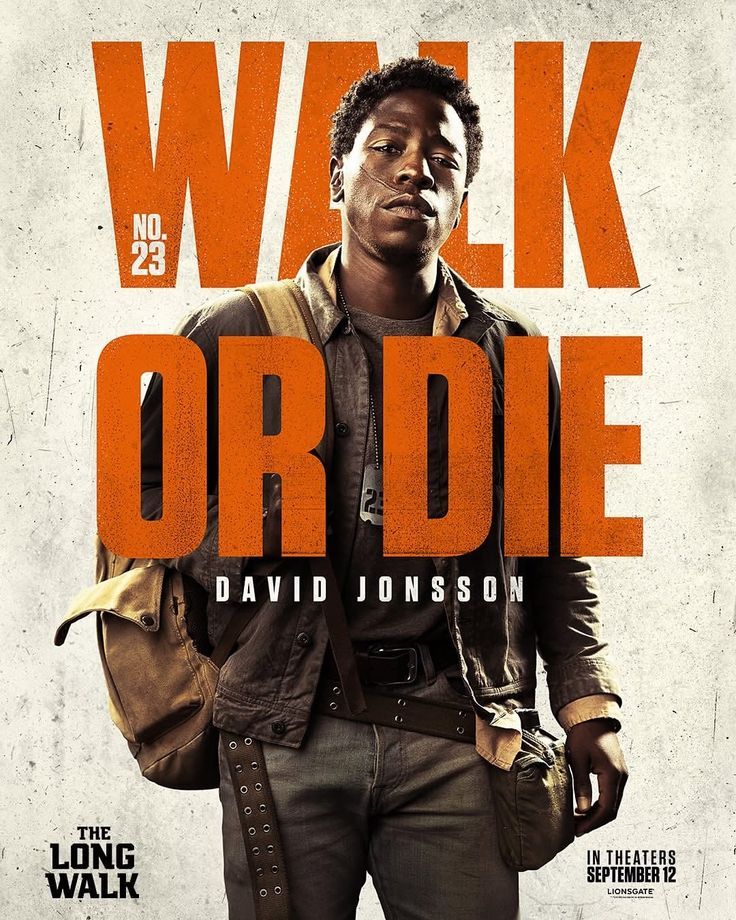
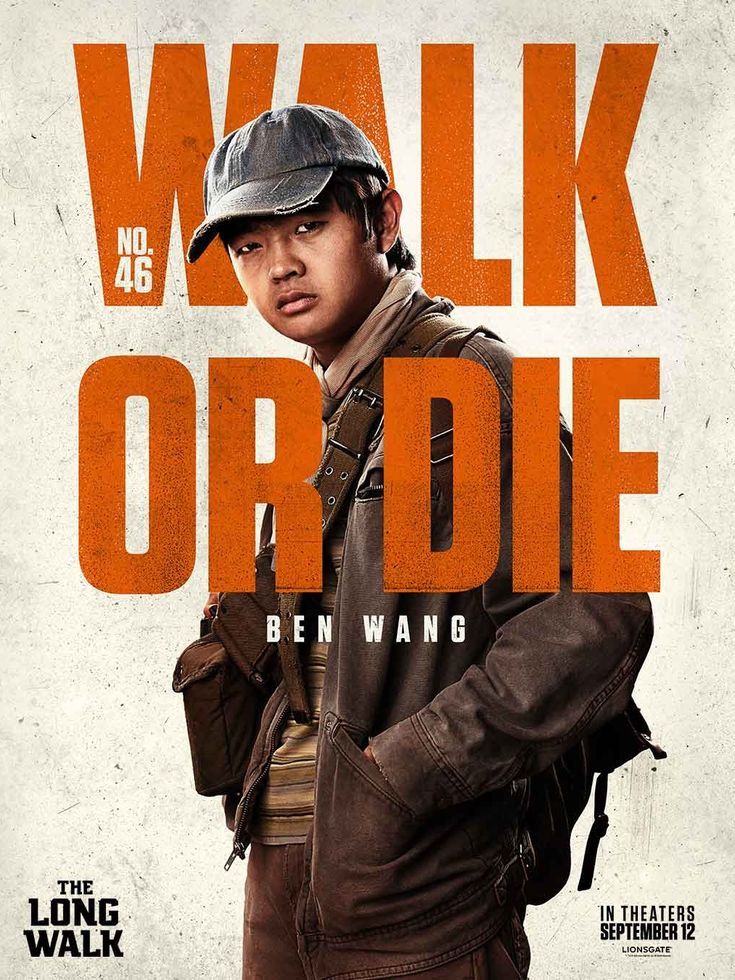
The cast of this film is filled with young talented actors on the rise in Hollywood. Besides Cooper, there are a handful of noticeable names in the cast. Among them are David Jonsson (Alien: Romulus, Rye Lane) as Pete McFries a close friend of the Cooper character and a support system for all the walkers, Ben Wang (Karate Kid:Legends, Sight) as Hank Olson a knowledgeable New Yorker who has some funny banter and memorable lines, Roman Griffin Davis (Jojo Rabbit) as Thomas “Curley” who is a little young for the walk and finds out firsthand and Charlie Plummer (Lean on Pete, Words on the Bathroom Wall) as Gary Barkovitch) a boy that antagonizes some others, but feels the pain of his mistakes as he goes along. Mark Hamill plays the Major, and he’s having a blast playing such a nasty and authoritative man. He has the lives of these boys in his hands, and it’s quite exhilarating for him in the film. This was a fantastic cast of up and coming actors who have already established themselves as terrific performers.
A key element of this story and why it was so hard to bring to the screen was the violence within it. There are obviously many sequences of boys being killed in very malicious ways. As one probably guessed, there were many different ways these boys had to die to get down to the final eventual winner. Illness, broken bones, going crazy and eventually getting tired are some of the reasons numerous of the walkers died. It was the sound of the gunshots that reverberated throughout the theater that affected me the most. The potential of these young men is gone for such a meaningless idea. The blood and violence were clearly a metaphor for the cost of war and the way the current world is moving towards. It’s not a pretty site regarding the future that the children of this country have to look forward to.
King, screenwriter JT Mollner, and Lawrence give viewers one specific subplot in the movie that uses flashbacks and a lot of dialogue from the two main characters during their journey. The film deals with morality as a case of revenge versus character. Is revenge worth losing one’s true character, or is wisdom the way to go instead? One is wiser than the other, which in turn means they are a better man, no matter their race, creed, or skin color. In today’s world, these are themes we as a society need to think about more. King obviously was ahead of his time with this story, but Lawrence and Lionsgate knew the importance of bringing this tale to the big screen. The Long Walk is one of the best films of the year in a year that is bereft of great films thus far.
4 ½ stars
Dan Skip Allen

 From the Fourth Row!
Leave a comment