
By Kyle Flynn
Writer’s Note: The film is based on true events, and a very notable event, and thus, I will be partially talking about the ending of the film, only mild spoilers. If you are not familiar and would like to avoid spoilers, you can skip to the final paragraph.
I am always skeptical of a film based on real events purporting any sort of gimmick or stylistic technique in the presentation of a story. Hearing that The Voice of Hind Rajab would use the actual audio recording of Hind Rajab’s phone call for help, my skepticism grew. I was hopeful that I would come out finding meaning in the work. For multiple reasons, but the primary three being the involvement of Hind Rajab’s family, the reception out of the Venice Film Festival, and Kaouther Ben Hania’s previous film, Four Daughters, being one of the few documentaries to impress me on the stylistic form in the past few years.

I could not find a single reason necessary to portray the voice of Hind Rajab within the movie. The first time the audio appears in the film, visually in large text, composed against a blue background, it announces that all the voices in the movie are real. I was a little shocked by the intentionality behind making it known to the viewer within the film (as opposed to the start of the film, or the credits) that the film is using the real voice of a young child experiencing an extremely traumatic experience during the last few hours of her life. It took me out of the film, and immediately soured me on what the film is hoping to achieve here.
The broader theme of security for Palestinians and affecting the mindset of viewers watching, who may be more apathetic to that messaging, which is basically ingrained into any film that is sympathetic to the struggles we see in Palestine, does resonate. At the same time, the two prevalent themes of the film are the idea of what children like Hind Rajab in Gaza experience regularly, and the need for a faster way to provide safety/aid for Palestinians in peril. The first of the two themes does not do anything for me in how Ben Hania portrays the film. Since October 7th, the average viewer (or if you are like me) who is likely choosing to support a movie using the real audio of a child being murdered has likely seen more dead Palestinians than anyone should. I can’t really even imagine someone moderately informed on the conflict/war changing their opinion based on watching this film. With the second idea presented, I found myself sympathizing with the one character in the film who is insistent on waiting for the Green Light to send aid for help. There is no reason why a child in peril should wait so long to receive aid, and the film is effective by the end when it does reveal that all the waiting was pointless, as the mission is never successful, even when the audience is holding onto the hope of it.

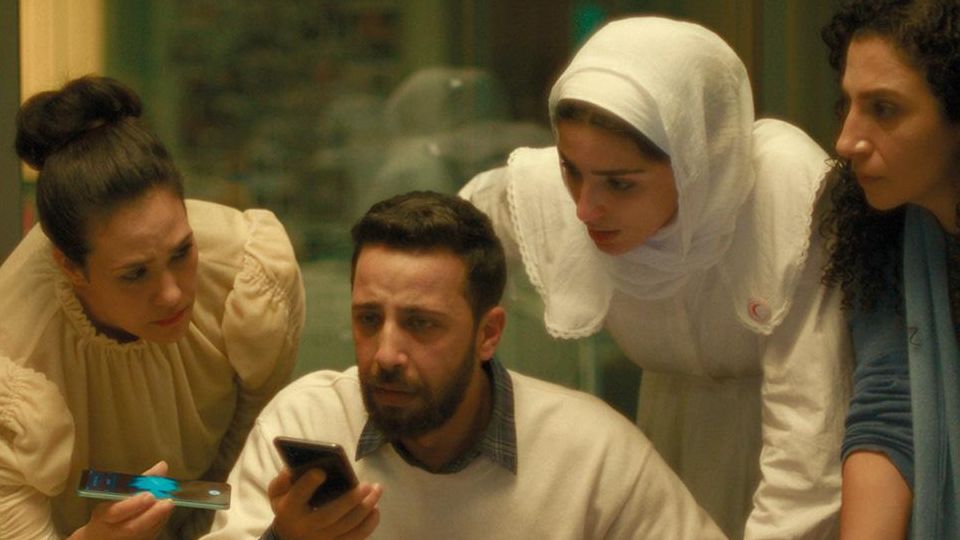
The strong performances and mostly one-location writing style do add an extra layer to the overall story. However, by the film’s end, I can’t help feeling skeptical of the film’s intent and methods of getting there, nor can I say it managed to fully engage me within the narrative when it is characters running around in circles of how to get this green light to save Hind Rajab. At best, it does serve as an important reminder of what Palestinian children are going through, and I believe the film will be evergreen in the sense that twenty years from now, we can look back and remember what those like Hind Rajab went through.
2.5/5 stars

 From the Fourth Row!
Leave a comment