
By Kyle Flynn
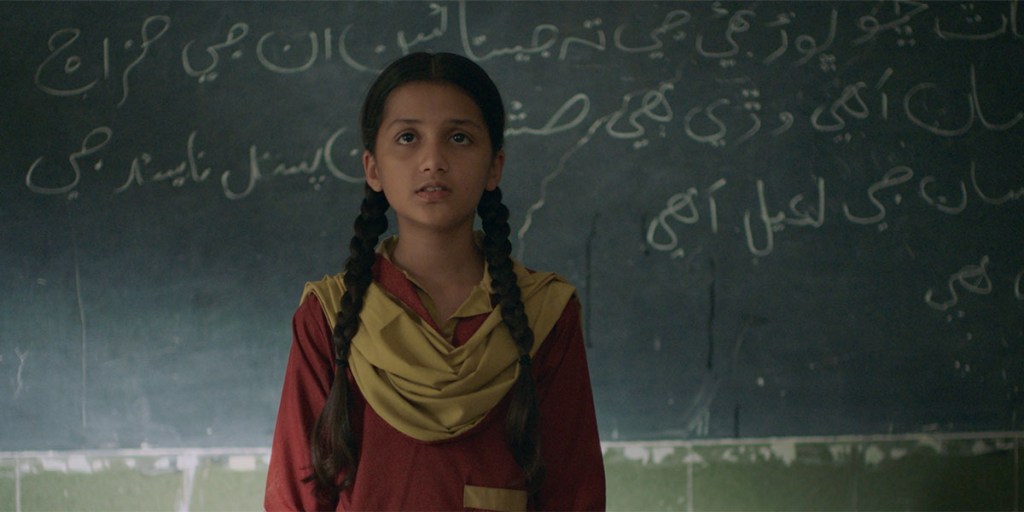
One of the more intriguing selections in this year’s Discovery section at TIFF was Seemab Gul’s Ghost School, a film that gently blends coming-of-age drama with elements of mystery. The story follows Rabia, a young girl who discovers that her school has abruptly closed. Soon after, she learns of rumors spreading through the village: whispers that Jinn, also known as “Ghosts,” have taken over the grounds. The premise could have been rather generic. Instead, she uses the conceit of the haunted school to explore themes of fear, education, and female agency in a community where questions are not always encouraged. I felt drawn into the world almost immediately, and the first act sets the tone beautifully, pulling viewers into Rabia’s experience with a sense of childlike curiosity and mounting unease.
The performances are, for the most part, compelling, though occasionally uneven. Sometimes, it feels like some of the supporting cast is underselling key moments. A scene involving the Nazualiya character around the film’s midpoint comes to mind — it felt emotionally flat when the stakes should have been higher. That said, Nazualiya Arsalan, who plays Rabia, delivers a performance well beyond her years. She carries the film on her shoulders with a mix of naturalism and intensity, making her character’s choices believable and affecting. You get the sense that Arsalan has real range, and Ghost School could prove to be a stepping stone to a strong career if she continues to take challenging roles. Samina Seher, who plays Rabia’s mother, serves as an effective foil. Her quiet authority and moments of protectiveness bring out the tension between curiosity and caution that lies at the heart of the film’s themes.
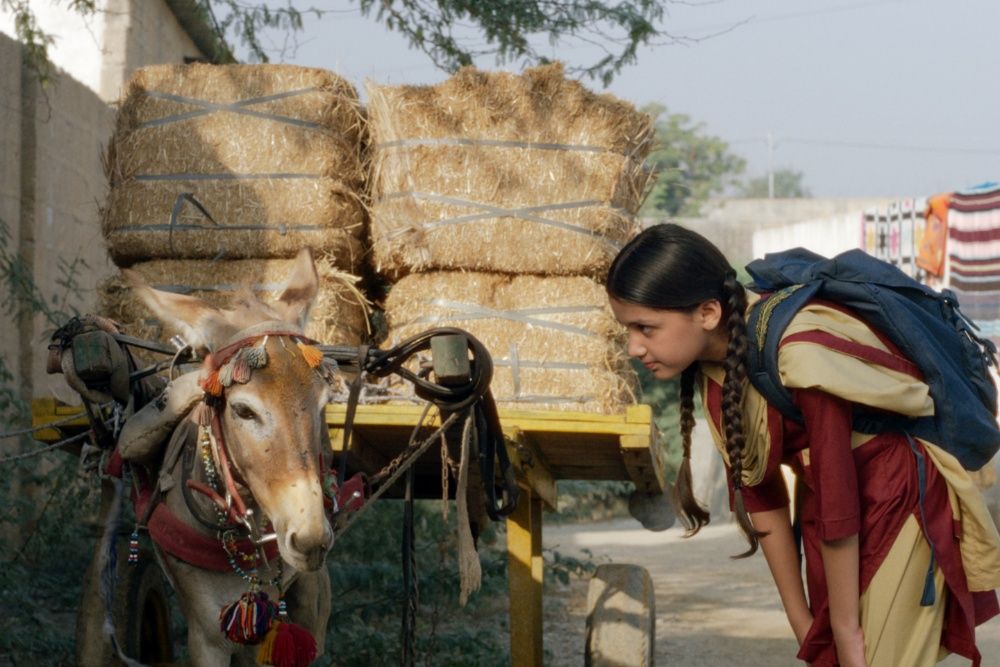
Rabia’s journey is ultimately what gives the film its emotional core. Her decision to investigate the rumors speaks to a universal aspect of growing up, the refusal to accept the stories told by others. Her persistence becomes a way to reclaim agency in a world trying to scare her into submission. The character’s arc is handled with care, and while I admired how the narrative built toward its conclusion, I found the ending a little too tidy. Gul provides more answers than I felt were necessary, resolving mysteries that might have been more powerful if left partially unexplained.
Still, Ghost School contains moments of genuine quiet beauty. The film is at its strongest when it slows down, allowing Rabia to sit with her thoughts or contemplate her surroundings. Seemab Gul’s directing shines most in these still, contemplative scenes, allowing the audience to consider the same questions haunting Rabia.
In the end, Ghost School may not be perfect, but it is an admirable and thoughtful work from Seemab Gul, offering a unique coming-of-age narrative with a folkloric edge. It pulls the viewer into Rabia’s inner world and sparks reflection on what it means to seek truth in the face of fear. While I would have preferred a more ambiguous ending, the film’s thematic ambition and its young lead’s impressive performance make it one of the more memorable discoveries of this year’s festival.

3.5/5 stars

 From the Fourth Row!
Leave a comment