
By Brian Susbielles
Paul Thomas Anderson, along with contemporaries Quentin Tarantino, Richard Linklater, and Kevin Smith, make up the VHS generation of directors emerging in the 1990s where they were self-taught on how to make movies and came out with visceral stories that had never been seen before. Thirty years later, all four of them are still going strong, with Anderson and Tarantino still devoted to old-fashioned filmmaking with celluloid and high-lensed camerwork to capture every inch of their stories. Anderson has been connected to period films with 2002’s Punch Drunk Love being the recent contemporary film by him, but we finally have an epic one in modern times, One Battle After Another, and it’s a high-octane journey, unusual for a PTA film.
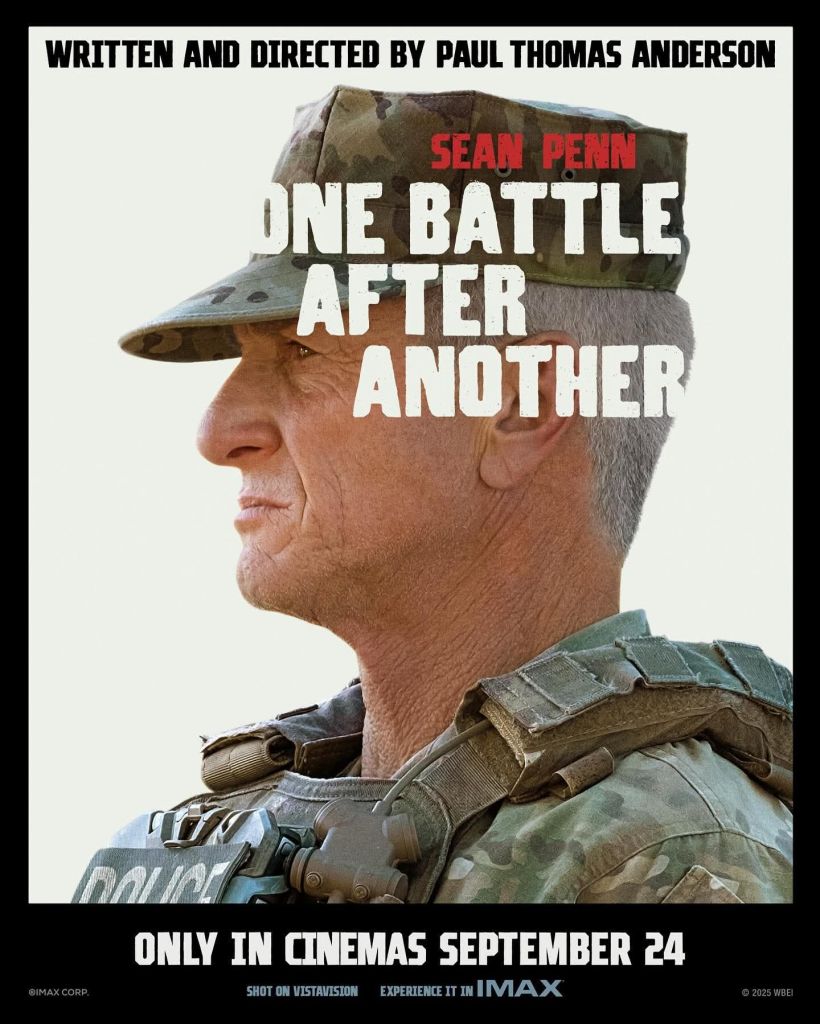
The film begins in the late 2000s with a far-left revolutionary group, the French 75, breaking into an immigration detention center and freeing all those who have been detained. They are led by Bob Ferguson (Leonardo DiCaprio), an alias he only takes on later, and his girlfriend, Perfidia Beverly Hills (Teyana Taylor). It is in this first sequence where they encounter Captain Steven Lockjaw (Sean Penn), who has the tenacity of a hardnosed leader, but is obviously a bit of a sexual deviant because he is attracted to Perfidia, a Black woman. The whole first act follows the French 75’s violent actions, none of which are given any sympathy, and the group is hunted down by Lockjaw. Some members are killed, others are arrested, and Bob goes into hiding with his infant daughter alone.
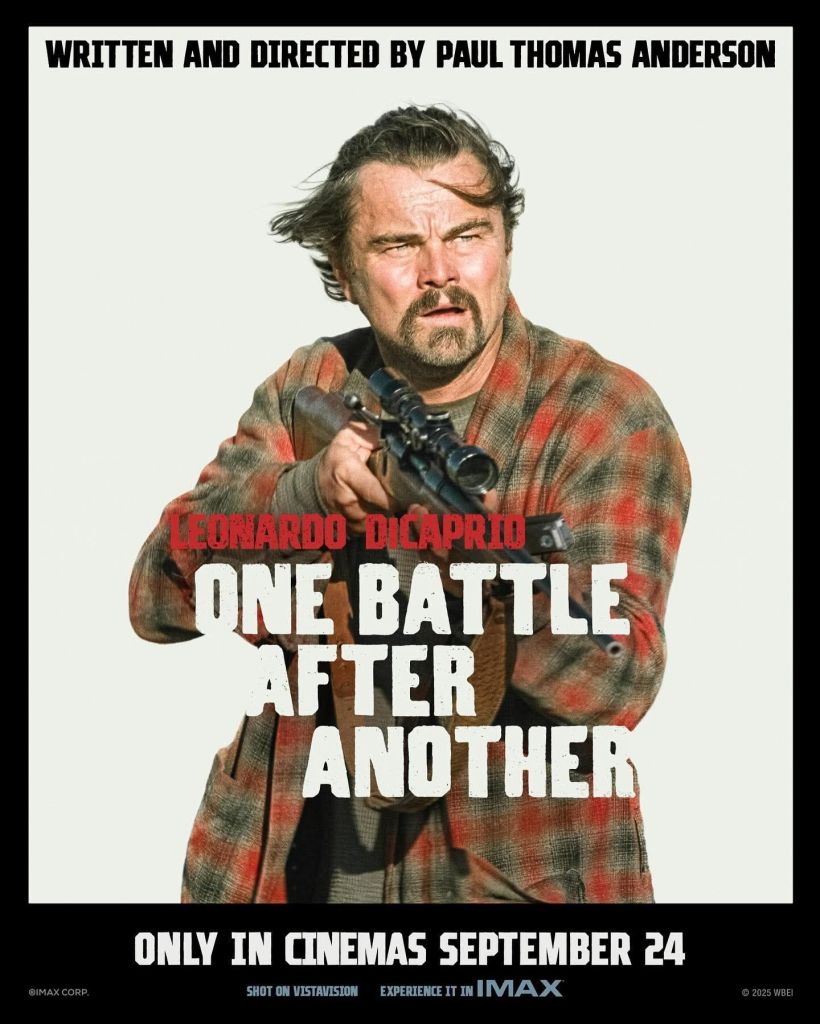
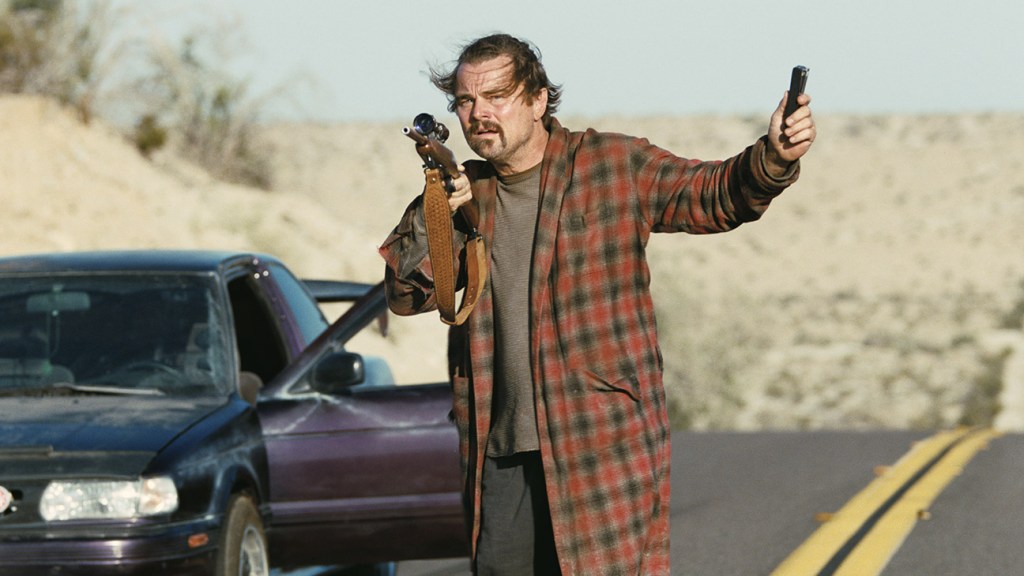
After the group is split up, we cut to 16 years later, where Ferguson lives in isolation with his daughter, Willa (Chase Infiniti). Ferguson is no longer that charismatic and convinced revolutionary, falling into alcohol and marijuana which bothers Willa, especially since they live off the grid without any cellphones. She has her diverse group of friends and does well in school, plus excels in karate. Bob, on the other hand, is always in a state of paranoia because he’s a wanted man and dresses like the hermit he has become, and his worst fears do come to light when Lockjaw suddenly reappears to find Bob and, most importantly, Willa.
His reason for seeking Willa is obvious when he meets members of a secret white supremacist society he wants to join and wants to be sure Lockjaw had never engaged in a sexual encounter with a Black woman. Because of his past hidden relationship with Perfidia, he wants to tie all loose ends, and it becomes obvious to the viewers why he is looking for Willa. Meanwhile, a former member of the French 75 (Regina Hall) intercepts Willa from a school dance to take her to a safe house where she says Bob will come to them – that is, if Bob remembers the codespeak to connect with the underground, but is so fried, he has no idea, “what the time,” is. Bob gets help from Willa’s karate teacher (Benicio del Toro), who helps hide migrants from raiding agents and gives Bob the fast forward towards saving his daughter.

“Inspired,” by the novel Vineland by Thomas Pynchon, the author whose novel, Inherent Vice, was adapted by PTA in 2014, PTA takes us on a Tarantino-esque ride unlike any other film he has made to date. Certainly, the personal in in this; he has four children with comedian Maya Ruldolph in their 20+ years as an interracial couple, but even with political connetations surrounding the whole story, its core is a straight-forward father-daughter journey towards reunification amidst social upheaval in their world. I highly doubt the politics is intentional because of how the movie actually mocks the two extremes. The French 75 breaks up due to acts of selfishness (so much for being a community fighting against the government), while Captain Lockjaw, a White supremacist, uses his resources for his own personal gains as a hypocrite.
The performances from all are amazing, spot on, and quite the theatrics with energy and tension, meshing the anxiety of Uncut Gems and the comic absurdity from The Wolf of Wall Street. DiCaprio’s Bob Ferguson is forced to go back into action in a dishelved state where he’s behind the times, and just is a dope on dope who can’t get his head straight under serious danger. Taylor evokes a badass mentality like Foxy Brown and uses her short screen time to the max with whoever she’s with. Even the scenes with Lockjaw, giving Penn his best performance since Milk, are a treat because that type of tension they put on punctures the seriousness of the setting and tells us it’s going to be funny and full of action. You can’t help but laugh at del Toro giving the same vibes as he was in Fear and Loathing in Las Vegas, but he’s not on LSD and is calm, complementing DiCaprio’s manic behavior throughout all this.
It all leads up to an incredible car chase sequence that Anderson, shooting in IMAX VistaVision (which is having a moment thanks to The Brutalist and the upcoming films Bugonia and Narnia: The Magician’s Nephew) for the first time, maximizes its potential while in the desert. Johnny Greenwood’s continuous score keeps things up tempo, and nothing drifts off-course in the insanity of a modern world with a country ripping itself apart. This is the biggest budget Anderson has ever been given, and for Warner Brothers to trust with a nine-figure amount for something, 95% original is a risk worth taking and successfully connects. One Battle After Another is an incredible piece of moviemaking, not that far to the levels as There Will Be Blood.
5 stars
Follow on X: @brian_cine (Cine-A-Man)

 From the Fourth Row!
Leave a comment