

It’s no surprise by now that my readers know I’m a big fan of Westerns. This genre has given quite a bit of joy over the years. That saying not all Westerns have been good. That’s the case with the latest western that I watched very recently, “Frontier Crucible”. It’s from director Travis Mills based on the novel by Harry Whittingham “Desert Stake-out”. Some directors try to implement a specific style into film based on the text of their specific unique sensibilities. That’s the case here. It’s a bit of too much style over substance. It’s a shame because I was looking forward to this film. There are a lot of Westerns coming out lately, though, so maybe the next one I see will be better.
A man and his wife are camping overnight in the Arizona Territory in 1872 when inexplicably some men come out of the darkness of night and shoot them sparing the woman (Mary Stickley) and leaving the man (Eli Brown) close to death. With no reason why. The next day, another group of men came along and found the man and his wife in dire need of assistance. They reluctantly stop and help them. The leader of the group is a quiet staunch man (Myles Clohessy) who makes his points known in a very serious manner. He doesn’t take much lip from any of the other men in the group.They aren’t happy about that, but they can’t do anything about it because he’s the leader. You can tell he’s a hard man who has been through something bad in his lifetime. He offers to help the wounded, near death, man because he has medical experience from the war. They still have to travel quite a distance to get to where they’re going so he can get the proper help he needs. So this motley crew of men and one woman embark on a journey together. A perilous and very dangerous one at that. Where many secrets and true motivations of the men on the journey come out in the open.
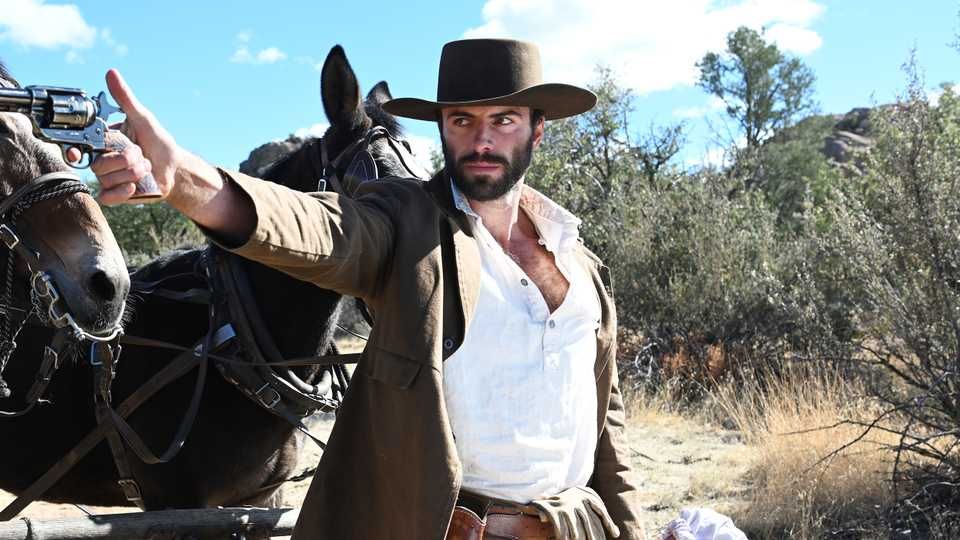
Besides the three characters I mentioned, there are some familiar faces in the cast. First in a cameo at the beginning is William H Macy. He is the man who sent the second group of men on their original mission before they ran into the injured man and his wife on their travels. One of the men in the group is a hardnosed gunman played by Thomas Jane, and he has his son with him as well (Ryan Masson). These two ulterior motives for joining up with this lot and as the movie progresses, their true motivations become clear. They are also traveling with another tall, grizzled gunman played by Armie Hammer. He, like the others, has something to hide and doesn’t get along with the Clohessy character at all. The cast is pretty good, but they just seem a bit miscast to me with a film of this kind. Maybe it had to do with the budget. Who knows? I wasn’t blown away by any of them in this movie.
There are a few technical things I noticed while watching this Western. The first is the music by Sean Rowe. He wrote and sang all eight songs, I counted, for the film. The style of music seemed a bit blue to me, and with the combination of this man’s low vocal range, these songs rang true to me. I felt like they fit perfectly within the context of the picture. More often than not, they popped up at the right moments with the film’s 125-minute runtime. I’m not usually much of a Blue’s kind of guy, but I enjoyed the music in this particular context. It fits the dark nature of this story quite a bit. This is where the right music for the right movie worked so very well.
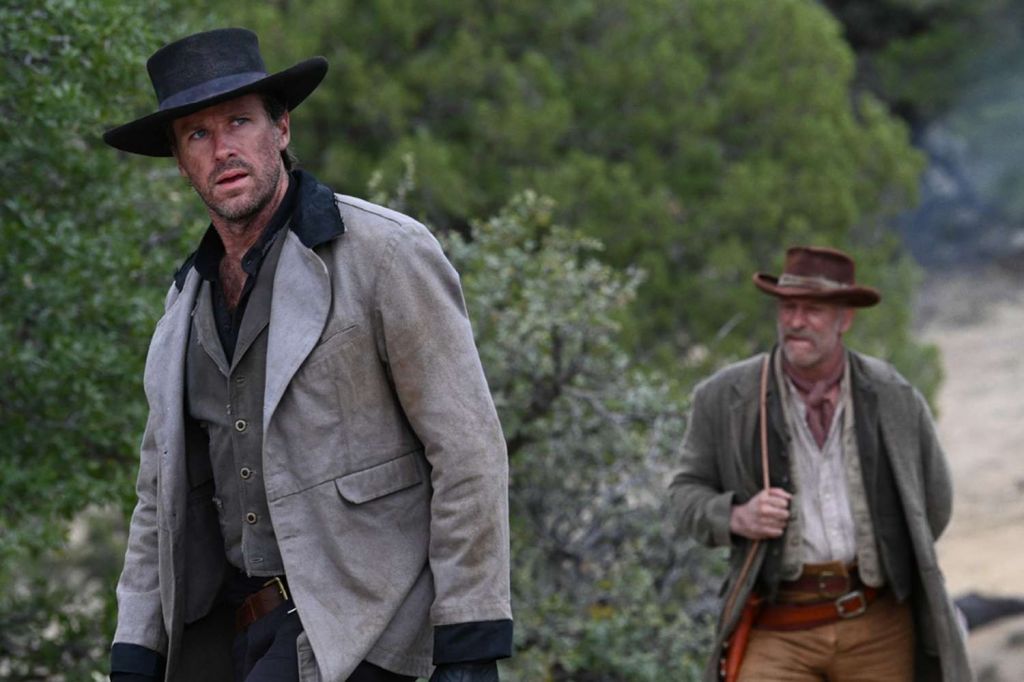
The cinematography is another element of the picture that I thought was exceptional. Maxime Alexandre did a magnificent job giving the movie a distinct look I haven’t quite seen before. I’ve seen a handful of the films done by him in the past. It seemed he used dusk as the main theme for what she wanted to do regarding the look of the film. I love it when a director has a specific look he or she is trying to achieve for a movie. As a western, the late afternoon and early evening gives a cinematographer very good light. The nighttime scenes didn’t look great, but I understand that considering the budget, there wasn’t much lightning. Most of the film looked gorgeous, though.
The story relies on the dialogue from the main character, which is a bit strange to me. There is a style of old English used as part of the dialogue in the script. I don’t know if it was intentional or adlibbed by the Clohessy character. Maybe this got him the role in the movie. Who knows? His unique style of speaking wasn’t that of a period piece from the English royalty or whatnot, but it had an eloquence to it of a Shakespeare play of the such. I was completely taken aback by the characters’ dialogue and how Clohessy delivered it time and time again through the course of the film. I’ve seen characters in movies with a specific kind of accent of tick in their voice, but nothing so over the top as this. I don’t think this kind of language should be used even if the character is an educated man. If that’s the reason, then I’ll have to live with it, but the way this character spoke was still strange to me. Especially in a Western such as this one is.

“Frontier Crucible” is a western I could quite get behind. Even when the motivations and secrets of some of the characters are revealed. It wasn’t enough to believe the events and story of this film. Even though this is based on a novel, it doesn’t mean the novel is any better than the movie. The story as a whole has flaws in it from a pacing standpoint. None, and I mean none of the characters were redeeming in any way to me. Even the main character played by Clohessy. The music and cinematography are the only two redeeming qualities this picture had for me. This is just another western that didn’t get the genre right. I’m sure more of my liking will crop up in the future. This one just wasn’t one of them for me.
2 stars
Dan Skip Allen

 From the Fourth Row!
Leave a comment