
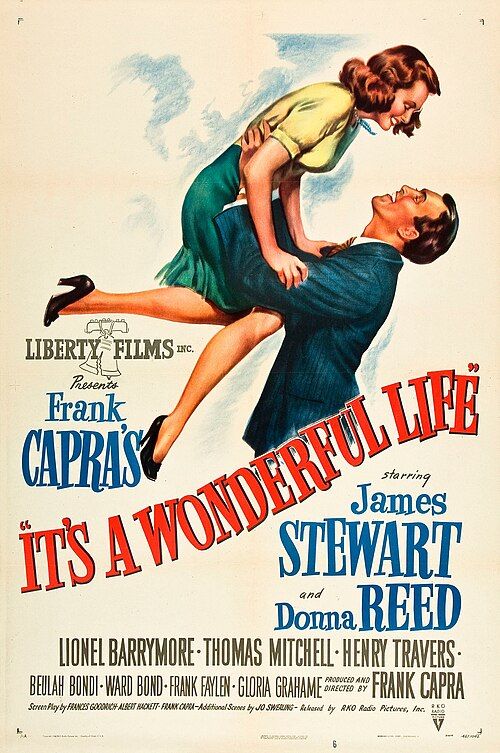
By Jacob Cameron
It’s rather superfluous to say that 1946’s It’s a Wonderful Life is a Christmas movie classic. This is a film that has been lauded and praised over its near eight decade existence. It has been viewed over and over again by generations. There are some who hear bells and wonder if an angel got its wings. It’s safe to say that this is a timeless film.
The plot of the film is well known by all. George Bailey, played by James Stewart, is the pride of Bedford Falls, New York. He has big ambitions but is routinely sidelined to help his family and other citizens. The film picks up with Bailey contemplating suicide after a dubious business deal with local curmudgeon and ultra rich entrepreneur Henry Potter, played by Lionel Barrymore. With the help of the angel, Clarence, George learns just how important and beautiful life truly can be.

The history of this films’ production and greater legacy could be a mini-series. The film, based on the short story The Greatest Gift by Philip Van Doren Stern, has a fascinating backstory. From the story going into the hands of Frank Capra through a mail pamphlet, to this being tapped for Cary Grant to star, to the film lapsing into the public domain due to a clerical error. The backstory of the films’ making is almost as interesting as the movie itself. Thankfully the film is a timeless classic that has an interesting backstory and not a case of fascinating history and mediocre product.
It goes without saying that James Stewart is excellent. He tended to give his all in everything he did; Rear Window and The Man Who Shot Liberty Valance are recommended for great Stewart performances. But Stewart does a great job of turning George Bailey into a true gentleman. Bailey is no pushover. He does get genuinely frustrated at his lot in life, but ultimately, he helps those in need at any hour. Even from an early age, George saves his younger brother from drowning in a river.
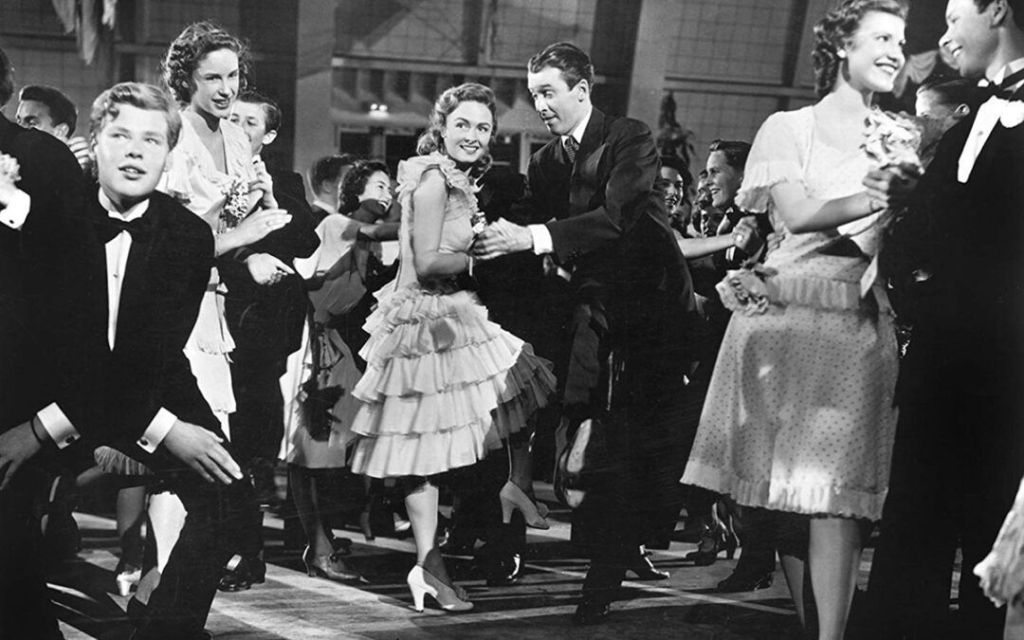
Lionel Barrymore is just as great as Old Man Potter. Barrymore had a long career that spanned from working with D.W. Griffith to John Huston. And Barrymore turns Potter into a brutal and morose individual who only cares about the next dollar. The 1940’s answer to Ebenezer Scrooge if you will. Special mentions should be made to Donna Reed as George’s wife Mary and Henry Travers as Clarence as both are great.
Even though this is an uplifting film, there are some dark undertones present. Look no further than when Clarence shows George what Bedford Falls would be like if he was never born. The Pottersville dream sequence feels like an episode of The Twilight Zone and it distresses all these years later. Director Frank Capra had a real knack for showing the darker side of life before ending things with a sense of optimism.
Hopefully, the legacy of this film will only grow and endure over time. For this is not just an all-time great Christmas film, but a great film period.

5 stars

 From the Fourth Row!
Leave a comment