By Fiorela Gonzales
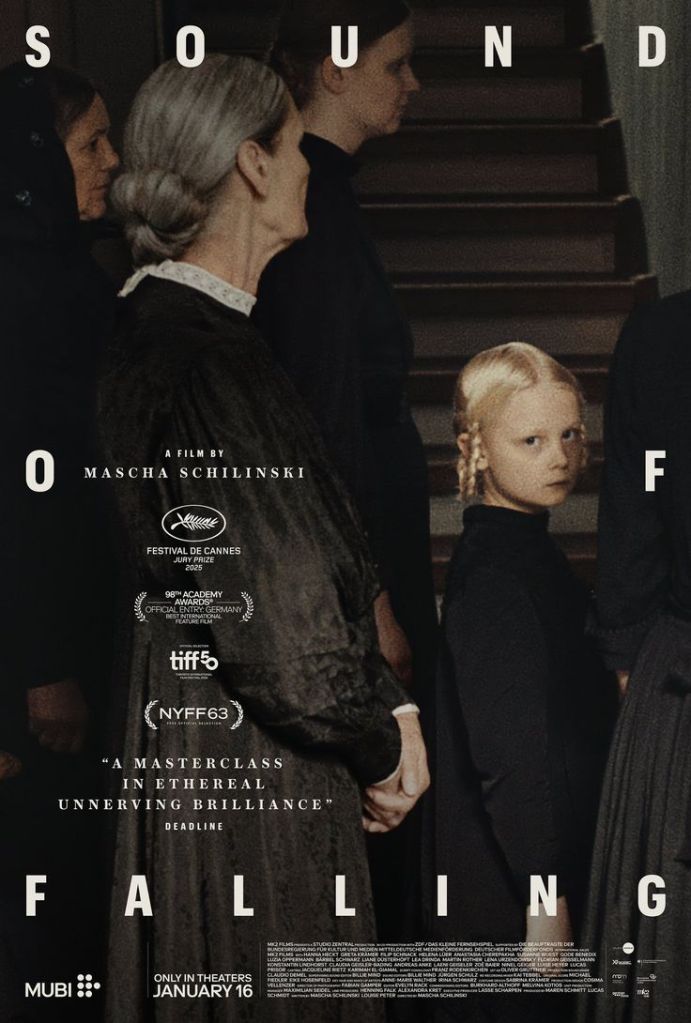
If a woman falls and no one is around to see it, does she make a sound? Sound of Falling asks this question, both literally and figuratively. The German film, directed by Mascha Schilinski, explores the deafening silence expounded by generations of women falling to the violence around them and perpetrated against them.
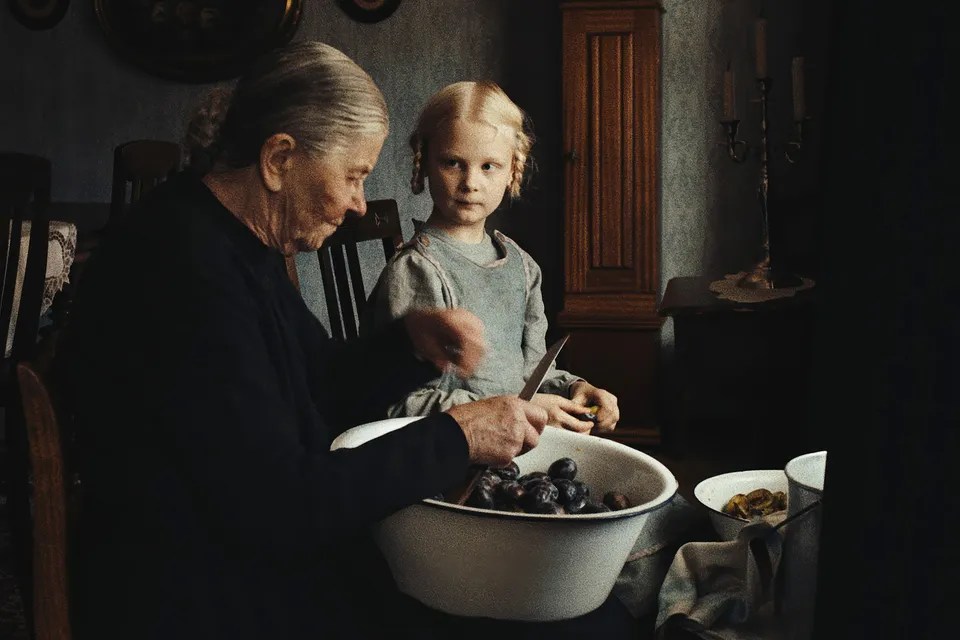
The film centers itself inside one house in a remote hay farm in Altmark, Germany following the lives of four girls throughout four generations. Alma (Hannah Heckt) is the youngest of the four women and the eldest in the chronology. She represents the time period at the turn of the 20th century right before the start of World War 1. Next in the story is Erika (Lea Drinda) whose story takes place right around the end of World War 2. Then there is Angelika’s (Lena Urzendowsky) story whose time period is the 80s where the Altmark farm now resides in communist occupied East Germany. The final block of the story is represented by Lenka (Laeni Geiseler) around the turn of the 21st century, exemplified by iPhones and air pods.
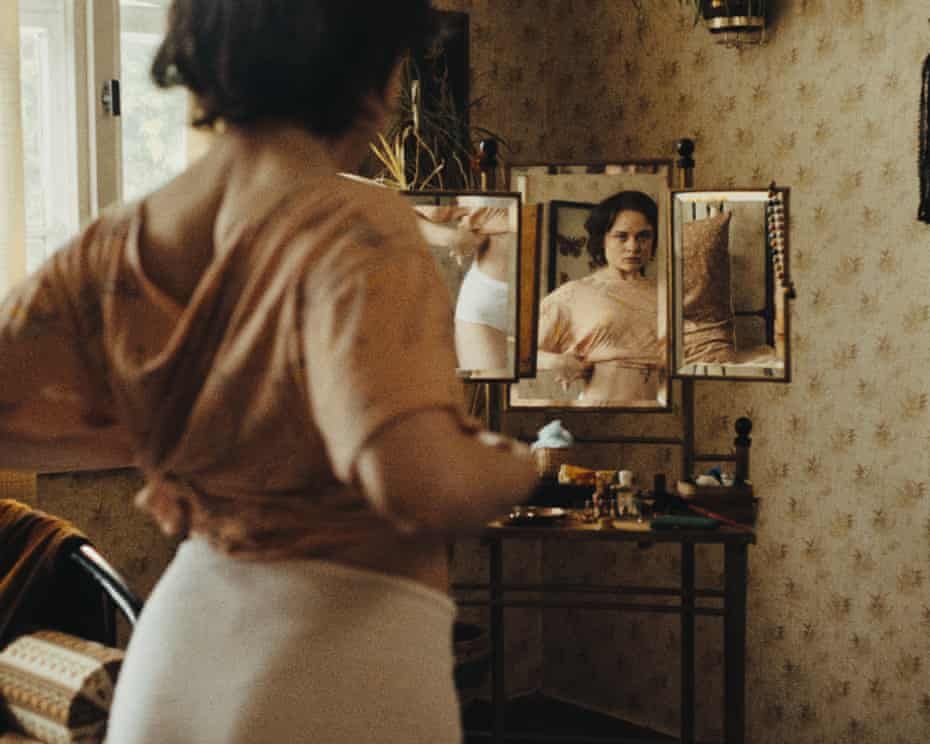
Though this chronology exists, the film doesn’t lay itself out in any discernable order. The movie begins with Erika hobbling on crutches, which we learn belong to her uncle who has one leg. From there it flows throughout these time periods so quickly and effortlessly that looking away for a second results in confusion as to whose story we’re in now. Schilinski has constructed a movie that forces you to keep looking to understand. The movie rarely speaks and when it does it’s sometimes done by the narration of the women. Though these narrations are done by the four main women, they sometimes narrate portions of the film which are not their own time period. The women all share the same house as they share in all the same trauma that surrounds them.
As the film unfolds, you’re not told any answers. Only by looking and picking up context clues and sometimes small bits of information narrated by the women are we able to piece together the connections between the four stories. We learn that the uncle with one leg is in fact Alma’s older brother, Fritz (Filip Schnack), who was maimed by his parents to avoid him being drafted in the first World War. Fritz is also spoken about in Angelika’s story as we learn her mother was Erika’s sister. Lenka’s story unfolds differently as there is no discernable connection to the old family aside from the house they have just recently moved into. Though the connection doesn’t reside within the family, the ghosts of trauma past linger around, suffocating.

Though the film follows the voices of the four main women, they are not the only women impacted in these stories. Alma narrates through childhood innocence about how the maids must be sent away so they can be “prepared for the men”. Sent away here meaning forced sterilization. Their maid Trudi (Luzia Oppermann), though a completely silent figure in the film, seems to be the only one screaming with her eyes. Alma’s sister, Lia (Greta Krämer) is the next to be sent away to become a maid and though she’s as silent as Trudi, her actions are louder. Erika’s story ends with her, along with all the other women, drowning themselves due to the fear of the end of World War 2 and the incoming Soviet army. As is narrated, they feared what came next more than death, presumably speaking about the sexual violence perpetrated by the Soviet army. Angelika’s story harbors dark secrets within the walls as well as she deals with leering eyes from her uncle and cousin which we then learn has come to be incest perpetrated by her uncle. Leering eyes follows into Lenka’s story as she gets unwanted attention from her parents’ friend. She’s on the cusp of adolescence learning about herself and who she may be – but it’s her sister who ultimately hears the silence.

The film is seeping with death to the point that you’re not sure if this is a ghost story or not. Schilinski films the movie as though a spectator is watching these lives unfold in front of them. The camera follows the women throughout but also peeks itself through the crevices of key holes as if it may be someone else than just the women watching. There are moments throughout when it looks as if we’re watching personal home videos, but even those can’t escape the haunting aura as some of the faces in the videos remain blurred. And this blurriness extends to the physical photographs depicted in the film. Alma is fascinated and frightened by a photo of a blurred woman standing above her dead child who not only has an uncanny resemblance to Alma but shares her name as well. Presumably, it’s another sister who died and the name was passed along to the younger Alma. Or, it’s ghosts. The film never tells you. In the 80s, with the development of the polaroid instant camera, a photograph of the family is taken leaving Angelika a blurry ghost in the photo. We learn this is the last time anyone saw her. There’s an underlying haunting throughout all these tales – but whether there’s any actual spirits permeating throughout the generations is for us to decide.
Sound of Falling is a movie that forces you to look and keep looking. It’s slow, it lingers, and it’s haunting. We’re forced to piece together and understand the movie through the world that moves around it without giving you any more context than the world these women already inhabit. Four generations of women suffering in silence and yet the film ends with an actual silent fall that lingers long after the credit crawl and makes you want to scream. The women may have been silent, but we don’t have to be.
4 stars.

 From the Fourth Row!
Leave a comment