By Dan Skip Allen
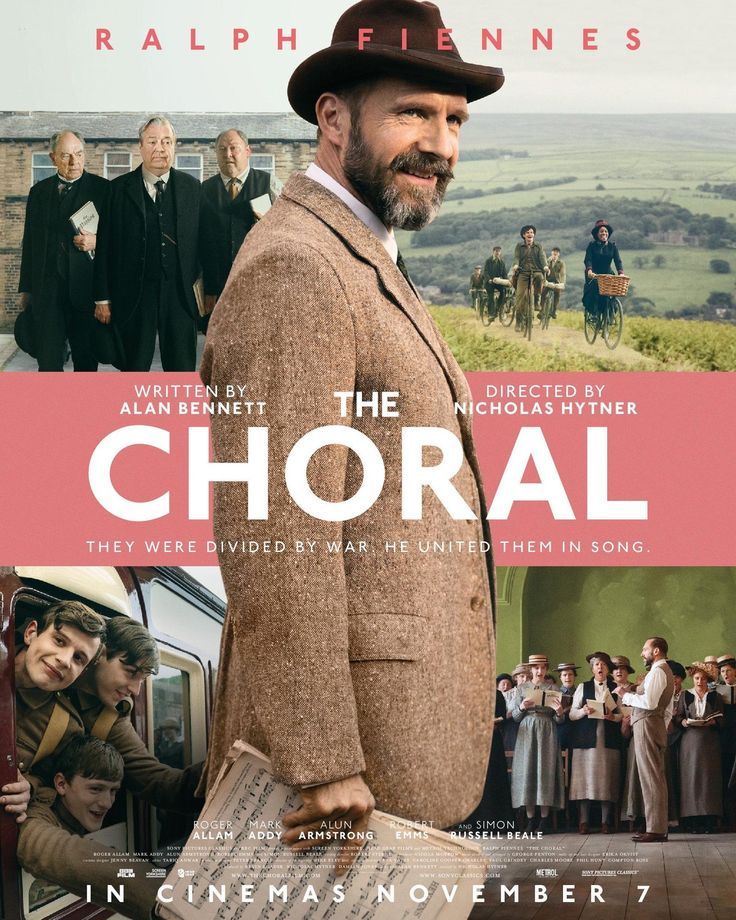
I’m a fan of music related films. Whether they be biopics or movies that have a narrative revolving around music in some way. The latest music related movie that I saw was “The Choral” involving an early 19th-century chorus in England. That also makes this film a period piece as well. The combination of these two genres made for a pretty good movie with an interesting concept as far as the chorus per se and the members of said chorus during this time in history. With Ralph Fiennes as the star I was in instantly. The question is, does this movie stand up to the weight of having such a big star at the head of it. Or does it fall in on its own weight?
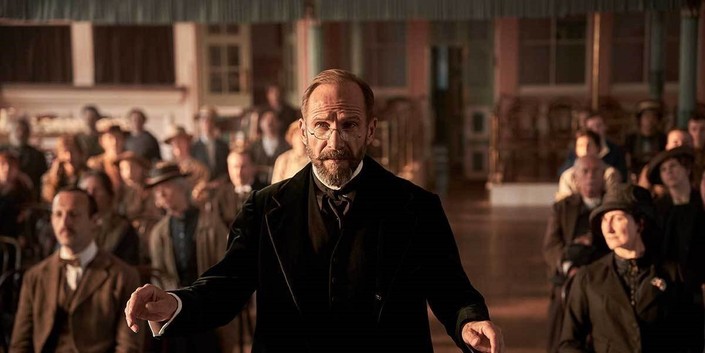
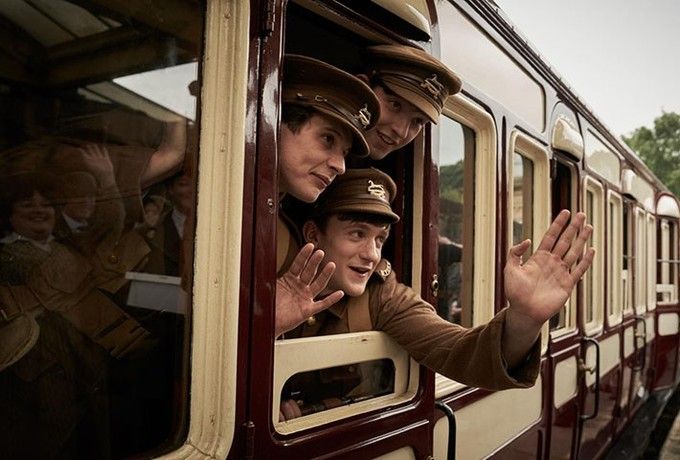
In the early 19th century in England, around the time of World War I, a community lost a bunch of its men to war. A new choral director, Dr. Henry Guthrie (Ralph Fiennes) is tasked with rebuilding the Choral society in the town. He finds it harder than he thought to find men who want to and can actually sing during these hard times of war and despair. He has to deal with some political issues as well as personal problems amongst the community and around the country. He thinks if he can get the people of the town to come together to create beautiful music, it will help heal some of the wounds held by the community.
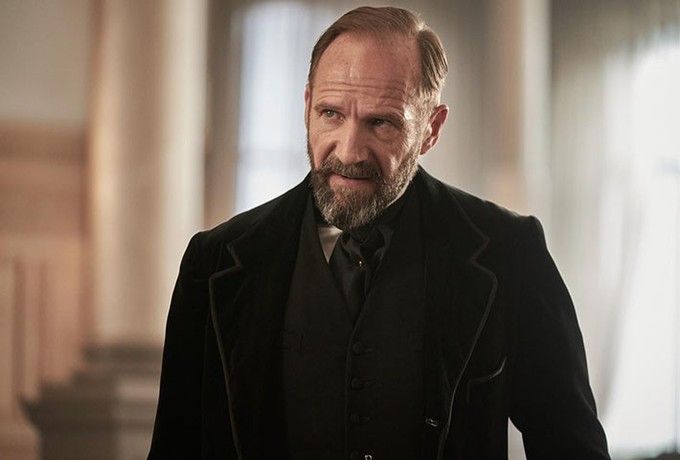
Ralph Fiennes is one of my favorite actors working today. He has done so many iconic roles in Schindler’s List, The Harry Potter Franchise,The English Patient, and in 2024, he played Cardinal Lawrence in Conclave. Lately, he has been doing some out of the box performances in “28 Years Later” and its sequel “The Bone Temple” and “The Return”, a version of “The Odyssey”. With “The Choral” he is getting back to the kinds of roles he is usually known for, distinguished English gentlemen. He is pretty low-key in this role, but that’s the point of it. It’s the music that must shine in the picture in the end. He’s quite believable as the conductor of this chorus. I liked him in a more mellow role. Hopefully, filmgoers will enjoy him in this as much as I did.
Besides fines, there are a few familiar faces in the movie. Especially if you’re a fan of British films and television shows. Roger Allum plays Betnard Duxbury, the financial backer behind the Choral society. He also sings in the chorus, but he has issues with the new director about friends of his getting removed from the chorus in place of newer, more capable singers. Mark Addy plays another member of the chorus who is stuck in his ways as well. Jacob Dudman is a young man who went off to war to come back with a missing limb. He has the voice of an angel and wants to return to singing now that is back from the depressing battle he was sent home from because of his injury. And last but not least is Amara Okereke as Mary a Black woman who can sing very well but gets opposition because she’s a woman and Black, but her ability to sing is so overwhelming the town goes along with the idea to add her to the chorus and sing during their special performance. This cast is fantastic, and they all add a nice touch to the overall story the film is telling.
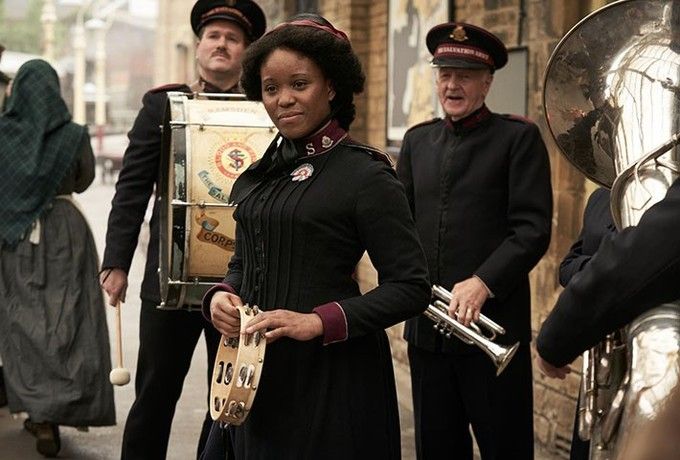
This story takes place in a difficult time in history. During WWI, as I’ve mentioned. There are still unsaid biases that are still being adhered to during this time in England. For example, women weren’t allowed to do things men could do. The prejudices were still real in those days, and racial issues still existed even though it was in the 19th century. England was more ahead of the times than America was at this time, but the unspoken rules still existed. This story proves that these walls started to be broken down at that. I liked this aspect of the story. It added another element other than the recruitment process and financial issues that were going on in the main narrative of the story.
As aforementioned, I am a fan of music films. That being said, I’m not that familiar with certain kinds of music. Classical being one of them. The music in the movie wasn’t exactly my cup of tea, but because of the nature of the story, I accepted the music that was used in the movie. The chorus sang beautifully, and the final performance was fantastic. The most entertaining part of the film was the recruitment process and finding the right singers for the group. This led to some funny interactions and some dramatic moments throughout the film. People don’t like to be told no or that they can’t do something. That happened a few times in this movie. Which was the main aspect of the story. As well as the differences between the new director and the members of the society.
“The Choral” was a delightful little period piece with good classical music. Ralph Fiennes led a terrific ensemble cast that all brought their unique talents to their roles. Fiennes, pun intended, was fine in his role as well. I was glad to see him get back to the more English roles I was accustomed to him being in before the recent buff macho men he’s played in recent years. This was a story I wasn’t familiar with before watching the film, but I enjoyed it quite a bit. There was a tinge of WWI thrown in and racial issues, which added to the overall plot. These helped give the movie a more dramatic touch. The main thing was that it was a lighthearted story, especially during the recruitment parts of the film. I think most audiences should come away from this movie with a good feeling.
3 ½ stars

 From the Fourth Row!
Leave a comment