By Dan Skip Allen
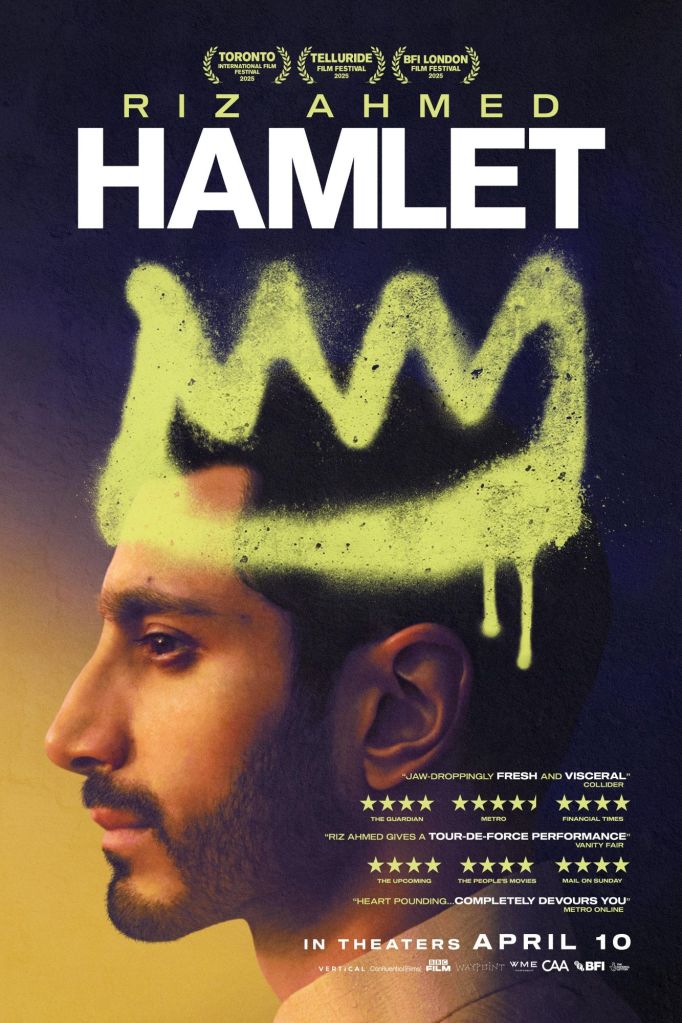
William Shakespeare adaptations have been popular fodder for screenwriters and filmmakers for many years now. Romeo and Juliet and Hamlet are the two most adapted of his works. Just last year, the story of how he was inspired to write Hamlet was made into a film called “Hamlet” now another adaptation of this world renowned play is coming out. This time around “Hamlet” is told from a South Asian point of view and starring one its biggest stars working today, Riz Ahmed. It’s also told from a contemporary viewpoint. It’s different from any other version of this story I’ve ever seen. That’s not exactly a bad thing.
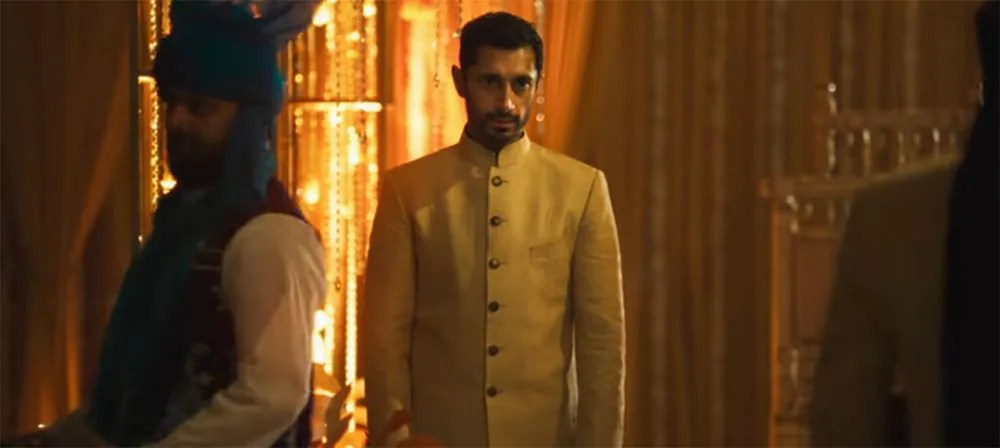
The film picks up the story as Hamlet (Riz Ahmed) is attending his father’s, King Hamlet’s, funeral. Shortly thereafter, his uncle Claudius (Art Malik) and his mother Gertrude (Sheeba Chaddha) take him aside and tell him that they are getting married. He is very surprised, considering his father has just passed on to the afterlife. They tell him they are in love and have been for a while. He is very upset with them. Even his closest friend Laertes (Joe Alwyn) and the family wiseman Polonius (Timothy Spall) think the marriage is the right thing for the family. His girlfriend Ophelia (Morfrydd Clark) agrees with him and doesn’t think that it’s right, but he has to live his life knowing that he’s right and that’s his cross to bear.
This version of the story is told in a specific way that none have been in the past. It’s an adaptation of a Shakespeare play that retains the original dialogue and is most commonly called a faithful adaptation or a literal adaptation. When this occurs in a different setting—such as modern-day—it is often referred to as an anachronistic setting or a modern-dress Shakespeare production. The setting of South Asian London makes for an interesting setting. The music, dance, and clothing of all of the Indian/Pakistan culture are on display in this movie. There have been many versions of this story over the years, but this one was one of the best I’ve seen next to the Kenneth Branagh version starring Mel Gibson.
Riz Ahmed is an actor I’ve loved for years now. His roles in “Sound of Metal”, “The Night Of” and “Rogue One: A Star Wars Story” have been a few I’ve admired. He has a way about being sympathetic on screen. His humanistic character is one I feel for in many of the movies and shows I’ve seen him in. Here, as a nobleman, he has to work harder for my affection. Yes, it’s a sad thing that his mother is marrying his uncle so soon after her husband’s death. His struggle with this drew me in quite well. Once the scene where he sees his father’s ghost happens, it’s much easier to side with him in this tragedy. I had empathy for him ever since this moment. His life is a struggle from that time on, and he has to decide what to do with the news he got from this spirit. Also, whether or not he saw what he thought he saw. That is a big question for him. This is why Ahmed does such a great job with this script and its dialogue. His anger and emotions come through in the performance.
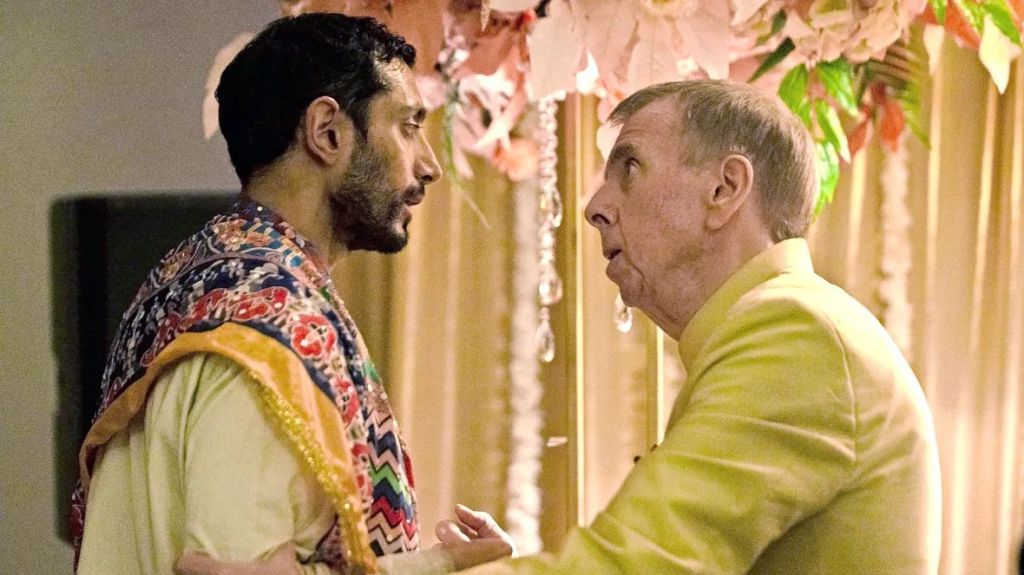
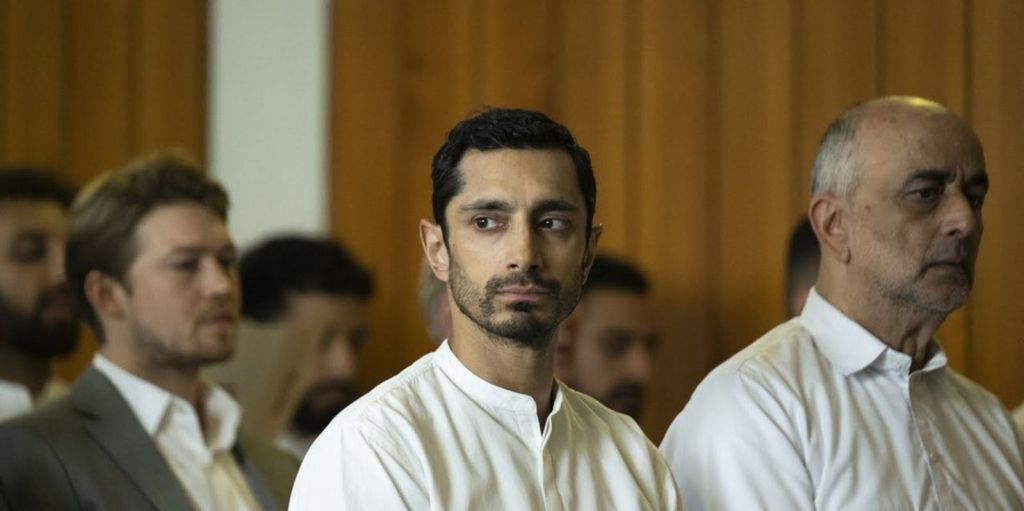
Besides Ahmed in the title role, there is a terrific supporting cast of actors that have had good careers. Timothy Spall (Harry Potter and the Prisoner of Azkaban), who had some good roles in his career, plays a family friend and is confident of the Malik character. He tries to use his influence with the family to convince Hamlet that this is a good thing and he should go along with it or else he’ll face the consequences. Joe Alwyn, in his second version of this story this year. He played Bartholomew Hathaway, Agnes’ brother in “Hamnet”, and now he’s a friend of Hamlet and the son of Polonius but sides with his mother and her new husband instead of him. Alwyn is good in this role as a foil to Hamlet. He needs someone to take his anger out on besides his mother and stepfather. Clark isn’t in many scenes, but she’s a key player in the demise of Hamlet’s sanity and depression. She’s fine in the role, but anybody could have played this character.
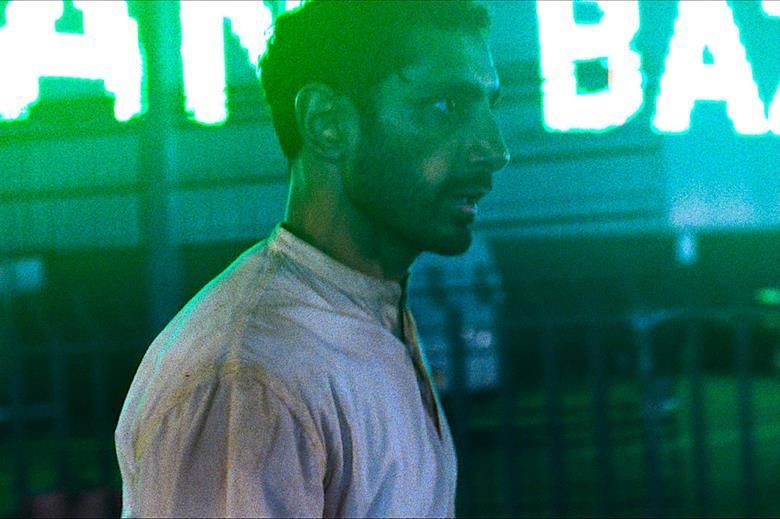
The film was written by Michael Lesslie and directed by Aneil Karia. Together, they placed this story in a world of South Asian London. This part of London is visualized in a gritty and grimey way regarding cinematography. The movie was filmed mostly at nighttime with darker visuals. Sometimes in clubs and in very well lit rooms but mostly darkly lit scenes. The lighting worked for how dark the story is. The purples and greens occasionally showed a different vibe, but still, the overall look was dark. The cinematographer, Stuart Bentley, worked well with the director to get a look and feel that would go along with such a dark and depressing story. The overall look showed through quite nicely considering the nature of this story.
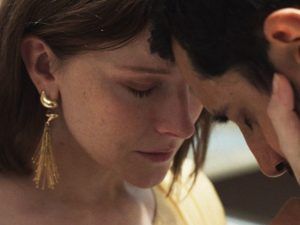
The music was another element that gave this movie a different vibe. In more than one scene but specifically the Indian music played a part in the story. When Hamlet was in a nightclub, there was hip-hop music and club music. These two styles of music were juxtaposed to the score, which was dark and somber. There were a lot of drums and honed instruments like clarinets and so forth in the tone of the score. The darker score by Maxwell Sterling helped fit into the vibe the film was going for. All the music worked well within this story construct.
“Hamlet” is a vastly different version of this classic William Skespeare story than I’ve seen before. Using the contemporary setting gave it a completely different look and feel from other versions of the story. Keeping the original dialogue was a stroke of genius, but it could have been a mistake. The writer and director collaboration was very important. They combined to give the story something it has never had in the past, originally. Add in the amazing supporting cast that included Spall, Alwyn, and Clark along with the terrific performances from Ahmed, and you have a decent adaptation of this story. It would be great as part of a double feature with “Hamnet” to see both sides of the coin, which is this classic tale.
3 ½ stars

 From the Fourth Row!
Leave a comment