
By Kyle Flynn
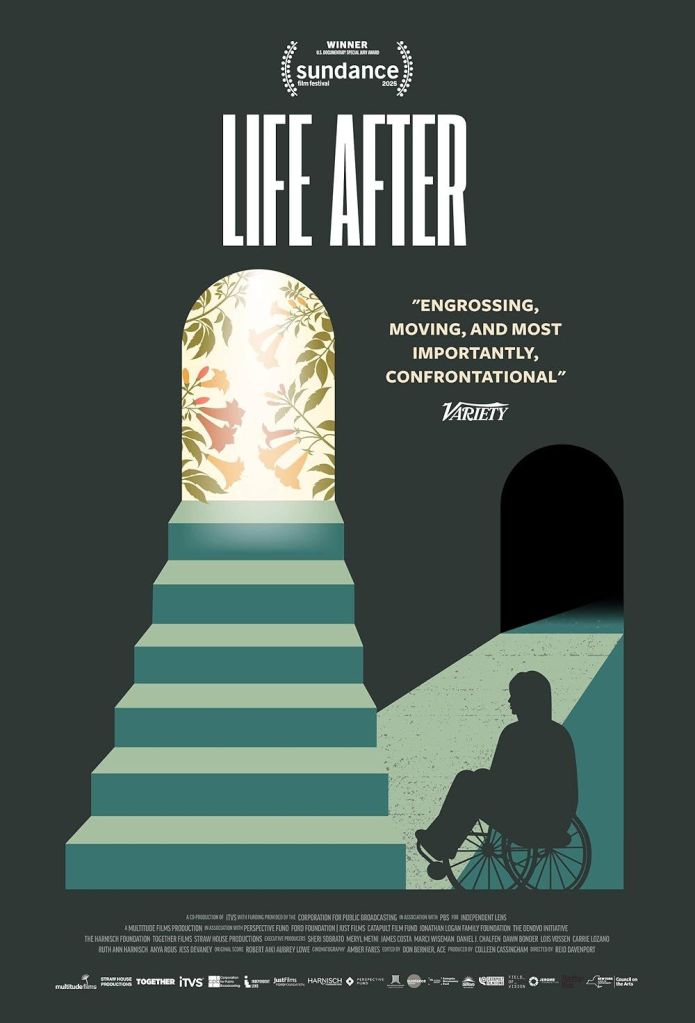
In Life After, director Reid Davenport tackles the thorny and emotional subject of assisted dying, using the 1983 case of Elizabeth Bouvia as a focal point. Bouvia, a disabled woman who famously fought for the legal right to end her life, becomes the film’s anchor as Davenport reflects on how her story still echoes in today’s conversations around autonomy, dignity, and the value society places on disabled lives. As a disabled filmmaker himself, Davenport brings an undeniable authenticity and urgency to the topic.
What the film does especially well is spotlight the perspectives of disabled people—voices that are too often missing from debates about assisted dying. Davenport pushes back against the idea that choosing death is always an act of pure agency. He suggests that for some, it’s not just about choice—it’s about survival in systems that don’t support them. That argument lands powerfully and forces viewers to rethink the assumptions behind “death with dignity” laws.

That said, the film isn’t without its rough spots. Structurally, it can feel a bit scattered. Davenport weaves Bouvia’s case with contemporary moments and personal reflections, but the connections between them don’t always come through clearly. For viewers who aren’t already familiar with Bouvia’s history or the broader context, the jumps in time and tone might feel jarring or confusing.
Visually and stylistically, Life After sticks to a fairly traditional documentary format—mostly interviews, archival footage, and voiceover. It’s effective but not particularly inventive. There are moments when the story feels like it could’ve used a little more creative energy to really bring the emotional stakes to life.
Still, despite its imperfections, Life After accomplishes something important. It opens up space for a conversation that desperately needs to be had: who gets encouraged to die, and who gets the support to live? The film doesn’t offer easy answers, but it asks the right questions—particularly around how ableism can shape end-of-life policy in subtle, dangerous ways.

In the end, Life After is a timely and necessary film. It’s not perfect, but it’s sincere and provocative in all the right ways. I found the final shot of the film to be significantly affecting myself. For anyone interested in disability justice, healthcare ethics, or the right-to-die debate, it’s well worth watching.
3 stars

 From the Fourth Row!
Leave a comment