By Brian Susbielles

When Netflix released the docuseries Drive To Survive in 2019, it opened the doors to many people who had been keen to learn more about this sleek, cutting-edge autosport that travels around the world. Except for the United States, which has three races (Austin, Miami, and Las Vegas), every race is in a different country. Mercedes, Ferrari, RedBull, and McLaren pop out as among the best teams with huge recognition for some of their drivers, notably Max Verstappen, Lando Norris, Charles Leclerc, and Sir Lewis Hamilton, a seven-time F1 champion. To describe the sport in general, it is Top Gun: Maverick on the ground, with racing speeds up to 200 mph and car designs based on aerodynamics. As someone who has followed with passion since I was a child in the 1990s, I can vouch for the high interest, incredible speed, and difficulty in driving these thimble cars through difficult race tracks.
But it’s not a sport for everyone. Some find it overbearing and ridiculously expensive, which it very much is, and it looks more advertised for a higher clientele. Formula 1 is a Eurocentric motorsport, whereas NASCAR and IndyCar are American-based, less expensive, and rooted in oval racing. The competition is a lot more diverse, where there are many drivers with an equal chance at winning, while F1 is based on the team that develops the fastest car. It’s exclusive, with only ten teams and twenty seats (an 11th team entering next year will make it twenty-two), and the lack of diverse winners will probably bore casuals. Where there are plenty of yellow (caution) flags in NASCAR races, F1 may have just one, sometimes none, and certain rules do infuriate people on what is or is not a penalty. Either you love or hate Formula 1.

Speaking of Top Gun: Maverick, it’s just the thing that producer Jerry Bruckheimer and director Joseph Kosinski would be attracted to following the massive success of Maverick. For IMAX and trying to equal what they did a few years ago, they hopped on the F1 train and have pulled a rapidly moving theatrical experience for everyone, fans and non-fans of the sport, to enjoy.
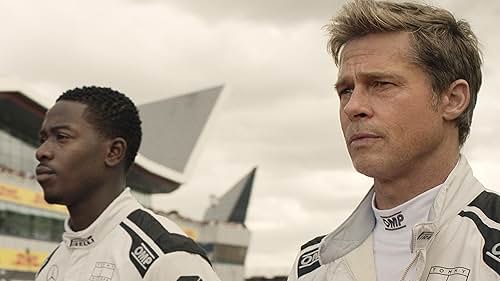
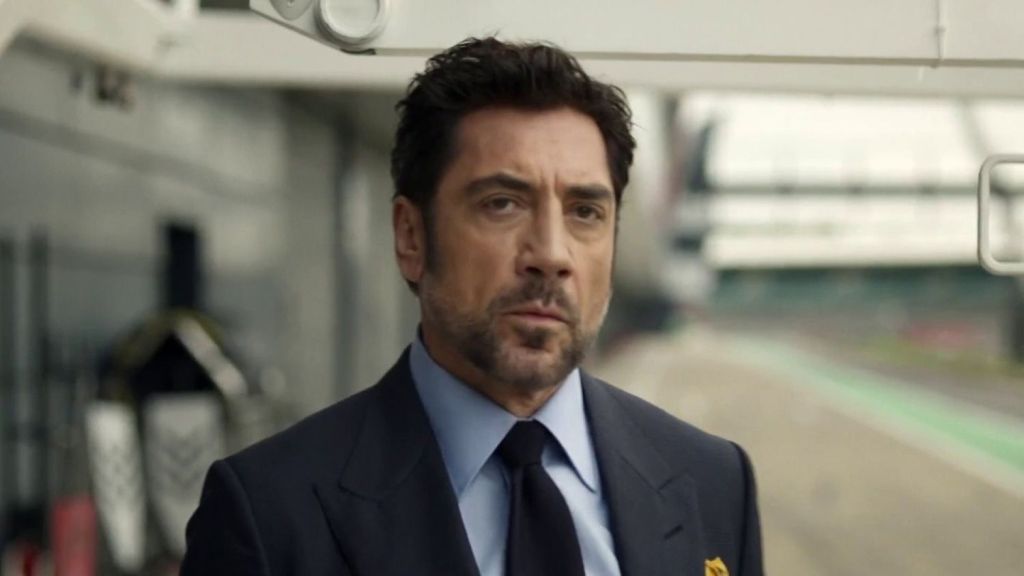
Brad Pitt plays Sonny Hayes, a nomad who will drive for anyone, anywhere, with thirty years of experience under his belt. He once had a promising career in Formula 1, which ended after a horrific crash that nearly cost him his life. Afterwards, a life of divorces and gambling debts leaves him broke and living out of a van, Hayes gets a surprise visit from his former teammate-turned-F1 team owner, Ruben (Javier Bardem). Running the APX Grand Prix team, the slowest on the grid, and in danger of being sold, Ruben goes to his friend and makes an offer impossible to refuse. With nine races left in the calendar and the second seat open, Ruben wants Hayes, a man in his 50s, mind you, to plug the gap and help the team’s rookie driver, Noah Pierce (Damson Idris).

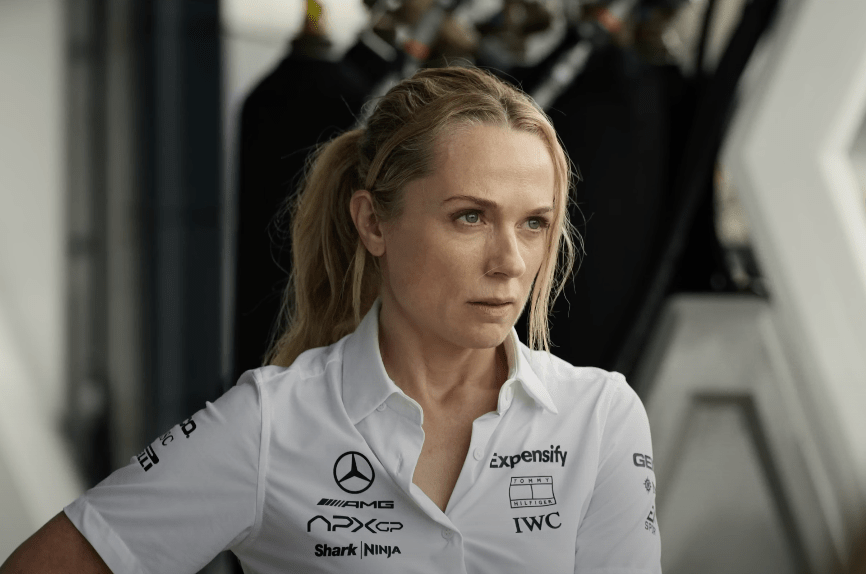
Being 11th place of 11 teams in F1 sucks, a backmarker in F1 terms, but after three years, APX is exactly that with exactly zero points and pressure not just to score points, but win a race. Very desperate times call for very desperate measures, hence the cynical mood of the team with Pierce, team technical director Kate (Kerry Condon), and team principal Kasper (Kim Bodnia) when Sonny shows up to drive for the British Grand Prix. As the pressure grows with each race, Sonny and Noah clash on and off the track, with each of them trying to outdo the other with every dangerous maneuver. But with Kate’s push to improve the car at Sonny’s behest, their chances of winning grow – and so does the egos of both Sonny and Noah.
Kosinski duplicates the incredible action from Maverick with cinematographer Claudio Miranda in putting us in the car going wheel-to-wheel with everyone else. It’s the heart of the movie, of course, and, thanks to incredible engineering and pinpoint sound design, that is Brad Pitt and Damson Idris driving the car with others. Don’t need to CGI the driving; they did film on race weekends in 2023 and 2024, on location. (Note: they didn’t film during the actual race, but in between practice and qualifying sessions those weekends.) Those are actual fans there for the weekend who got a bonus view of a movie being made. If you watched a race live, an 11th team with a full functional garage would be there. Thanks to the support of everyone in the sport, this movie got as realistic as it can be, with the actual drivers being filmed in their natural racing habitat.
Compare it to the godawful, Renny Harlin-directed Driven (2001), set in the world of IndyCar (then known as CART) where a whole lot of it was, to be blunt, crocks of shit. Crashes that would never happen, scenes of fans nearly getting killed by flying tires, which happened in real life multiple times, and a ludicrous ending, which made the sport look bad, and why the movie was trashed in the first place. The characters between Sylvester Stallone’s Joe Tanto and Pitt’s Sonny Hayes are similar, but Tanto has no reason to get back in the car to help a rookie driver, while Hayes has reasons to accept the gig, and it’s more selfish. Tanto is a former champion whose crew knows he’s in the groove when he’s humming. Seriously. Hayes, being in his 50s and thirty years removed from F1, is a stretch, but with two drivers currently in their forties driving (one of them being Hamilton, who is also a producer of the film), who’s to say no one could make it back at such an age?
The key weakness is in the story and script by Kosinski and Ehren Kruger, where the relationship between Hayes and Pierce feels a bit shallow, and it constrains Pierce from being as charismatic as he should be when trying to build up his brand. Same goes with Kate, who at times feels like she’s being told how to do her job as the head technical director and, not surprisingly, becomes a love interest to Sonny. The people who work at APX are all underdogs, with real-life Ferrari team principal Fred Vasseur saying in one scene he doesn’t think about APX because they’re so far back in the competition. Yet, even when a member of the team’s board of directors (Tobias Menzies) lays it thick on Sonny of what will happen if they fail, the threat isn’t at all convincing. F1 politics is a lot more cutthroat and immediate, with many moving parts behind the scenes instead of just a single person.
Hardcore F1 fans will pick up on mistakes and scenarios that wouldn’t make sense, but the movie was made for the general public, just like how Drive to Survive is. The 24 Hours of Daytona is in January, not June/July when the British GP takes place, and how Hayes gets the superlicence points to drive an F1 car aren’t addressed, but that’s fine. There is plenty of tire strategy and talks about getting one-tenth of a second quicker, which is 100 percent accurate, but people who aren’t in the know may find it a nuisance to hear about. Some will notice the APX car looking different than others; it’s because they built it around Formula 2 cars since they couldn’t use real F1 cars for Pitt and Idris to drive in. Other parts, such as the extremity of some crashes – pieced from actual crashes that happened in the past – and how much explanation from F1 commentators David Croft and Martin Brundle we hear, get a little dumbed down, but this is Hollywood, and that measure to stretch the imagination for everyone will always be there.
The story tests our sense of disbelief a bit too much, but it doesn’t go that far out of its way to keep the narrative going. After all, it is about the glamour of Formula 1 and does wonders for the sport, but at the expense of the film, which seems to get neglected at times. Yet, F1 is fun, and the action is real, and it feels like that good dad-movie we have every year. Hans Zimmer’s score sets the tone from the beginning as we are lured into this world and plugged in straight into the driver’s seat. Cameos galore in the sport with the actors parading alongside the drivers and team owners; one scene in particular against rival team boss Gunther Steiner, one of the most colorful characters in the sport, is hilarious. Bruckheimer and company have a tough balancing act between realism and storytelling, but they get the job done to please many and leave us at the top step of the podium.
4 stars
Follow me on BluSky: @briansusbielles.bsky.social

 From the Fourth Row!
Leave a comment