By Brian Susbielles
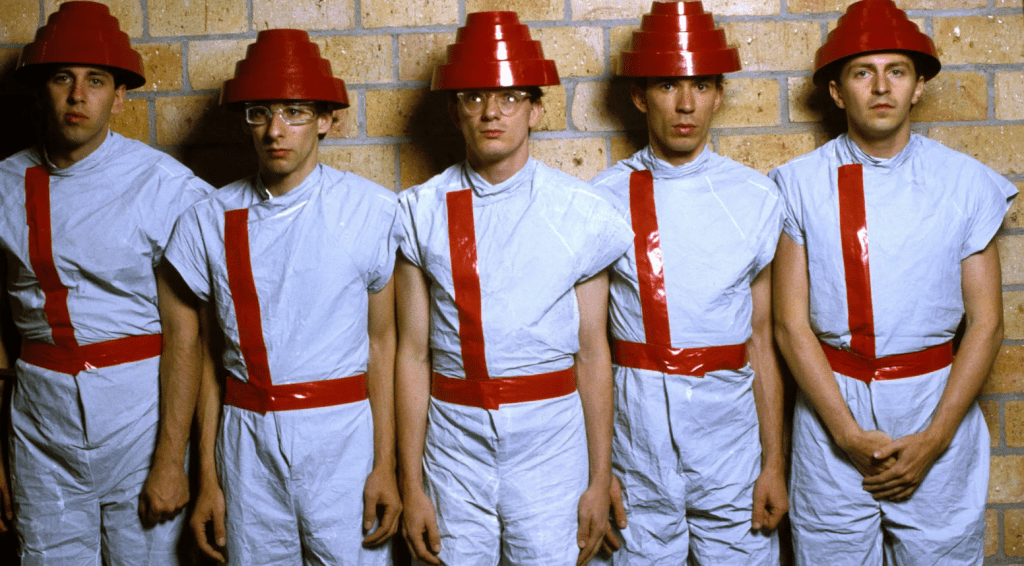
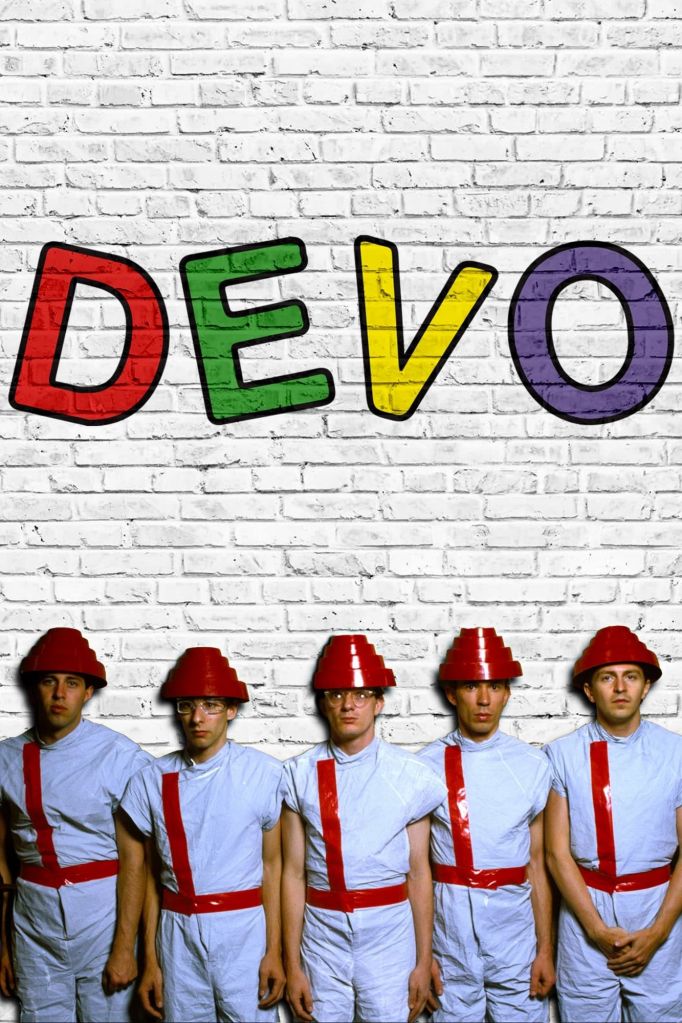
One of the boppiest songs of all time and one that crosses generations is the 1980 single “Whip It,” featuring five men in weird red hats in a cheesy Western with innuendos portraying sadomasochism and sex. Young me, paying attention a little closely, assumed it was like the Cha Cha Slide with the song giving directions in the chorus, never in my mind thinking it was something inappropriate. Also, the high-tempo, cartoonish tune that came with it – which makes sense considering the connection to Rugrats the band has – also caught my mind. Devo, as I knew, was a one-hit band. However, the documentary about Devo, shows they were more than just one single song.
The story starts in Kent State University with two of Devo’s leading figures, Gerald Casale and Mark Mothersbaugh, meeting up over their interest in art and the belief that the world is devolving, or devolution, where the band’s name comes from. In 1970, the country was immersed in the Vietnam War, still reeling from the assassinations of Robert F. Kennedy and Martin Luther King Jr, and feelings that free speech was being repressed. For a band that would make their mark with unusual music and lyrics satirizing the cultural changes which they felt was stopping evolution, the band’s main impetus is from a real-life tragedy, when four Kent State students were shot dead by the National Guard on May 4, 1970.
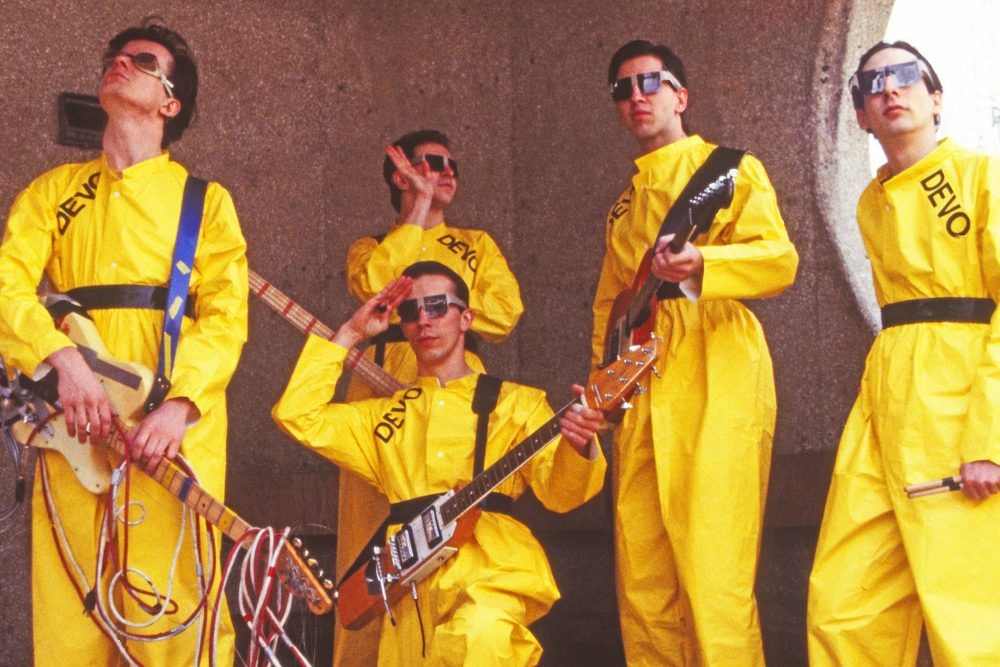
Out of this national horror, Gerald Casale, his brother, Bob (who died in 2014), Mark’s brother, also named Bob, and Alan Myers (who died in 2013) would form the core of this art pop, synth new-wave genre that would become highly popular in the late 70s and early 80s. The film dives into the themes of social commentary, surrealism, and social theory on what was happening in the country through their music and visual art, becoming early pioneers to music videos and short films. MTV began in 1981, and Devo was one of the first artists being played on rotation that first year of its existence. Being middle-class figures from a working class city in Akron, Ohio, the group took inspiration from factory life and created their aesthetic like from an assembly line, almost robotic.
As their work grabs the attention of various artists who went down in New York’s club scene, namely one of their idols, David Bowie, the band starts to put in the real work with actual albums. The crux of their mainstream breakthrough comes in working noted producer Brian Eno, signing a contract with Warner Brothers, and then, in a stroke of luck which neither the company nor the band thought was going to be a hit, “Whip It” is played by a Florida disc jockey and the song spreads like wildfire. With the success comes the money, and with the money, there comes pressure to create another major while having to rub elbows with the other major artists who want their piece of pie. Amidst a dilution of their genre and changing tastes, there is the question of maintaining their artistic integrity while trying to capture the listeners’ ears.

Director Chris Smith (Jim & Andy: The Great Beyond, Mr. McMahon) continues his hot streak of work with Netflix by shifting to another unique group of people who made its mark on pop culture. They weren’t the biggest band in the world and didn’t have the best songs ever written, but as the documentary shows, this was a group of people with messages meshed in with avant-garde chic that Andy Warhol’s Factory couldn’t have made. It’s a breezy 94 minutes, although there are moments I wish the documentary would’ve loved to dig a little more deep into. Devo honors Devo with a proper explanation and celebration of the band’s meaning and how really ahead of the times they were in their artistry, unveiling the enigma that the quintuplet had put upon the world in their own special way.
4 stars

 From the Fourth Row!
Leave a comment