

By Kyle Flynn
For my money, the Palme d’Or remains the most prestigious prize a film can win. This year, the Juliette Binoche-led jury awarded it to Jafar Panahi’s It Was Just an Accident, a decision that immediately piqued my curiosity. My relationship with Panahi’s work has been a mixed one—his most celebrated film, Taxi never quite resonated with me, but his previous feature, No Bears, struck me as a quietly devastating piece of cinema. I came into this screening wondering which side of Panahi I would get: the one that leaves me at a distance or pulls me completely into his world.
The film opens simply: a family on the road, their car breaking down on what feels like an ordinary day. But Panahi wastes no time shifting our attention to the people they meet when they stop for help. What begins as a momentary inconvenience quickly spirals into something far more layered, gradually pulling in a web of characters whose lives intersect around this single event. It’s a deceptively patient opening, one that builds tension in small increments and sets the stage for the quiet chaos to come.
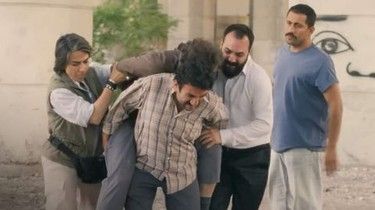
The ensemble here is nothing short of remarkable. Vahmid leads with a performance that feels brash, coiled, and perpetually on the edge of eruption. His work is complemented by a cast that never feels like background players; each new character introduced seems to open another window into the moral and emotional complexity of the story. This is a dialogue-driven film, but it never drags, because every line is charged with stakes. The actors carry the weight of Panahi’s words with such controlled intensity that even the quietest moments feel like a held breath. Maryam Afshari is a particular standout; her character’s emotional arc is handled with such nuance that it becomes one of the film’s most devastating threads. A late scene between Afshari and Vahmid is one of the most emotionally raw moments I’ve seen this year, and I’d be surprised if Afshari is not a favorite of mine by the year’s end.
Panahi’s screenplay is impressively tight for a film that moves from one location and situation to another with such freedom. It’s never aimless. Instead, each set piece feels like a building block, accumulating meaning and emotional resonance as the story progresses. What makes the writing so affecting is how it privileges the characters over the plot, and the pain they each carry shapes the narrative far more than any traditional story mechanics. The dialogue is rich and layered, at times so incisive that it lingers in the mind long after the scene has ended. I’ve caught myself replaying certain exchanges over and over, marveling at how much they reveal about the characters without ever feeling expository.
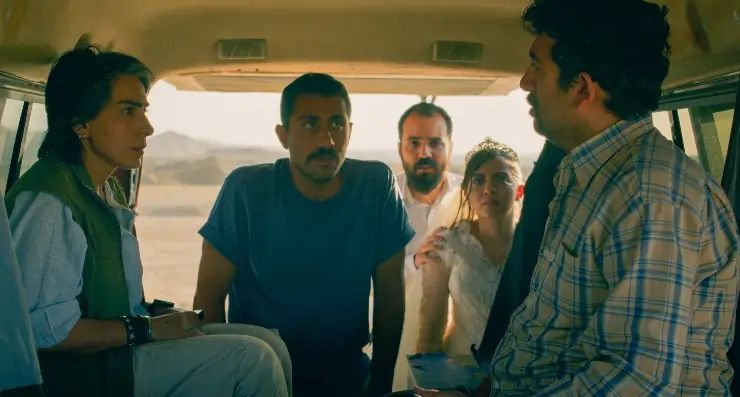
On a production level, It Was Just an Accident feels nothing short of miraculous. Knowing the restrictions Panahi faces as a filmmaker under a government-imposed ban makes the vitality of this film even more staggering. The camera seems to breathe alongside the characters, framing them in a way that feels both intimate and observational. The editing, handled by longtime collaborator Amir Etminan, is razor-sharp, and it gives the film a rhythm that feels alive, almost improvisatory, while maintaining a sense of tension. This is a film that feels fully inhabited, fully alive, and fully aware of its own political and emotional urgency.
If the preceding chapters were not enough to sell you on the accomplishment. Let me make it known that the ending of the film made this movie, and moved me to bump this film up by a half star. Panahi managed to make another film consistent with his already stellar filmography.
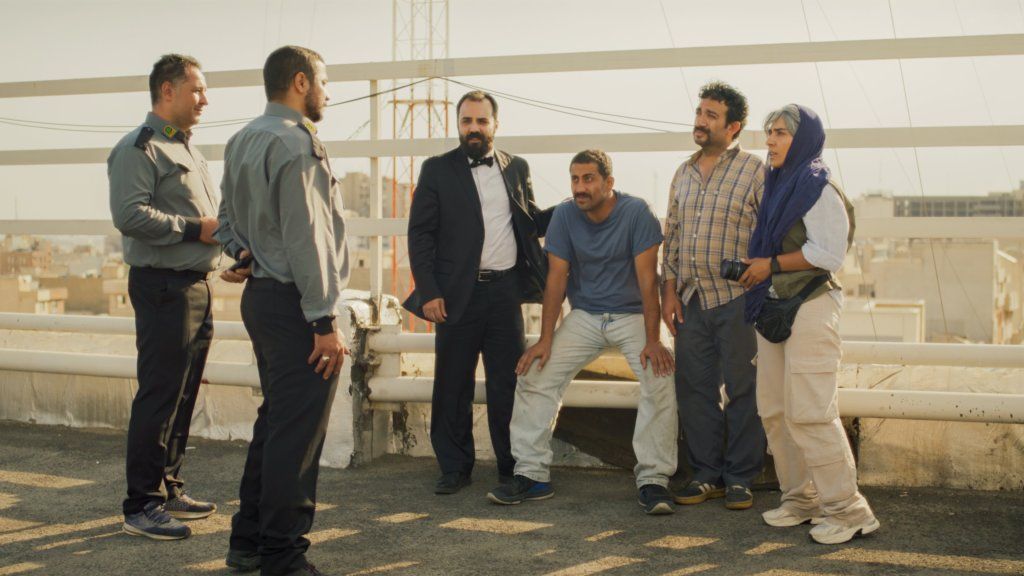
4.5/5 stars

 From the Fourth Row!
Leave a comment