
By Kyle Flynn
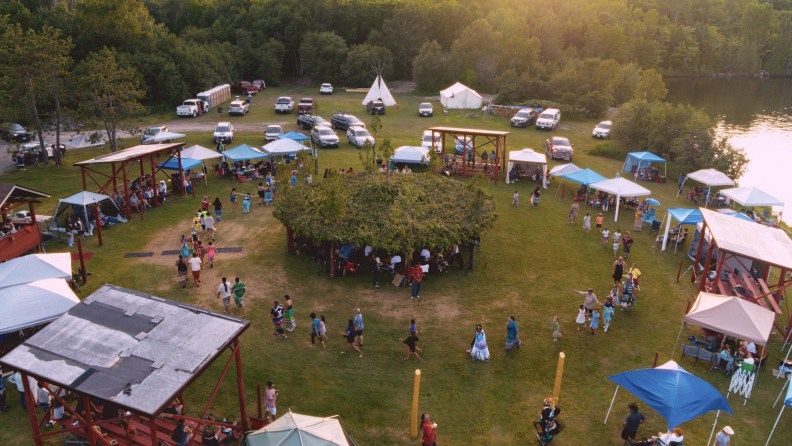
At TIFF, every film is preceded by an acknowledgment of the native american land the theaters are built on. I bring this up because it almost felt uncanny, but I also felt somewhat of a release watching Aki. A film where documentarian Darlene Naponse showcases her hometown of Atikameksheng Anishnawbek in Northern Ontario.
I watched Aki, not knowing at all what to expect. A documentary that I thought could vary in quality, with it being marketed as a visual style documentary. In my memory, I could only really think of one visual style documentary I had seen, Godfrey Reggio’s Koyaanisqatsi (as well as the two sequels). A documentary that has stood the test of time and resonates emotionally, viewing the world as it is today. Darlene Naponse manages to create film wholly in a league of her own. In Aki, she manages to document a side of the world that I have never seen before.

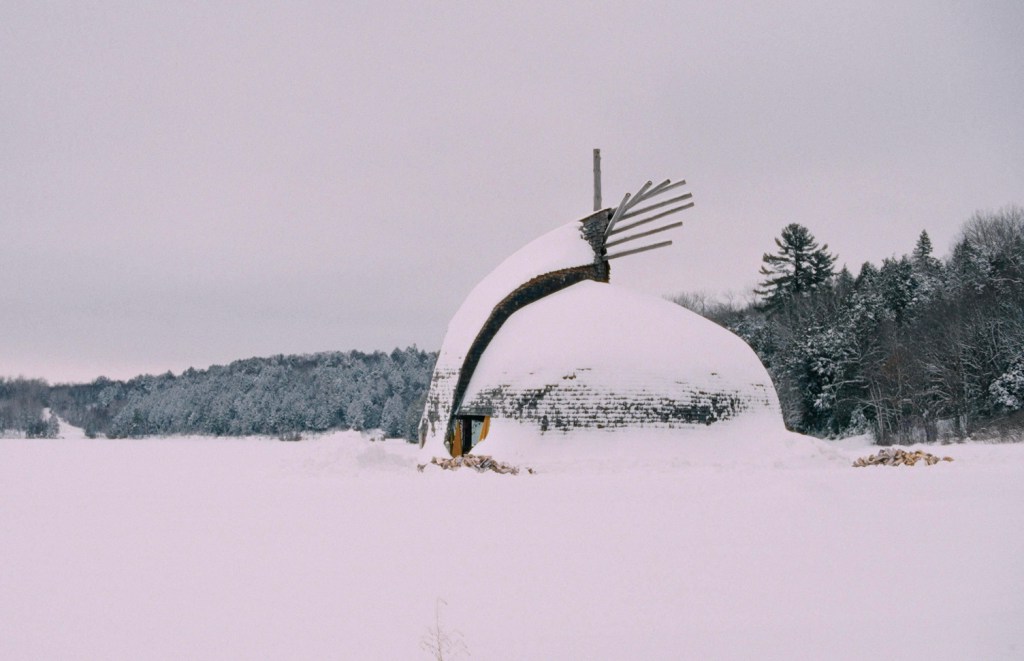
One of the many reasons I adore documentary filmmaking is the opportunity to revel in feelings that have become increasingly rare when enjoying any form of art. If we assume most documentaries are concerned primarily with both informing and entertaining, what Aki accomplishes with almost no spoken dialogue is incredible and teaches us more so than other films that make the same attempt. A lot of the film is built up with quiet moments. There are wildlife moments, moments of children playing hockey, and snowy landscapes, but all echoed by the undercurrent of industrialization and gentrification in the area of her hometown. The constant juxtaposition strikes a chord and makes you think about what you’re viewing.
I am a little mixed on the musical cues of the film. Sometimes, it comes across as a little incessant, and there are moments I feel would have played better for me if a little more reserved in the music presented, or at least used a little more sparingly. Cris Derkson, who provides the music, does an incredible job, and I found that it played nicely with the emotions I felt. It is fairly well-edited, with each scene, and creates the atmosphere of a lived-in world.
I found the movie to be encouraging of what can be explored and accomplished amidst the current state of documentary filmmaking. I will be seated for whatever Darlene Naponse does next in her filmmaking endeavors.
3.5/5 stars

 From the Fourth Row!
Leave a comment