By Tyler Banark
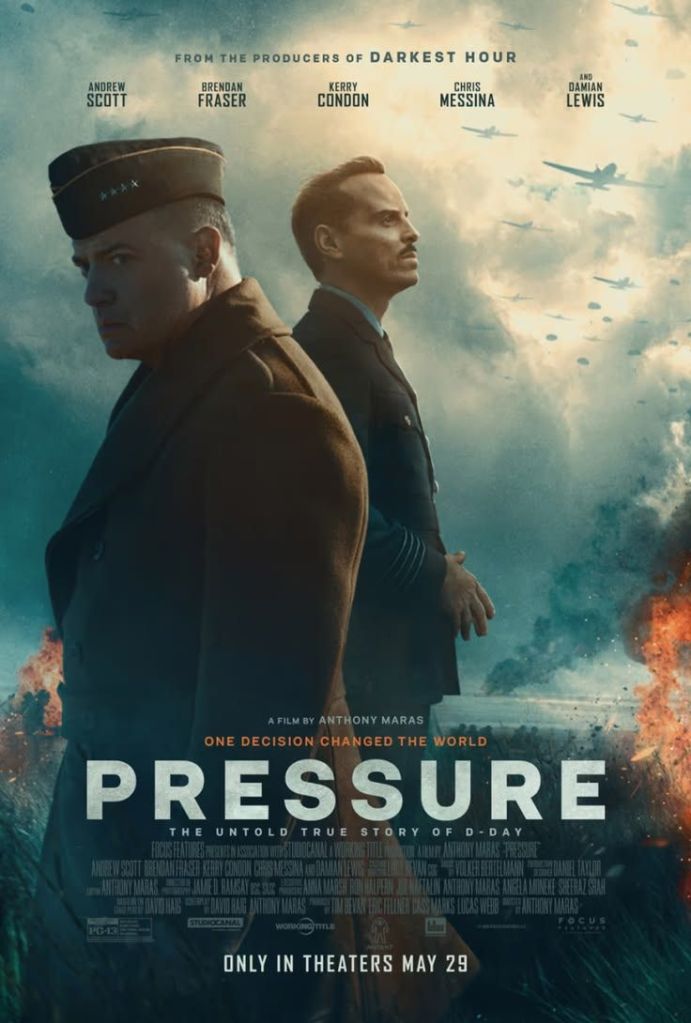
War is all about strategy and finding the right moments to strike! Historians and military personnel know this better than anyone else. However, it’s not just how to roll out certain platoons or coordinate where paratroopers dive into. Strategy can also be found in Mother Nature herself and in how her behavior could impact. It’s seen here in Anthony Maras’ new drama Pressure, a retelling of the 72 hours leading up to D-Day. Led by commanding performances from Andrew Scott, Brendan Fraser, and Kerry Condon, “Pressure” proved to be a surprise success!
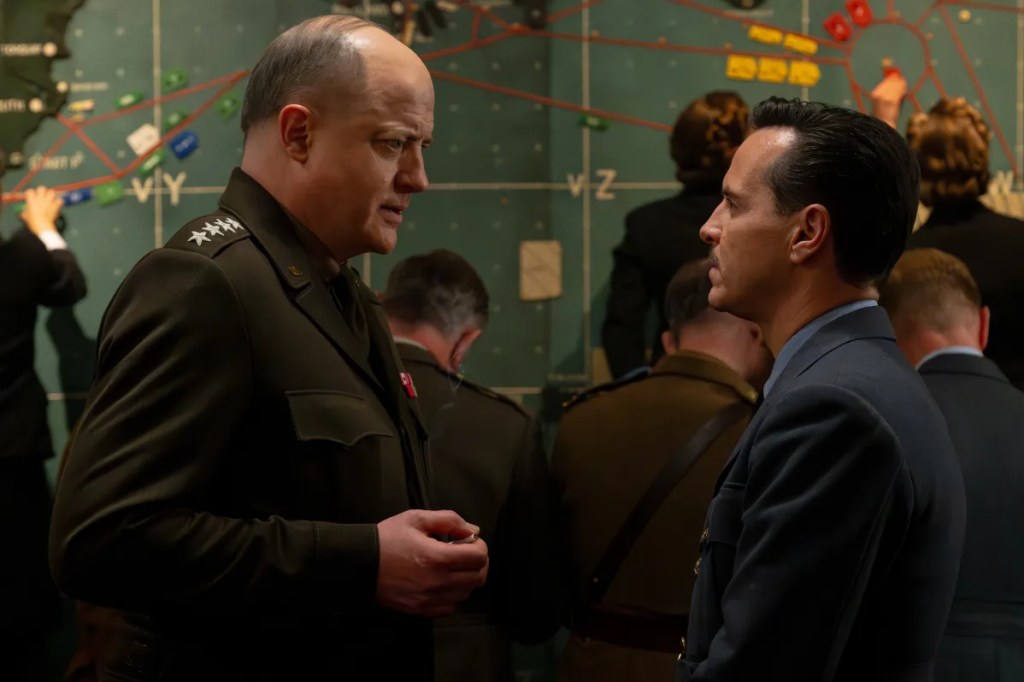
Many people talk about how unprepared the Axis powers were for winter in Russia, which played a significant part in their loss. Though no one talks enough about how the hectic rainy conditions soldiers from both sides of the war faced on June 6th, 1945. That’s where we meet James Stagg (Scott), a Scottish meteorologist who is precise about his predictions and can be difficult to work with. He’s tasked with informing the US and British armies about what troops could face when they storm the beaches of France. Scott plays Stagg with a stone-cold gravitas and further proves why he’s an underrated actor from across the pond. I have never doubted his capabilities, but the more I’ve seen from him, the more convinced I am of how, like Stagg, precise he can be when approaching roles. In every scene he’s in, Scott is firm and knows exactly how best to adapt Stagg to the opposing people around him.
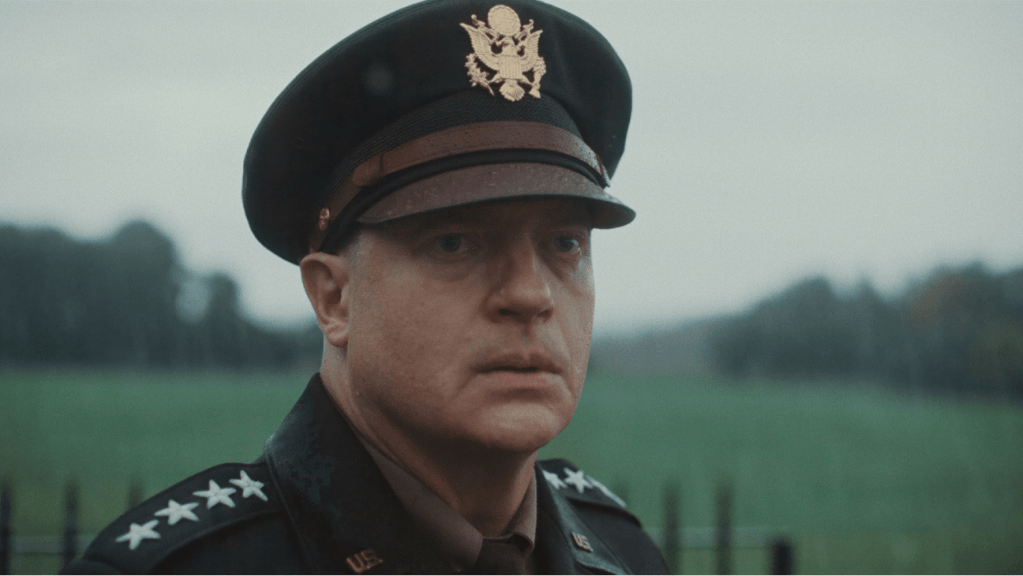
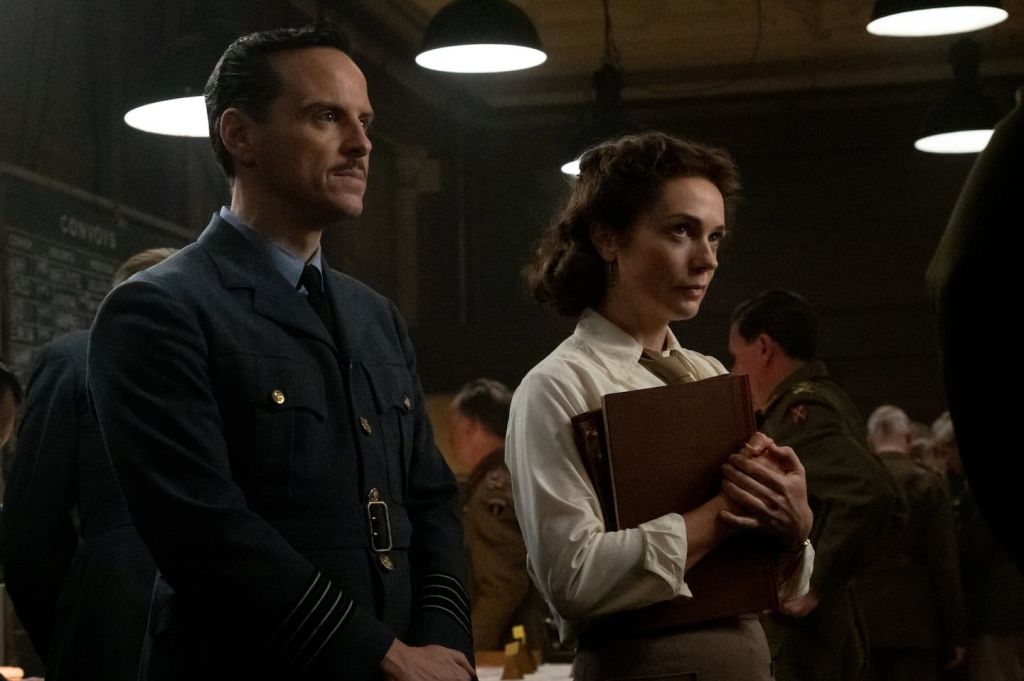
Now, Scott isn’t the only actor in the limelight with this film. Fraser and Condon also shine as Dwight Eisenhower and his secretary, respectively. The former has proven since his Oscar win that he makes his impact and presence in a film known by being loud and sharp. The way he plays off Scott is definitely commanding, even if at times it comes across as over-the-top. I believe once he gets over the fact that every role he plays has to involve him raising his voice to make his character’s point, he can return to his pre-Oscar methods for what made him a notable name in the first place. As for Condon, Kay Summersby isn’t given much time in the spotlight, but she knows how and where to support. The script, written for the titular play by David Haig and adapted to the screen by him and Maras, seems to want to give Kay a shining moment but never quite finds it.
Maras and Haig’s script makes quippy dialogue for a movie going at a brisk pace. Pressure clocks in at 100 minutes, but nothing in the plot feels underdeveloped or lost. If there’s any fault its has, it’s in the handling of certain characters. Most notably in Kay, she’s only seen as a secretary doing her job. There is an instance in which she wants to disobey orders and do the right thing for Stagg, but the script doesn’t allow her to. I feel as though if that were to happen, Kay and Condon’s portrayal of her would’ve been more resonant. The movie also chooses not to focus on the fighting until the climax of the film. Not that it needed action, but having the D-Day scene be a back-and-forth cut between the beaches and the war room where everyone’s tuning in to what’s going on, I could’ve lived without. Instead, the scene could’ve been seen only from the war room, and it still would’ve been as intense.
“Pressure” also finds substance in its score, crafted by Volker Bertelmann. Aside from last fall’s A House of Dynamite, this is the only occasion where I’ve heard a Bertelmann score outside of an Edward Berger film. While I have mixed emotions about his work in those films, I can confidently say his score won me over here in “Pressure” It immediately captivates audiences and thrusts them into the chaotic nature of World War 2. He’s firing on all cylinders with pulsing strings, making the moment more impactful by the second. It’s a crucial part of an already epic drama, as the marriage of his score and the script goes hand-in-hand. Pressure works as well as it does because of this, as it makes for one of the best fast-paced war movies in a while!
4 stars


Leave a comment