By Dan Skip Allen
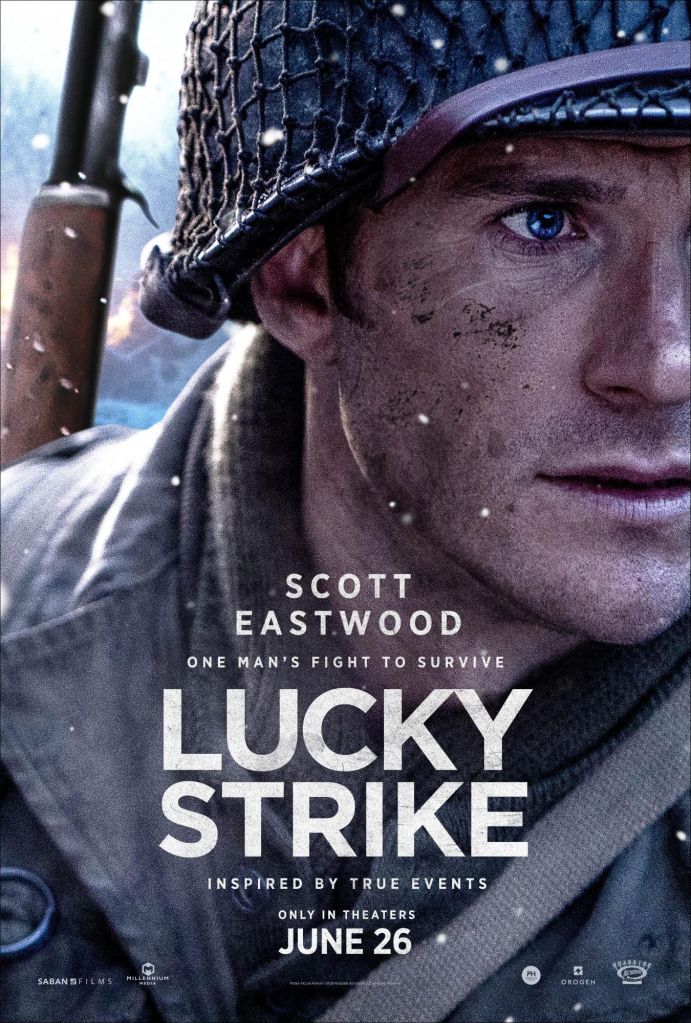
Of late, there have been a lot of WWII films, some fanciful like “Sisu” and its sequel, some comical like “The Ministry of Ungentlemanly Warfare” and others like “Pressure” which are more serious and very good from an acting and directing standpoint. Now, a few weeks after that film came out, there is “Lucky Strike” starring Scott Eastwood and directed by Rod Lurie. Lurie doesn’t have a very big filmography, but he did direct “The Outpost” , which came out in 2019 about the war in Afghanistan. So, he has a history of directing films about military conflicts. This’ll be the second time in a row he’s worked with Eastwood who co-starred in “The Outpost” with Alan Ritchson, Orlando Bloom, and Caleb Lendry Jones. So that’s a good sign.
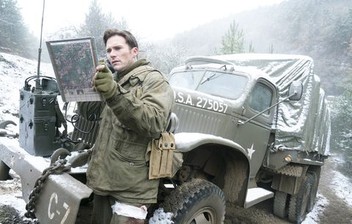
Eastwood plays Murph, often called Murphy, he is part of a team of American soldiers who get ambushed on a foggy road in Belgium during the last offensive of the German Reich known as “The Battle of the Bulge.” His team are all killed, and he’s caught between enemy lines with only a Motorola SCR-300 radio, a new technology for the time. He has to often play dead to avoid capture and hide in structures like barns to escape from being caught. He has to make it to a far-off distance to get back to the American forces. Using his wits, training, and ingenuity, he avoids capture for the most part, but there is some collateral damage as he’s trying to make his rendezvous with the Allied forces.
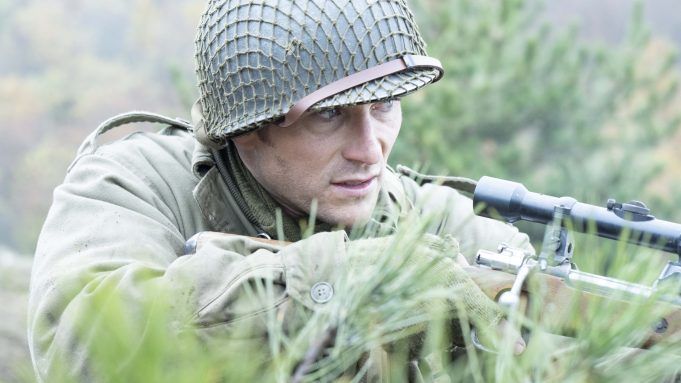
One of the technical aspects of the movie that stands out is the cinematography by Lorenzo Sanatore, who worked on “Wonder Woman “ in 2017. That makes sense because the cinematography of that film was gorgeous. He uses the cold air, fog, and the night to create a gritty look for this movie. It makes the film look like it was from the time period it took place in. I’ve seen a lot of WWII movies that look pristine and new looking, and that’s not the way a film about this war or time period should look like.. When I watch movies, I want them to look authentic to the time and place they took place in, and this one did that very well.
This movie uses a framing device to a very good effect. The main character visits a woman played by Aunjanue Ellis Taylor, “King Richard” whom he tells a story about his time in WWII. She’s the mother of a soldier he met in WWII, but he has a deeper connection with. As the film progresses, that connection is revealed to the audience watching. A key to this man’s survival was the radio he had that he could use to communicate with his allies back on their base. Without it, this man, Murph, may not have survived all of the pitfalls he encountered on his journey. It was cool to see how this device played such a pivotal role in this man’s survival so as he lived and could tell his story.
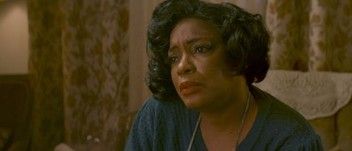
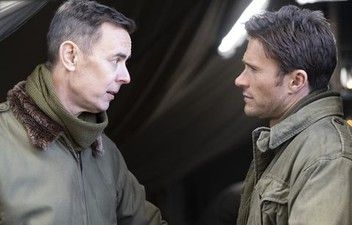
Besides Aunjanue Ellis Taylor, the film had a small supporting cast. Colin Hanks plays an officer who gives Eastwood’s character and his men their mission. It’s interesting to see Hanks in these kinds of supporting roles where he seems out of place to me. Taylor John Smith plays another stranded soldier who meets up with Eastwood’s character on his trek through the night back towards safety. They talk about their experiences and their various jobs, but something isn’t quite right about this soldier also stranded behind enemy lines. I’ll leave that for the viewers to find out for themselves. The rest of the cast plays American or German soldiers and has little effect on the overall story that Marc Frydman and Lurie are trying to tell. This is mainly an Eastwood vehicle to shine in.
The movie uses two things to show the struggle of a wounded soldier in war. One of them is a white horse. Eastwood’s character sees this horse multiple times as he’s lost and walking towards his impending doom. The white horse represents an angel of death and going to heaven possibly. This might also represent hope amongst the chaos of war. Either way, it was a very good use of this kind of symbolism. The director also uses flashbacks as a way to show Eastwood’s character’s family back home. That’s a way for him to have hope in a bad situation, I would assume. These two specific things were very well used in conjunction with the main narrative to give the audience a sense of dread during the context of the film.
Having not been in the military or anywhere near a war I am not exactly the best representation of how realistic this film was, but I’ve seen a lot of war movies in my 52 years on this earth and this was a very good one. It showed the reasoning behind how, where, and why these events happened and what the cost of said events was. Lurie used various techniques to give viewers a sense of dread in an unimaginable situation for most of them/us. Eastwood is a far cry from his Oscar winning father as an actor but I thought he seemed right at home in this role as an American soldier caught behind enemy lines during “the Battle of the Bulge” in WWII. The cinematography was incredible by Sanatore. He gave a film a look that I could genuinely imagine this time and a place in history would look like. I loved the look of the movie from beginning to end. A nice touch was a song in the credits and photos of the men who fought in this war at this time. This was a really good movie telling an important story.
🌟 🌟 🌟 🌟 stars


Leave a Reply