
By Tyler Banark
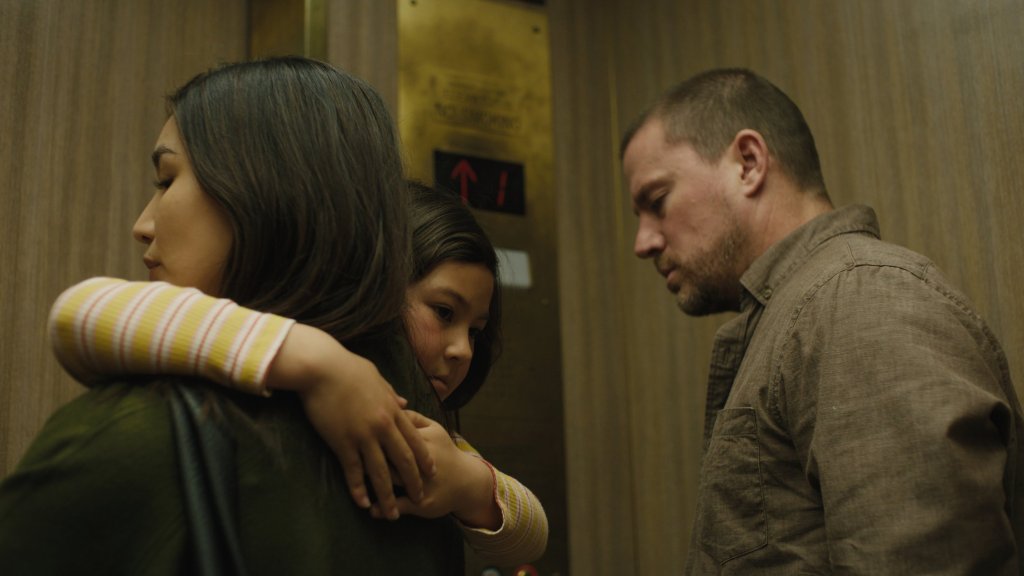
One of the biggest hits of Sundance this year that immediately jumped on my radar for TIFF 2026 was Beth de Araujo’s Josephine. All the noise I heard from Boulder back in January was how much of a punch to the gut this movie lands in the first 10 minutes, then haunts you for the rest of the runtime. I bought into it and can confirm that Josephine is a somber film that’s sure to be discussed more after its release. Above all, it’s loud but also quiet for what it’s going for, which is exactly what de Araujo intended.
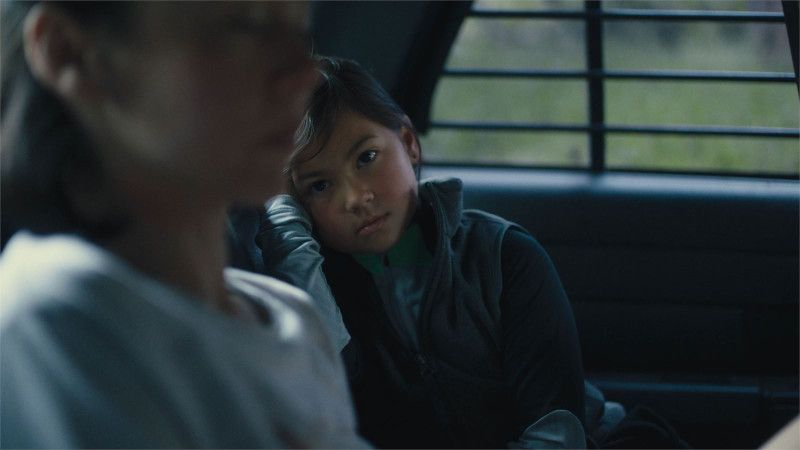
Drawing on de Araujo’s own experience, Josephine follows a young girl who witnesses a crime she shouldn’t have seen. One where she’s too young to understand what happened, and it shatters not only her life, but her parents’ as well. Newcomer Mason Reeves plays the titular girl and captures her arc perfectly. Josephine doesn’t know how to cope with the trauma of what she saw. It keeps her up at night, leads her to do things that get her in trouble at school, and, above all, reveals that her home life is flawed. Reeves is quiet and doesn’t have many loud scenes, but much comes through in her eyes.
Gemma Chan and Channing Tatum play the parents in grounded performances. In particular, the latter continues a streak of risk-taking roles. Between this and last year’s Roofman, I’m convinced Tatum is proving he can spread his wings and be more than just eye candy or a goofball. He’s out to prove he can take on serious subjects and roles within them, and so far it’s more than working. He plays Damien, a father grappling with how to caution his daughter about certain atrocities and how to move on from them. He’s not perfect at it; in fact, some of the methods he tries to show Josephine backfire, and it all snowballs into her acting out on him and Chan’s Claire.
Beyond the leading trio, Josephine is visually enticing thanks to Miles Ross’ cinematography. It doesn’t stand out through color schemes or lighting, but through how Ross moves the camera during scenes. It captivates the audience through moments of characters figuring things out through police questionings and a trial testimony scene. The latter has one of the most shocking moments I have seen at TIFF this year, and it drew rapturous applause from the audience. Moreover, Ross’ cinematography handles the gravity of de Araujo’s script with respectful heaviness, making the movie fittingly grim. It’s safe to say Josephine is easily one of the best-shot movies of the year, and I hope more people recognize it.
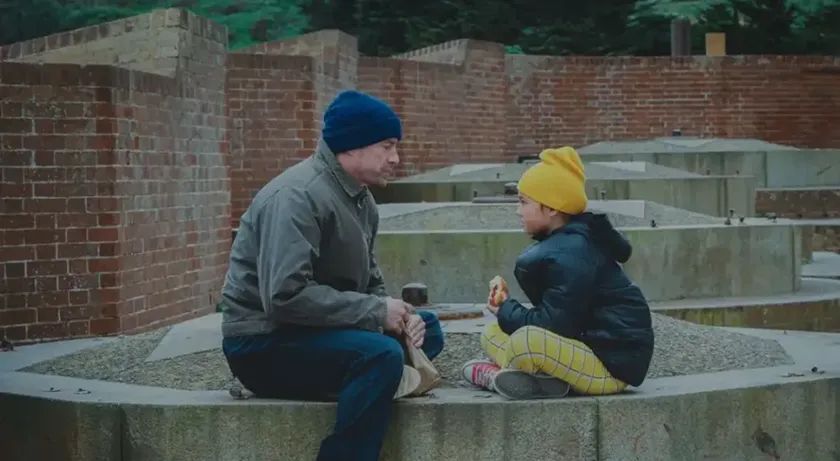
If Josephine has any faults, it’s how the titular character is written to be too quiet. It isn’t a knock on Reeves because she translates Josephine’s writing well. The problem is that de Araujo doesn’t give her much rage, and she mostly stays emotionless as everything unfolds around her. Even if the script had one moment where Josephine lashed out loudly, I felt that would’ve been enough, and audiences could see that Reeves can be voluminous in that regard. However, she proves it’s enough, and the rage comes through in Chan and Tatum’s roles. If anything, it makes me hopeful that Reeves will have a future in acting.
Josephine comes across as a tough pill to swallow, but it’s professional and never exploitative. Beth de Araujo and company had a tall task to face, and delivered it with such nuance and raw emotion. Despite all of the love at Sundance, it didn’t have much fanfare coming out of TIFF, which is baffling because it should be in the conversation for this awards season. However, the reason may be that the film is being distributed by Sumerian Pictures, an up-and-coming independent distributor spun out of a Nashville-based record label. Regardless, it shouldn’t stop people from seeing this movie or negate the fact that Josephine is one of the strongest works of the year!

🌟 🌟 🌟 🌟 1/2 stars


Leave a comment