By Kyle Flynn
Werner Herzog’s latest vision transports you once again into the recesses of his mind, in a completely reflective state of his own ideals. Herzog films, especially his narrative features, are often hit-or-miss for me. Despite my respect for his continued effort to make a delivery that feels consistent in tone and style from start to finish, it never all comes together, and I often struggle to justify the experience as worthwhile. While his documentaries (and I should say I believe Cave of Forgotten Dreams, which recently had a theatrical rerelease this year, would pair excellently with Bucking Fastard) work a little better for me. To my surprise, Bucking Fastard manages to have so much heart, and the playful state Herzog imagines for us had me in my palm.
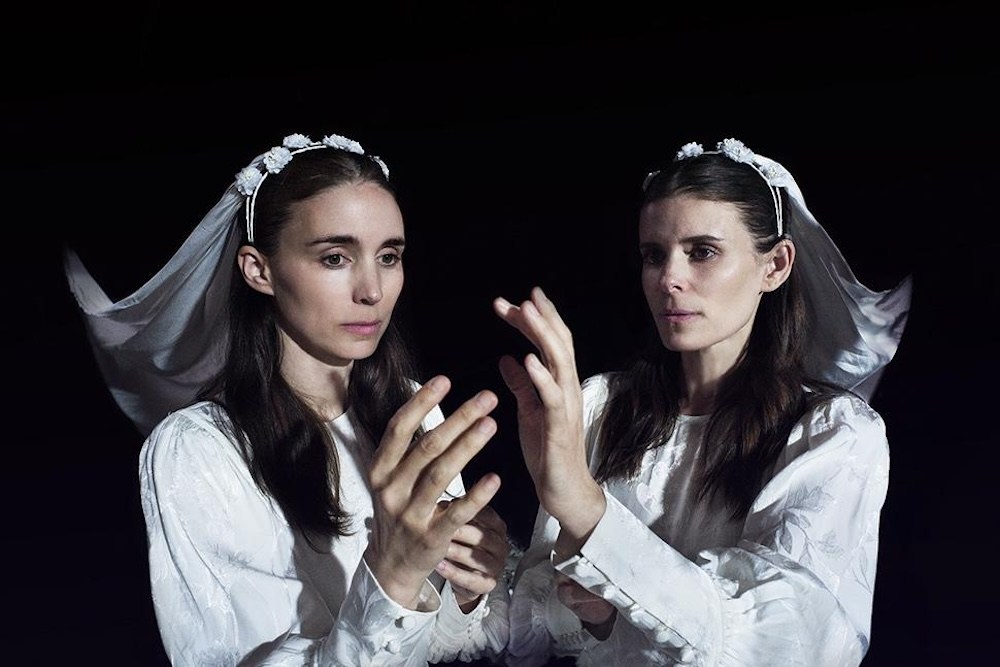
The film follows sisters, Jean and Joan Holbrooke, played respectively by real-life sisters Kate Mara and Rooney Mara. Their exploits include falling in love with the same man, having the same dreams, and digging a tunnel together. The primary conceit of the film is that during the course of the film, Kate and Rooney talk in unison for narrative purposes, but to primarily recognize that they are connected.
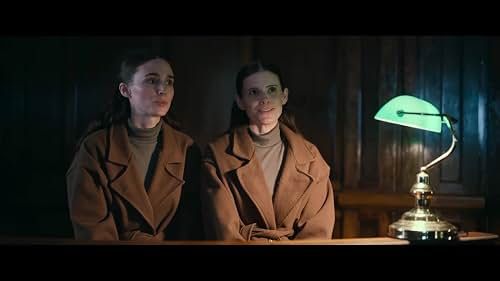
In Herzog fashion, the film traverses you through many different story beats and plot points. The actual path it takes you on exemplifies the phrase ‘The Journey is Better Than the Destination’ more than most films this decade have been able to. 99.9% of moviegoers would be bewildered if you told them where the film ended up after the first 20 minutes, which manages to be completely disconnected from the central resolution of the film, but still feels like a logical and thematic start to the story you just witnessed.
You can imagine this succeeds mainly due to the heavy burden placed on both Kate and Rooney Mara to have to sell such highly stylized characters in a world that at least acknowledges the oddities that the women embody. They are doing magnificent work. The main ‘gimmick’ (I resent calling the conceit of the story that, but it feels the most apt because I struggle to believe it was the only way of telling this story) does wear thin. At a certain point, I just kind of understood that the style was likely to be hit-or-miss for general audiences, and despite my being on board for the majority of the film, it doesn’t all feel all that meaningful to me by the end.
Of the supporting performances, Domhall Gleeson does feel a tad out of place, taking me out when he is on screen. However, I was very fond of the performances of both Orlando Bloom and Marion O’Dwyer. Both manage to strike an interesting tonal balance in the story, in parallel to the Mara sisters. The former plays a prevalent role early in the film, while the latter represents a striking voice of reason in the third act of the movie.
For the sake of interesting cinema, it does feel like Herzog is tapping into something different. It’s visually striking and tonally off-kilter, but that’s not a negative, as I found myself on the same wavelength for much of the film. Despite my mentioning of how the conceit wore on me by the third act, truly, how could I not be grasped wholeheartedly when Herzog simultaneously doubles the third act as not just an ode to sisterhood, not just an ode to off-kilter cinema, but also an ode to his true joy of cave exploration. Very Herzog, and very much for me.
🌟 🌟🌟1/2 (much, much closer to a 4 than a 3, perhaps on a rewatch when this gets acquired for distribution)


Leave a comment