By Dan Skip Allen
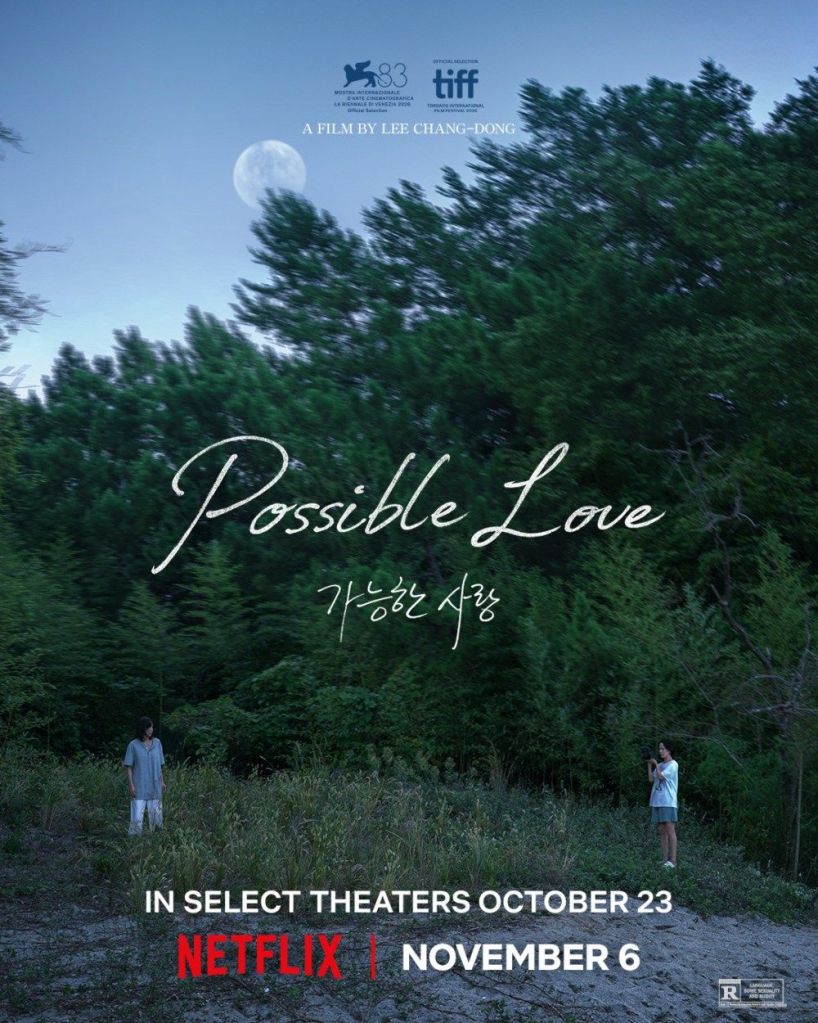
“Possible Love” won the Silver Lion at this past year’s Venice International Film Festival, where it first premiered and was selected as South Korea’s submission for Best International Feature Film going into next year’s 99th Academy Awards. Movies that take place in other countries other than America can often get lost in translation by American audiences because of the way the stories are told. Lee Chang-dong (Burning) is a Korean director who has at least one fantastic film under his belt now he’s made another terrific movie that deals with some subject matter that is very relatable to a lot of people in different countries. Especially here in America, so that lost in translation thing didn’t work in this instance.
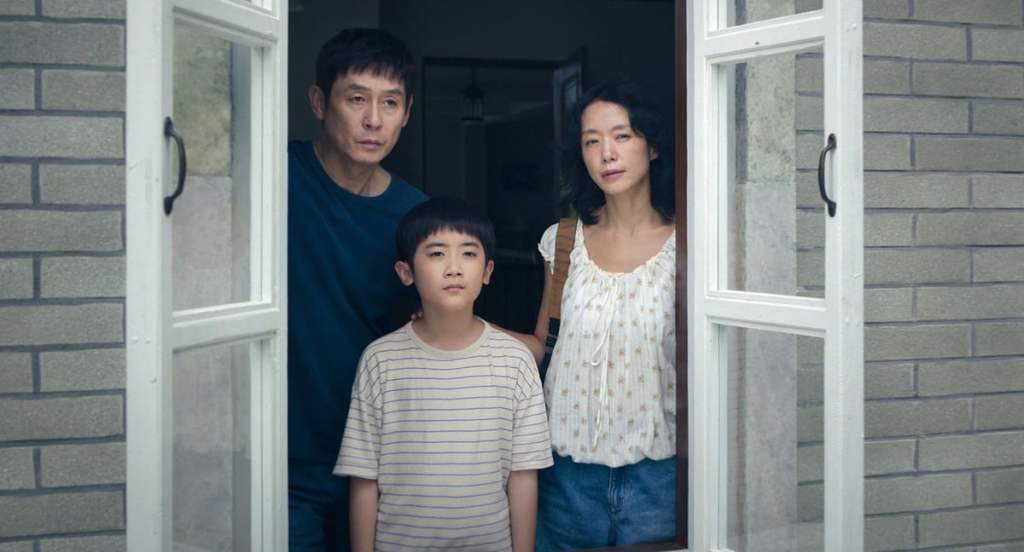
An mi OK (Jeon Do-yeon) and Choi Ho-seok (Sul Kyung-gu) are a struggling working class family who are financially and emotionally broken after Ho-seok is laid off from his job after he was part of a factory union strike. A couple of friends of theirs, Lee Yi-ji (Cho Yeo-joeng) and Sang-woo (Zo In-sung), are an affluent family. One is a documentarian, and the other is a wealthy businessman. After a nice dinner one night, Sang-woo asks if she can document their struggles. This helps them figure out some of the things that have been going on in their community. They aren’t the only ones having a hard time. The documentarian interviews others who are in similar situations as this couple for her film about workers’ rights and bad treatment for employees in this country.
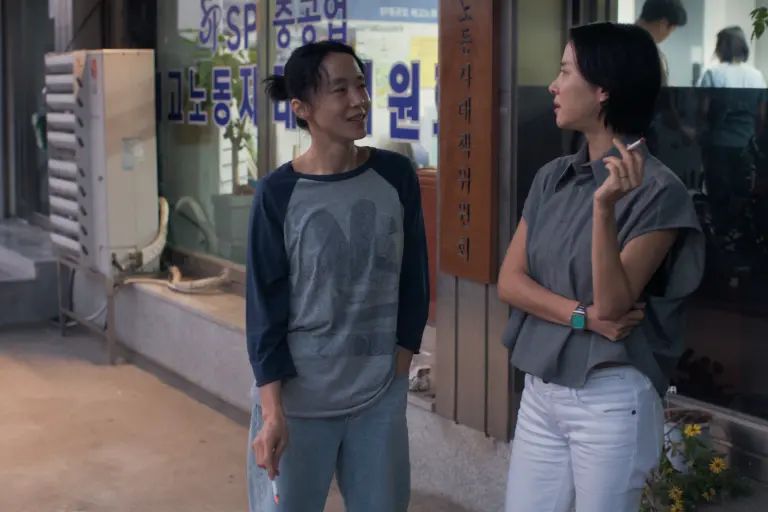
The two families are vastly different, but they are friends anyway. The husband Choi Ho-seok is embarrassed by his situation. He doesn’t want to be part of the film, but he’s in a bad mood about being let go from his job. He knows there is a vast difference between him and his wife and the other couple. As far as the well off couple goes they feel bad for their friends and they want to help them by inviting them to their vacation home to make them feel better but there is an ulterior motive behind the invite. It’s to get more information from the couple about the hard times they are going through. Trying to understand not having anything. What that means to the couple and their son. That dichotomy is what’s so fascinating about this story.
As someone who has struggled his whole life, I can say that I completely understand what this couple is going through. I’ve lost a number of jobs due to either bad treatment by my bosses, outsourcing, or other reasons. I’ve even tried to organize my co-workers at one of the jobs I’ve worked at because of bad treatment from the employers regarding overworking us and not paying us enough. I definitely can relate to what this couple is going through except one thing. I’m a single guy, not married with a child like them. I even know a few filmmakers, and that includes a documentarian who has made a few great documentaries in past years. There is a lot in this movie I can personally relate to. I’m sure I’m not the only one.
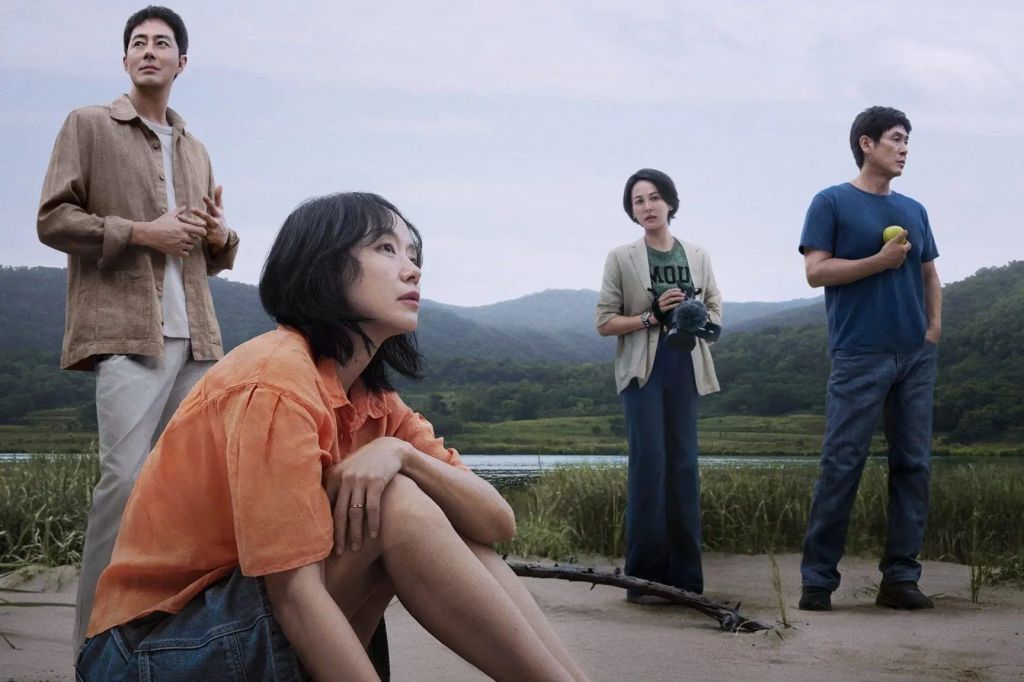
The cast in the film are all giving fine performances. With this being a Korean movie, I’m not that familiar with the actors, but they do a great job of representing who they are playing. The various lives these actors are playing were totally believable to me. I didn’t question once who they were. That’s a good acting performance as far as I’m concerned. Four actors who make the viewer completely believe in their performances make for a good movie. It makes the story more effective and what is going in it better overall. That’s what I’m mainly looking for in acting performances. This director gets the best out of these actors.
One technical thing I noticed regarding the storytelling aspect of this movie is flashbacks. There aren’t many technical aspects I can talk about, but the flashbacks are a key thing in the story. The actors, as their characters, are having conversations with each other and sometimes tell stories about the past. Also, the strike that the husband is involved in is used as a flashback as well. The director transitions into the flashbacks in these situations. The flashbacks are used to get to know the first couple I mentioned while the interviews for the documentary are another way to learn about these people. Using this kind of framing device makes sense in the context of the story. Lee Chang-dong uses both of these techniques to good effects in this film.
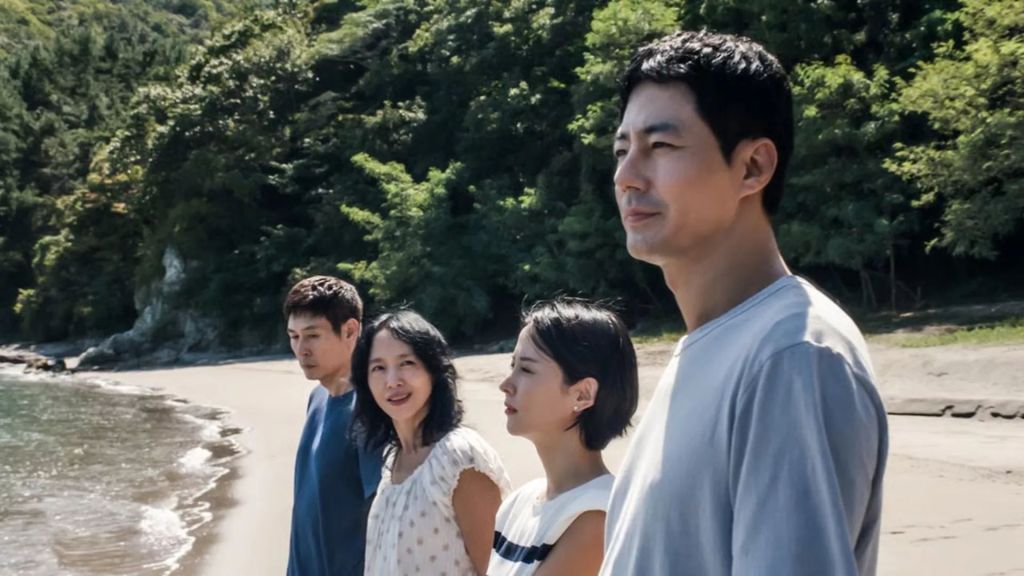
“Possible Love” is a pretty straightforward story about this struggling family and another couple who take pity on them. The differences between the two couples are very clear. They are completely different from a financial point of view. The film shows that very well. The flashbacks help in this. The actors are all doing fine work here, and the director gets good performances out of them. He does a good job as well bouncing around from the main story of these four people into the flashbacks and the interview sessions and counseling sessions for the main couple. If I had one issue with the film, it would be that it’s too long. I think a good edit could have taken this film down from 2 hrs and 45 minutes to 2 hrs 15 minutes. It drags in the middle. Other than that, this movie and its story are both relatable to me. Once again, Lee Chang-dong made a good film.
Possible Love is now currently streaming on Netflix
🌟 🌟 🌟 🌟 stars


Leave a Reply