

By Tyler Banark
One thing that goes unspoken about The Hunger Games franchise is that it’s the last book(s) standing from the YA novel-to-film adaptation craze of the 2010s. Whether it’s because of the vast intrigue Suzanne Collins created for readers and viewers, or because Jennifer Lawrence became the face of the franchise while also being Hollywood’s hottest commodity for five years, the world of Panem has survived the craze’s phase-out and still welcomes old and new viewers. Since 2020, Collins has brought readers and viewers back to Panem. She succeeded in doing so with The Ballad of Songbirds and Snakes, even if the movie adaptation wasn’t as resonant as the main franchise. Last year, she published another spinoff that was immediately greenlit for a movie, Sunrise on the Reaping. Where Songbirds and Snakes lacked in tone and intention, Sunrise felt more like a step towards returning to form.
In a day and age where a lot of major studios are milking their most coveted IPs (mainly looking at you, Disney), Lionsgate has found its crown jewel in The Hunger Games, while I’ve found most to be annoying and unnecessary, The Hunger Games resolved its core story but still left a lot to be explored within the world of Panem. This is why we’ve gotten origin stories like President Snow’s in Songbirds and Snakes and Haymitch’s here. Haymitch has always been a highlight of the main franchise, thanks to both the character’s writing and Woody Harrelson’s charismatic performance. His Hunger Games, the 50th version and Second Quarter Quell, was the most brutal one we’ve seen thus far. We see Haymitch, played by newcomer Joseph Zada, go through the absolute ringer in the arena. If you think Katniss or Lucy Gray had it rough, think again because I promise you nothing those two experienced holds a candle to what Haymitch had to endure. From brutal mutts to an erupting volcano that wiped out half of the remaining tributes, the 50th Hunger Games had the odds in hardly anybody’s favor.
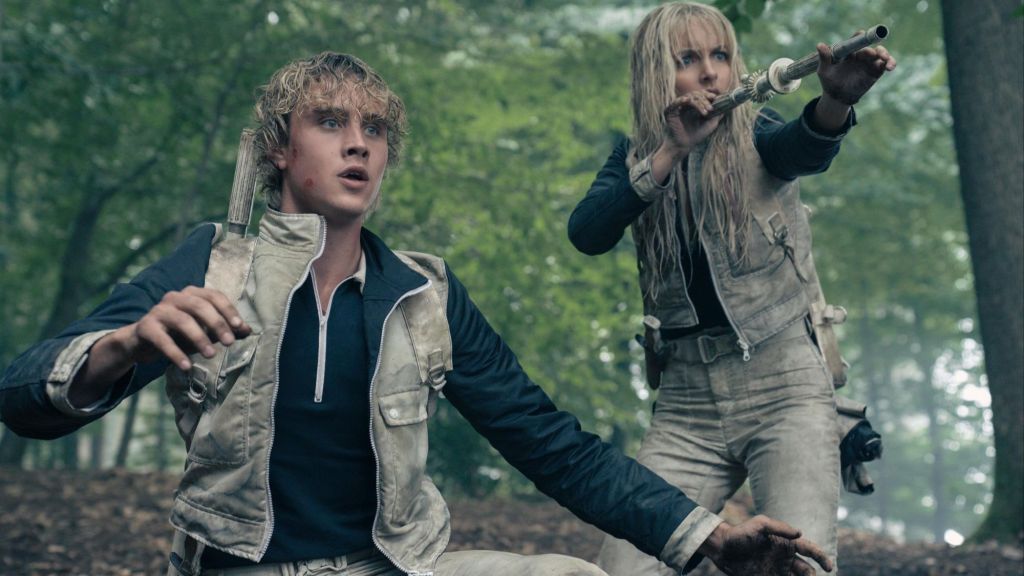
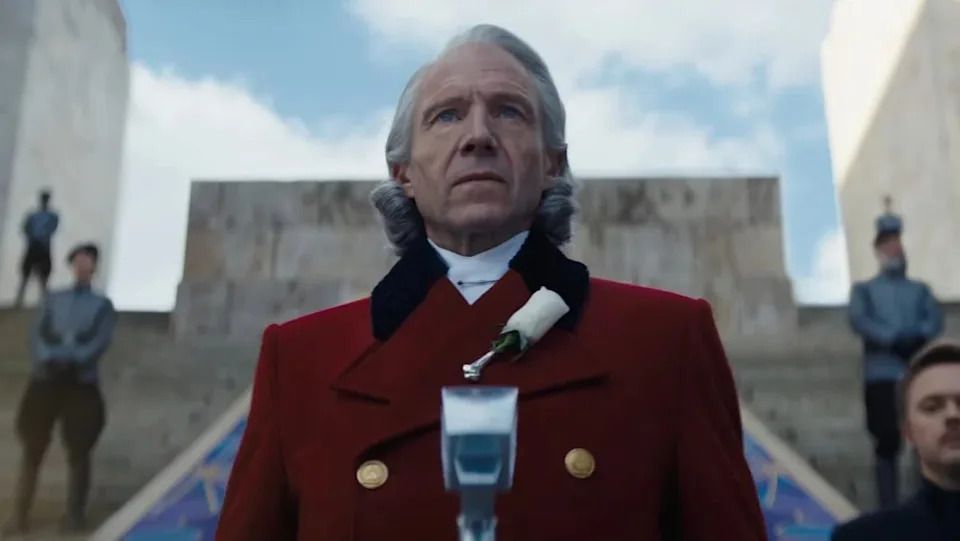
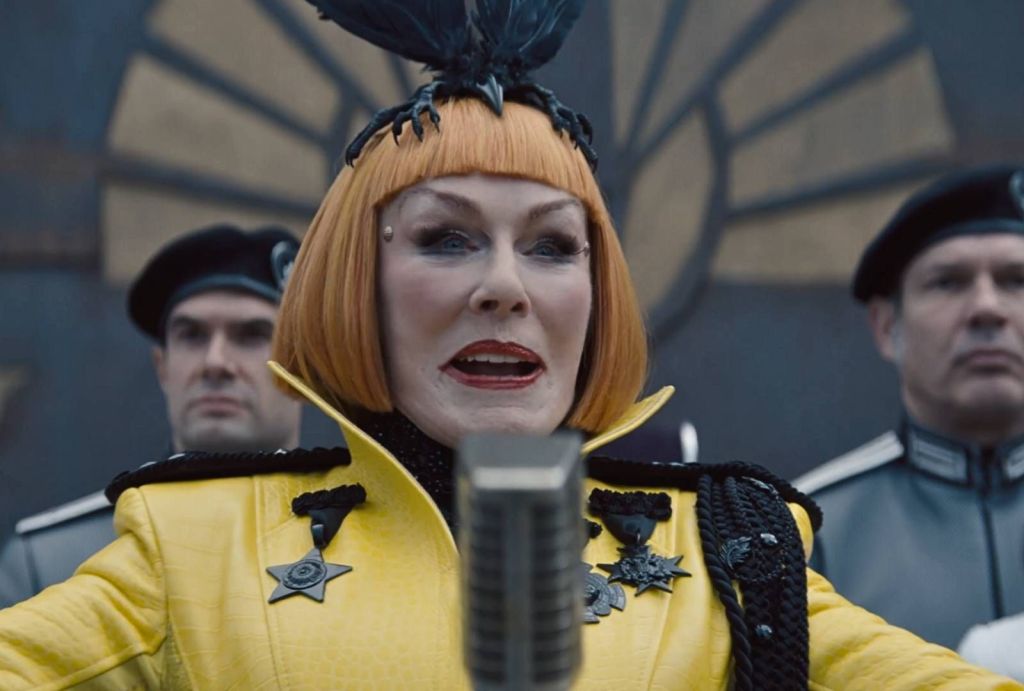
One of the most talked-about elements of Sunrise was how Francis Lawrence and crew went all in on the cast. Last year, it felt like a new casting was announced every day, and it was one A-list actor after another. Seriously, I don’t think I’ve ever seen a studio or casting director go this crazy assembling an all-star cast since Barbenheimer. Everyone steps up to the plate, regardless of how much screen time they got. Ralph Fiennes is menacing as ever as President Snow, Kieran Culkin leans into his brash personality as Caesar Flickerman (a character with complex motives in the original entries), and Maya Hawke and Kelvin Harrison Jr. don their best as previous game winners Wiress and Beetie, respectively. Elle Fanning also leans heavily into Effie Trinket in a marketing campaign similar to Margot Robbie’s for Barbie, and it shows in her minimal screen time.
However, the two biggest highlights of the ensemble are Zada and Jesse Plemons as Plutarch Heavensby. The former embodies the mindset Harrelson established and runs with it here, as we see Haymitch become the drunk yet well-intentioned mentor we’ve come to know. Zada seems promising as an actor, and making this heavy feat his mainstream debut is nothing short of a small task. While taking on the mantle of Haymitch isn’t as big as Katniss or even President Snow, he works it and delivers one of the franchise’s best performances since the original movies. Haymitch was a passionate kid whose life got flipped upside down when he got picked for the Hunger Games. Like Katniss, he looks out for the little guy and isn’t afraid to stand up to bullies. He’s also strategic in his efforts to dismantle the games and also reins in a move-and-countermoves mindset.
Meanwhile, the latter masters the two-faced Capitol citizen by serving as Haymitch’s voice of reason. I’ve been saying for years that Plemons is the closest thing we have to a second coming of Philip Seymour Hoffman (no offense to Cooper), as he captures similar mannerisms and gravitas to each of his roles. His performance in Sunrise further proves it. Seeing him go from one second as a Capitol ally trying to build a narrative for the games to another as a man of the people looking out for Haymitch, Plutarch plays chess while everyone else plays checkers (moves and countermoves, as he says in Catching Fire). To my surprise, Plutarch got a lot more screen time/plot contribution than I expected, and I am more than all for it.
Behind the camera, Lawrence provides a glowing, colorful display in sight and sound. Sunrise’s color scheme makes other modern blockbusters look disgusting, and James Newton Howard’s score is easily the best in the franchise. If there’s anything lacking, it’s plot holes and questions about the world that aren’t fully answered (i.e., how did Districts 1 and 2 become the ones with special treatment?). I won’t go over them due to spoilers, but I’m hoping any questions I have can be answered one way or another. All that said, Sunrise on the Reaping is still a magnetic, resonant film of 2026 and one of the best in the Hunger Games franchise. What I once feared as a franchise slowly drifting away from what made it special has now begun returning to its rightful form. Some might even say this new entry is the sunrise to the true continuation and worldbuilding of Panem!
🌟 🌟 🌟 🌟 1/2 stars


Leave a Reply