

By Dan Skip Allen
Pedro Almodovar is a director who I’ve admired for years now. His films like “Volver”, “All About My Mother”, “The Skin I Live In” and “Pain and Glory” are just a few of the movies he’s written/directed that I’ve enjoyed over the years. He has a unique style all his own for making movies, and his latest “Bitter Christmas” is no exception to that. It’s an anthology film like none I’ve seen before. He deals with the human condition quite often in his films. That’s what this movie deals with as well. The human condition that isn’t always enjoyable to follow along with. The real characters or the imagined ones aren’t very engaging. This isn’t the best of his films, and that’s me being nice.
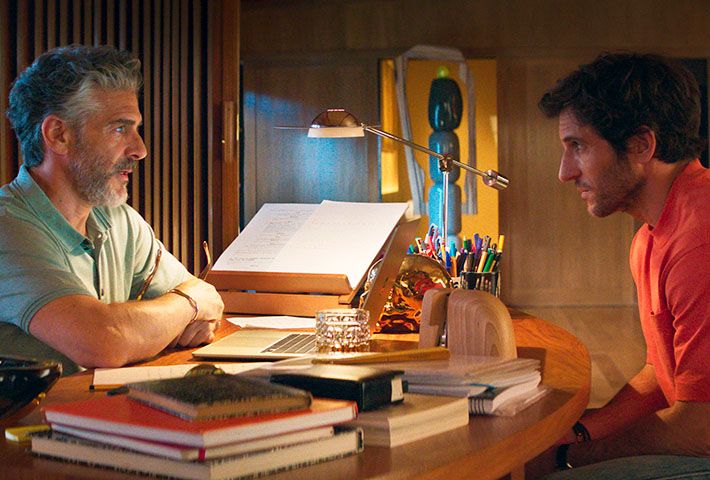
The film deals with a writer named Raul (Leonardo Sbaraglia) who is writing a screenplay . He has an assistant Monica (Aitana Sanchez-Gijon). She helps him with his day to day life, including his appointments and engagements. He also writes about his liver Santi (Quim Gutiérrez). He is inspired by his life in the present 2026 to write an autobiographical story about a woman in 2004. This story is imagined in a non-linear way as it unfolds as the writer is creating the story. It focuses on Elsa (Barbara Lennie) and Bonifacio (Patrick Criado). She is an advertising director who makes commercials and so forth. He is a firefighter who moonlights as an exotic dancer on the weekend. She has a best friend that she confides in named Patricia (Victoria Luengo). They are very close and share their deepest thoughts and secrets with each other. As close friends often do. The story in the screenplay mirrors some of the events in the writers’ real life, and that is what makes the story interesting.

Almadovar plays around with non-linear storytelling in this film. The present day, 2026, characters inspire the 2004 characters quite a bit. Each of their stories are complex and layered. Illnesses and other personal issues plague the characters in the past in the screenplay while difficult subjects are also touched on as well in the present day, 2026, time-line.Trying to balance both his real life and the lives of the characters in the screenplay seem to be hard for him. These are complex characters in both timelines. That’s where Almadovar shines. The script is a good one. It’s just hard to follow along with these characters for very long.
The performances are good in this film especially from the three women who play the main characters in the past and one in the present. The various things they do and go through as well as deal with are the crux of the film. These three women who speak Spanish are actresses whom I wasn’t familiar with before seeing them in this film. They have character subplots and storylines a lot of women in the world can relate to. They have to deal with illness, death, family squabbles, and differences between them at times throughout the movie. It’s mainly centered on women and their lifestyles. Almadovar is good at giving women good shows and characters to dive into.
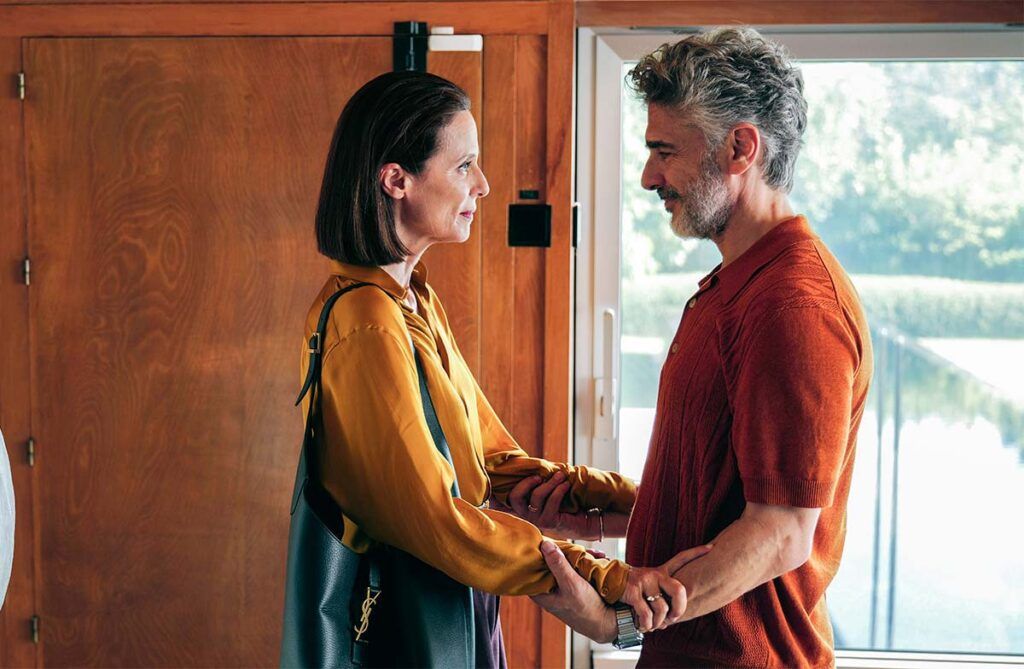
Part of what makes a good Almadovar film is its production design. He loves to have very colorful sets, rooms, furniture, and backdrops in his films. They are the same here. The 2004 world within the screenplay is aesthetically beautiful. That includes the clothes the characters wear as well. The present-day production design is equally good to look at. The main room that the writer works in has red walls and stands out quite nicely. The world as a whole that the film exists in is quite beautiful to look at from the beaches to the rooms and everything in between.
I completely understand being in the mind of a writer as I’m a writer myself. The difficulty getting the words out isn’t always easing. Expressing one’s thoughts on paper or a laptop isn’t the easiest thing in the world. Writing a script is probably one of the hardest things to write. I know because I’ve tried and almost succeeded. I’m still working on it. The writer in this story has a hard time getting his characters right and giving them enough of an interesting story to make people care about them as much as he does. I was somewhat interested in them but not totally interested in them. As this is a foreign film, I wasn’t quite as admired with them as I wanted to be. That’s sometimes the case with Almadovar movies.
Drugs and so forth are a subplot of the film because of the main character’s, Elsa’s, headaches, but this was really one thing that kept me interested in her. She took Trankizolans for her migraines, and I have had migraines my whole life. Headaches can be a real pain because they make you think about how painful they are instead of the things you need to do on a given day, such as work tasks and everyday things. My headaches were debilitating at times. So when I saw this character in the film, I cared about her plight. That’s all the relatability she had for me, though. Other than that, I wasn’t interested in this character. To be honest, I wasn’t interested in the lives of any of these characters except for her, even if the story took place around Christmas or not. That was an afterthought for me. If it weren’t in the title, I would have forgotten it when the film took place.
“Bitter Christmas” has a few subplots and / or character traits that fascinated me, but as a whole, I wasn’t interested in these people. Maybe because it was a Spanish story. Who knows? The acting was fine by all. Nobody completely stood out to me as an incredible performance. The production design was good as always in an Almadovar film. I always get a kick out of the look of his movies. This story was semi-interesting to me because I’m a writer. I could relate to the struggle of coming up with good things to say. I could also relate to the headaches of the main character. The back and forth between the present, 2026, and 20024 was what bothered me the most in this movie. It was a bit confusing at first. Fans of Almadovar might like it more than I did, but at least he tried doing something different than the usual fare.

🌟 🌟 1/2


Leave a Reply