By Kyle Flynn
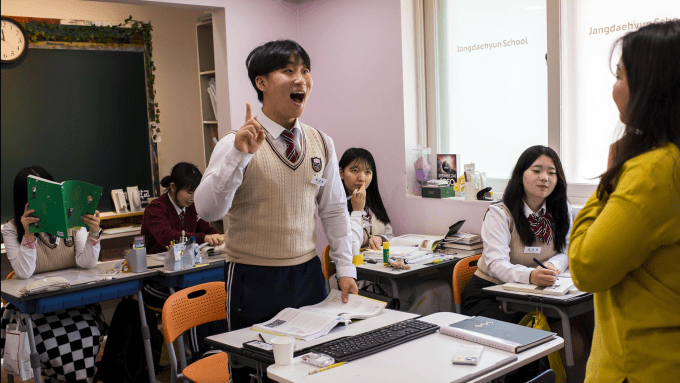
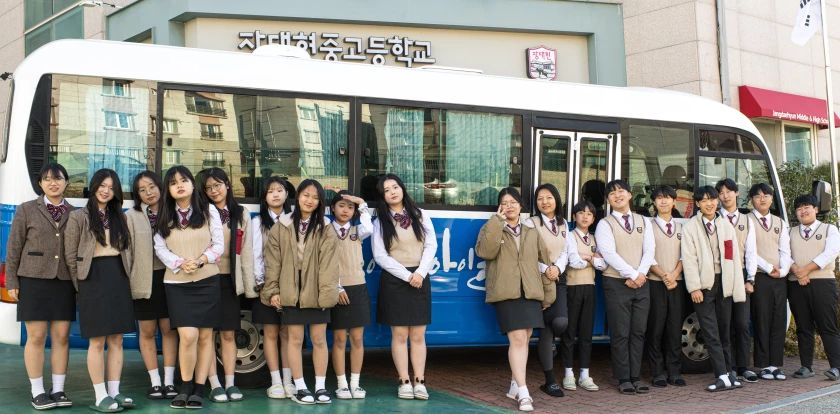
In the latest project from documentarian Jeremy Workman, School For Defectors showcases the lives of students who have defected from other countries or regions to South Korea in search of a better life and education. The documentary is framed entirely through the lens of the Jangdaehyun High School (JDH), where the subjects of the documentary attend and study. Bringing you as close as possible to looking through the eyes of the students can be.
There is so much opportunity in non-fiction filmmaking to provide moments of reflection and a chance for the audience to really have a long think about where their own experiences can be placed while watching the lives of others. Despite the obvious thematic and tonal differences from Workman’s previous work, including his most recent and high-profile feature, Secret Mall Apartment, one of the unexpected hits of 2025, which I was fortunate enough to watch at The Florida Film Festival in 2024. I found the students’ observations of Workman and company capture at JDH to be more interesting and well-formed than his previous work, despite my longstanding enjoyment of his previous films.
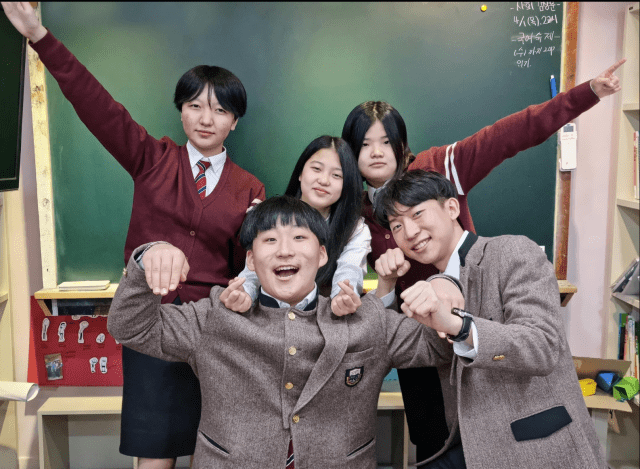
The film’s view shows how the JDH differs from the generic school structure in South Korea. The film showcases the struggle to acclimate from the Democratic People’s Republic of Korea (North Korea) to South Korea, and, in some cases, examines those who have defected from the regime in China to South Korea. The film features multiple one-on-one interviews with both students and parental defectors. One moment that struck me quickly at the range gathering was an interview with Jia, a former JDH student, who spoke about her experience at a traditional South Korean school and the cultural differences she encountered compared to JDH. Giving us a little bit of an opportunity to imagine what the actual benefit of coming here is to the students.
During the latter half of the film, we get multiple interviews with the parents who defected. It digresses farther than I expected into how they fled, why they took the risk, and how enrolling their children in the JDH is a greater benefit to them and an assurance that they will receive a great education regardless of their status as defectors. For obvious reasons, many of these interviews would put them at risk, and many have opted to remain anonymous, but rarely have I found such essential stories that provide such clear insight into the parallels of life in North and South Korea.
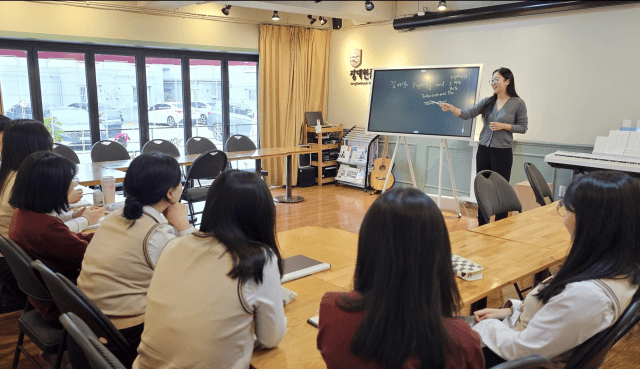
School for Defectors succeeds in part due to its own budging of the diplomatic differences with regard to the landscape of South and North Korea. The earnest attempt to portray the educational opportunities available to those who defect, and without going too deep, because it is best experienced on your own, finds another way to open in more ways by showcasing other schools for defectors on a holiday. These little moments go beyond the rare novelty that often plagues talking-head documentaries, and the conversations that can be derived from the film’s content are evident in my own post-film talks with other viewers. In the end, I came away moved by it’s and hopefully for the future of the subjects involved.
4 stars

 From the Fourth Row!
Leave a comment