By Fiorela Gonzales
Mother Mary blurs the lines between the real world of a mega pop star with the surrealism of ghosts wrapping it around a story of trauma and forgiveness. The film takes place inside a cabin in England where just two characters speak the entire time and the claustrophobia of the room slowly opens itself as the story winds itself into a fantastical world that doesn’t give you the answers you crave.
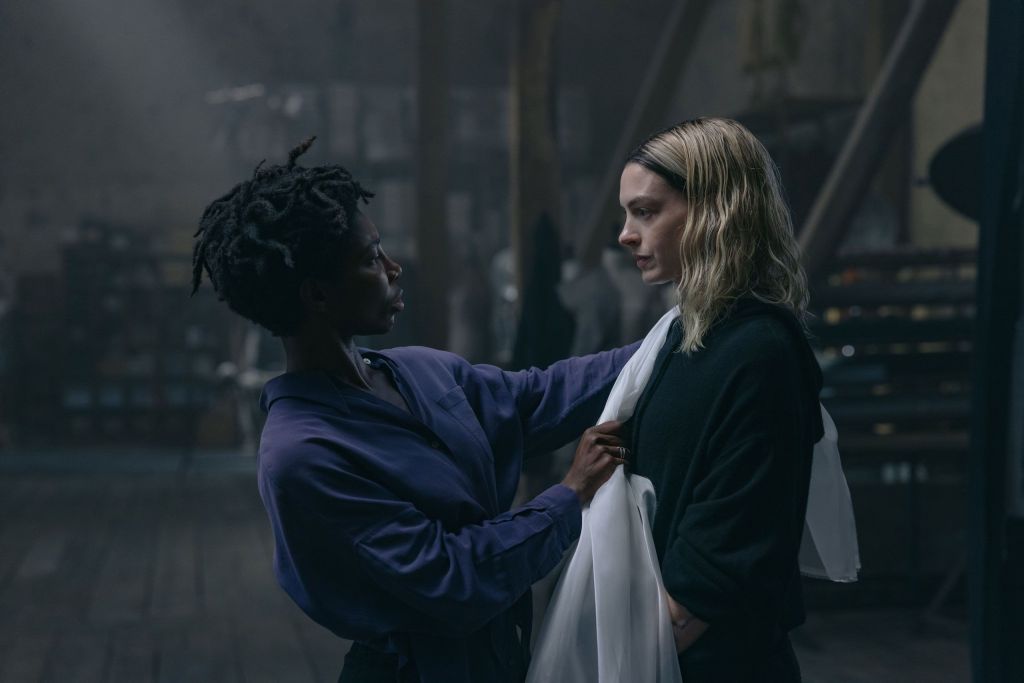
Michaela Coel as renowned dress designer Sam Anselm, opens the film with a voice over about a plague that is imminent. This voice over leads to Anne Hathaway as the world-famous singer, Mother Mary, at a dress fitting where she screams into the abyss after seeing a red cloth float towards her. She runs away and barges her way through Sam’s door begging her to make a dress for her as she makes her return to the stage, having been gone from the world for a bit. Slowly, through conversations that only reveal what it needs to as it unfolds the history of these two leads, we learn that Sam was Mother Mary’s dress designer and then once Mother Mary became the level of stardom she is now, Sam was left in the dust. There is animosity, grief, regret, and anger dripping from both leads as they try to collaborate on a new dress. Sam tells her if she creates a dress for the debut, then Mother Mary will not question her and will allow her free reign. Mother Mary agrees with the caveat that the dress isn’t red.
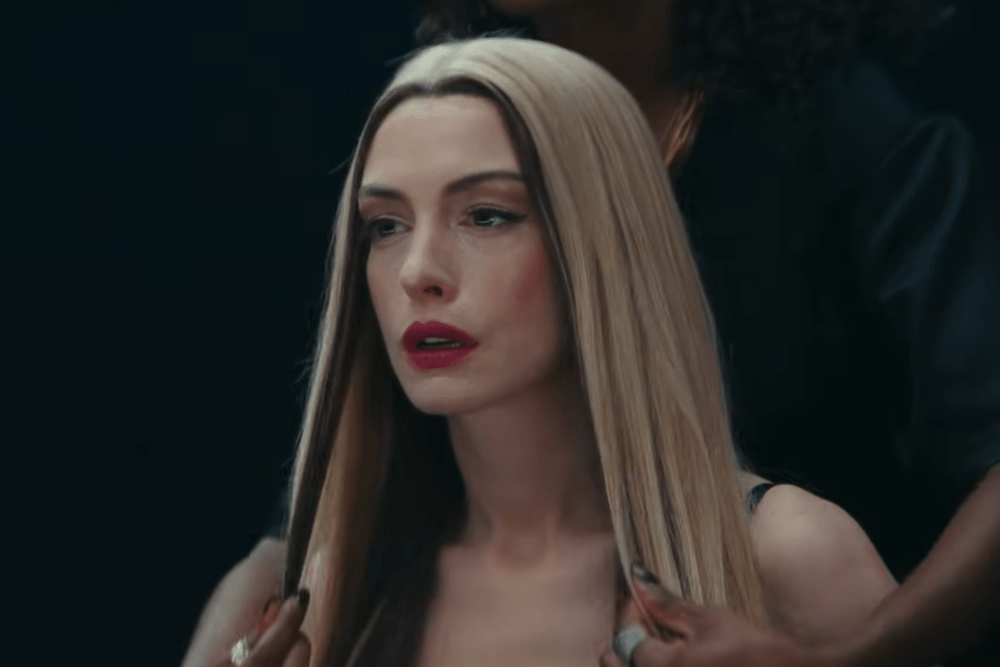
As the scars open up and the wounds spill out, we learn that both these characters are haunted. The last time Sam saw Mother Mary live, it caused her so much physical pain, it manifested itself into her jaw and ended with her having to have a tooth removed. That night while recovering she saw a ghost – a red cloth shape she assumed to be female that crawled its way out of the ground and flew away. Mother Mary contends that she’s also seen Sam’s ghost which gives Sam the best line of the film: “So I can’t have my own ghost either” which lands perfectly after all we’ve learned about Mother Mary and her taking credit for all of Sam’s designs and how Sam had to create her own world outside of Mother Mary. Mother Mary’s ghost parallels that of Sam’s, with the red cloth that floats towards her, but it comes at a higher price. During a séance, a possessed younger pop star played by FKA Twigs, slices open Mother Mary’s hand and the red cloth spirit inhabits her. Mother Mary is tormented and during her final performance before she took a break, you see the ghost controlling her as she jumps off the floating stage. Though the ghost is clear to her only, to others it is seen as a suicide attempt. This is the impetus of her return to the stage, her need for Sam, and her desire to understand and be forgiven for her past.
Sam conducts another séance where they slice open Mother Mary’s chest and remove the red cloth from inside her. As the ghost leaves her, Mother Mary’s team finally finds her and drags her away to return home. Before she leaves, Mother Mary apologizes to Sam, and we see Sam begin to work on the dress while Mother Mary gets ready for her debut show. Sam’s assistant Hilda (Hunter Schafer) helps Sam as she builds the dress, dictating what they think Mother Mary is doing during the show, which is interspersed with cuts of Mother Mary at her show. Sam cuts red threads and makes the dress – fully red. While Mother Mary gets on stage and removes her headgear that has become part of her persona, removes her dress – which is not the dress Sam is working on, and sings out the world as bare as she can.
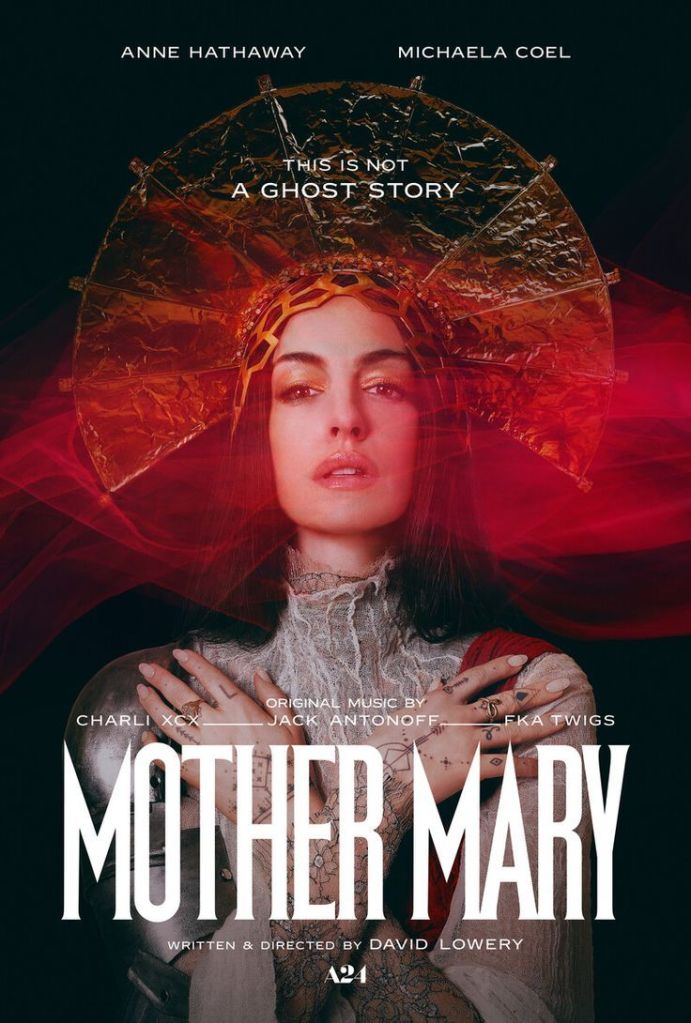
The tagline of this movie is “This is not a ghost story. This is not a love story.” Though the red cloth ghost permeates throughout the film, inhabiting Mother Mary forcefully while leaving Sam at peace, I agree that this isn’t a ghost story. This is a story about animosity and forgiveness. It’s a story about art and taking the pain and anger we have in this world and turning it into something beautiful. My personal interpretation of the film is that Mother Mary was never there in that cabin in England. Sam has had years of pent-up hostility towards Mother Mary and the first time she saw the ghost was after a surgery from the pain of seeing Mother Mary live.
Michaela Coel is an incredible force in this film, but she’s also overpowering so. This film is almost two hours of mostly two characters speaking, but though Mother Mary is the world star, it is Coel who commands the room and every conversation. Hathaway slinks to the shadows of every scene – never taking full force in any conversation. To me, this is purposeful to show that this is Sam’s story. This is Sam’s world and her battling with the demons and trauma of her past and her anger at Mother Mary. At the very end of the film, we see Mother Mary take the world stage again, wearing the outfit from the beginning of the film that caused her to scream into the abyss, and get undressed. In the last shot of the film, that’s intercut with Mother Mary’s performance, Hilda says to Sam, “she sings your song.” We then cut to the final shot of the dress Sam had been working on: it’s a red dress made from the red cloth she had been seeing. Sam is creating a world where Mother Mary apologizes to her for past transgressions and in doing so wrote a song for her. This could be true, Mother Mary may have written the song for Sam, but in this surreal/fantastical world created by Sam, it is true. This is her story and this is her coping with the real loss of friendship and the anger of being left out. Sam is making dresses and making her mark as a designer – Mother Mary is but a spirit that haunts her to do so.
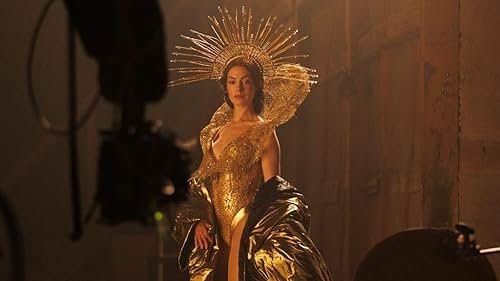
This movie won’t give you answers. It’s not a ghost story. It’s not a love story. It’s an exercise in trauma and forgiveness with some of the most beautiful and fantastical shots with outstanding dress designs. The lines are blurred and you truly never know what’s happening, but it’s an impeccable script. Michaela Coel’s words are short, but biting. She says everything she needs to with a few words that leave Mother Mary devastated. The way the script slowly unveils itself to show Mother Mary and Sam’s relationship, Mother Mary’s apparent suicide, and Mother Mary and Sam’s desire to reconcile without saying any of those things out loud are truly impressive. This movie says everything it needs to, and what you take from it is up to your own interpretation. Much like a red cloth that’s the spirit of trauma floating towards you becoming the perfect dress, it is what you make of it.
3 ½ stars.


Leave a Reply