
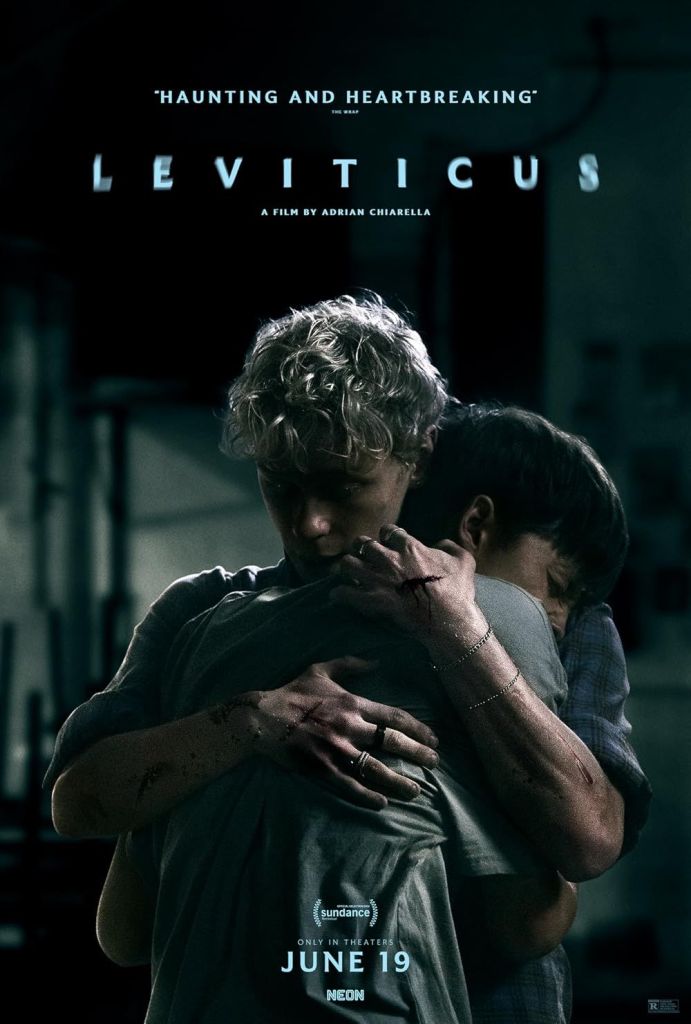
By Kyle Flynn
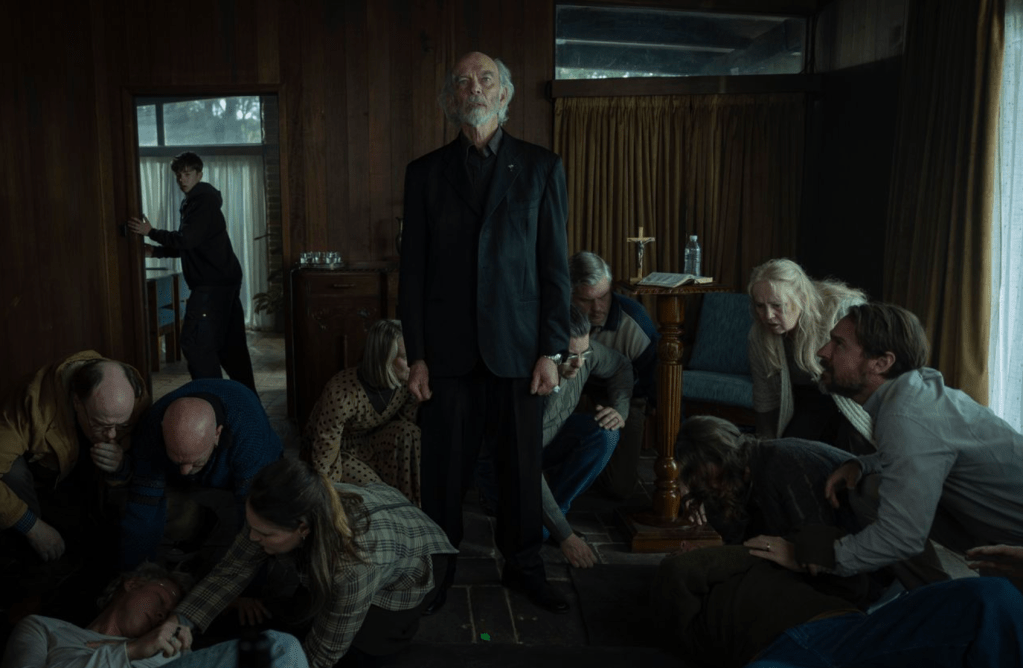
Throughout the 2020s, we have seen a plethora of queer horror films; arguably, we are in a new era, with new creative voices bringing these stories to the screen and a level of commercial appeal and value, making them more accepted by distributors. Furthermore, Leviticus is coming off the massive success of Obsession and Backrooms and the place it occupies in the current horror space. Leviticus follows the relationship between two young men, when one realizes about the intimate feelings the other might have for someone else the decisions that follow after the exposure of their sexual orientation to their parents and the broader community at large, prompt the ‘deliverance healer’ to pay a visit to ‘cure’ them of there affliction.
I was immediately drawn conceptually to the film’s plot, so much so that I would recommend going in as blind as possible. Adrian Chiarella’s attempt to make a metaphor visualizing the fear-mongering that’s so prevalent against those who are queer as a physical (or spiritual?) manifestation works much better than it should The raw knowingness of the way a small Austrailan Town would treat those who are gay feels lived in. My surprise to this is to find a fresh and high-concept outlet for this debut feature. Despite this, I couldn’t help but have a lack of engagement with the first half of this film; for a film coming in around the 90-minute mark, it feels so overwrought with the precautions of the outer community as opposed to the mind. Once the film begins to reveal more of itself, it plays far better.

The central performance of Naim was carried by Joe Bird, who had one of the breakout performances a few years ago in Talk To Me, and delivered a believable portrayal of the inner fear that drives the events in Leviticus. This can’t be easily said for the entire cast, who have to act within this film that is reliant on the audiences ability to buy into the narrative and suspend any disbelief or judgment. Many of the supporting roles, including Hunter (Jermey Blewitt) and the Deliverance Healer (Nicholas Hope), failed to emotionally hook me in with their performances. It likely doesn’t help that almost all the supporting seem to not be frankly engaged with what is happening with Ryan or Naim. The other central character Ryan, played by Stacy Clausen, provides an additional dimension to the role. He manages to find the right balance between fear and the heart-wrenching teenage emotions that occupy the mind when in an emotional relationship or physical relationship. The mother of Naim is played by Mia Wasikowa who is truly never bad in anything, one of the few actresses with the foresight to pick projects that would fit to her mold and then outperform the material given manages to once again live up to the career she has built for herself.
Leviticus does carve a knew hole for itself in the ever-changing landscape of the queer film cannon with an interesting conceit and the independent nature of the film. Adrian Chiaraella has a voice unique enough to stand out despite not enjoying the minuita of his writing. A clear evolution seems available to trace for his future.
🌟 🌟 🌟 stars


Leave a Reply