By Kyle Flynn
In 1976, when Barbara Kopple released her Academy Award-winning film, Harlan County, USA, about the ongoing labor struggles in Harlan County as a labor union was established, it quickly entered the canon of great American documentaries. Her 1990 sequel, American Dream, produced a similar effect, documenting the efforts of the workers fighting for fairness. These films put her, in my opinion, amongst so many of the other great documentarians, including the late Fredwick Wiseman, to whom this film is dedicated. In Union Town, the third and final film in the trilogy, Barbara confronts labor-union struggles once more.
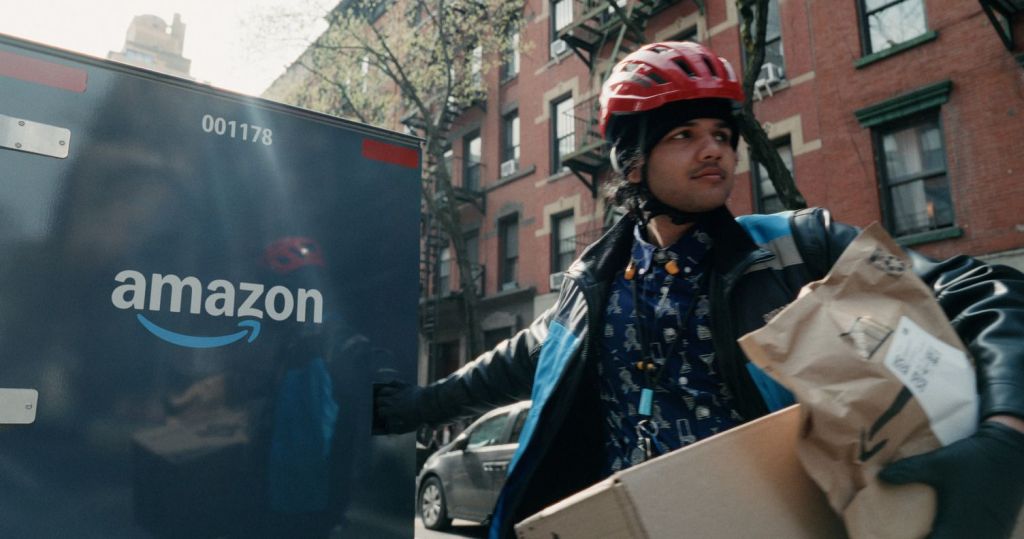
It surprised me how much emphasis Barbara Kopple placed on modernity when she made this transition to Union Town. Operating through the lens of the Teamsters and viewing the labor struggles that have taken over during the 21st Century. The new-age labor-busting efforts are currently being put in place to undermine workers’ ability to survive on a living wage and secure better working conditions.
Additionally, I think it’s hard not to acknowledge how in conversation the film is with Union, directed by Brett Story and Stephen Maing, a documentary that affected me greatly with its portrayal of the longstanding efforts and active fights among workers and employers. What Kopple achieves is drawn from a broader context, yet manages to capture the small wins and moments that make you wonder how they will be able to work within the vision to secure a deal with the employers. With both films covering the Amazon unionizing with such a forthright idealism, as an audience member, I have come to expect the shoe to drop with Kopple.
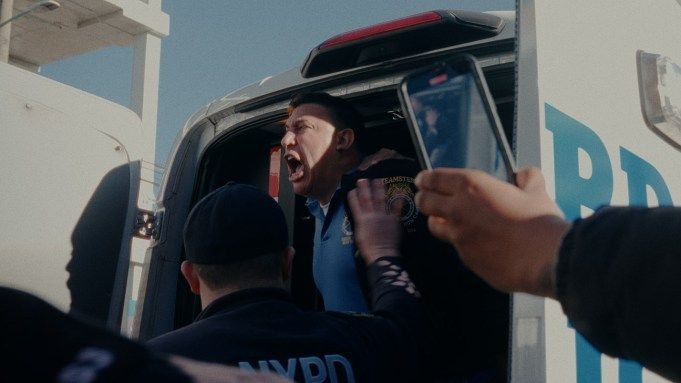
Then, the earth-shattering climax and finale, not this film but the whole trilogy, remind us intently of how the mindset of the non-union workers is structured. Within the context of Union Town, we find the heartfelt moments that shine through. The stars of Union Town, the individuals whose lives are captured, find themselves within the project. There is a moment in the film, completely focused on the protest against scabbers as they exit the lot during the standard Amazon delivery route, and, in a moment that feels triumphant in the moment, a scabber dramatically leaves his truck and joins the union. Editor’s Francisco Bello, Hannes Hosp and Deborah Peretz’s decision to include that moment in the film represents a key tenet of what makes Kopple’s work so special: the ability to capture small moments and make them feel larger than life in situations that feel so close to home. Another simple moment(s) is that, partway through the film, Kopple and Peretz decide to intercut some of the dissenting opinions within the union effort. The emphasis on infighting within the union, and specifically, it being framed on the part-time workers needing more pay than what the majority of the Teamsters were willing to fight for in an effort to push through a Union deal, creates an additional layer of infallibility on both ends of the spectrum during the Unionizing efforts.
The heart felt through the frames on my screen, shot excellently by Kopple’s team of cinematographers, ultimately shining through and resonating in a new way each time. As the film concludes, the journey finds you in your own space, a rarity to find in a documentary.
🌟 🌟 🌟 🌟 stars


Leave a Reply